
An emotional and busy offseason provided Marlins’ Miguel Rojas with a newfound motivation
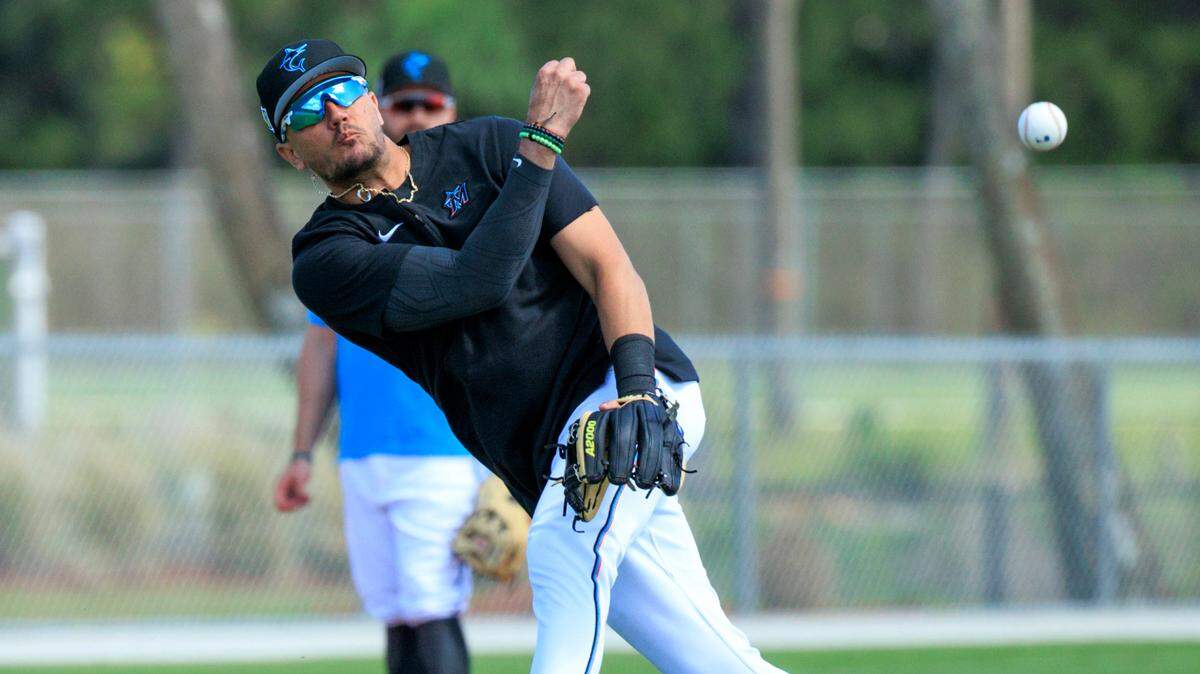
To say Miguel Rojas’ offseason was busier than usual might be an understatement.
It’s been a hectic past three months on multiple levels.
Personally, the Miami Marlins’ shortstop lost two pillars in his life. His grandfather Rafael Naidenoff and mom Norma Naidenoff passed away within a week of each other in January. He is now wearing No. 11 this season instead of his usually No. 19 to honor his grandfather, who died of a heart attack at age 86, and pink cleats to help organizations that raise awareness for breast cancer, the disease that took his mother’s life at age 62.
Professionally, he was getting a crash course on the business side of baseball. As the Marlins’ player representative for the MLB Players Association, he was immersed in updated on with labor negotiations during the lockout and attended a few of the negotiation sessions for the collective bargaining agreement when they took place at Jupiter’s Roger Dean Chevrolet Stadium in late February.
In between, he stayed on top of his teammates to make sure they were ready for spring training and the regular season — whenever they ended up starting — and balancing life as a father of two. He also attempted to ensure the Marlins’ front office was still committed to its long-term goal of sustainable success — the goal Rojas committed to in 2019 — following Derek Jeter’s departure on Feb. 28.
“A little bit of extra work,” the 33-year-old Rojas said.
Through it all, though, Rojas found a new appreciation for where he is in his career and new motivating factors as he heads into his eighth season with the Marlins.
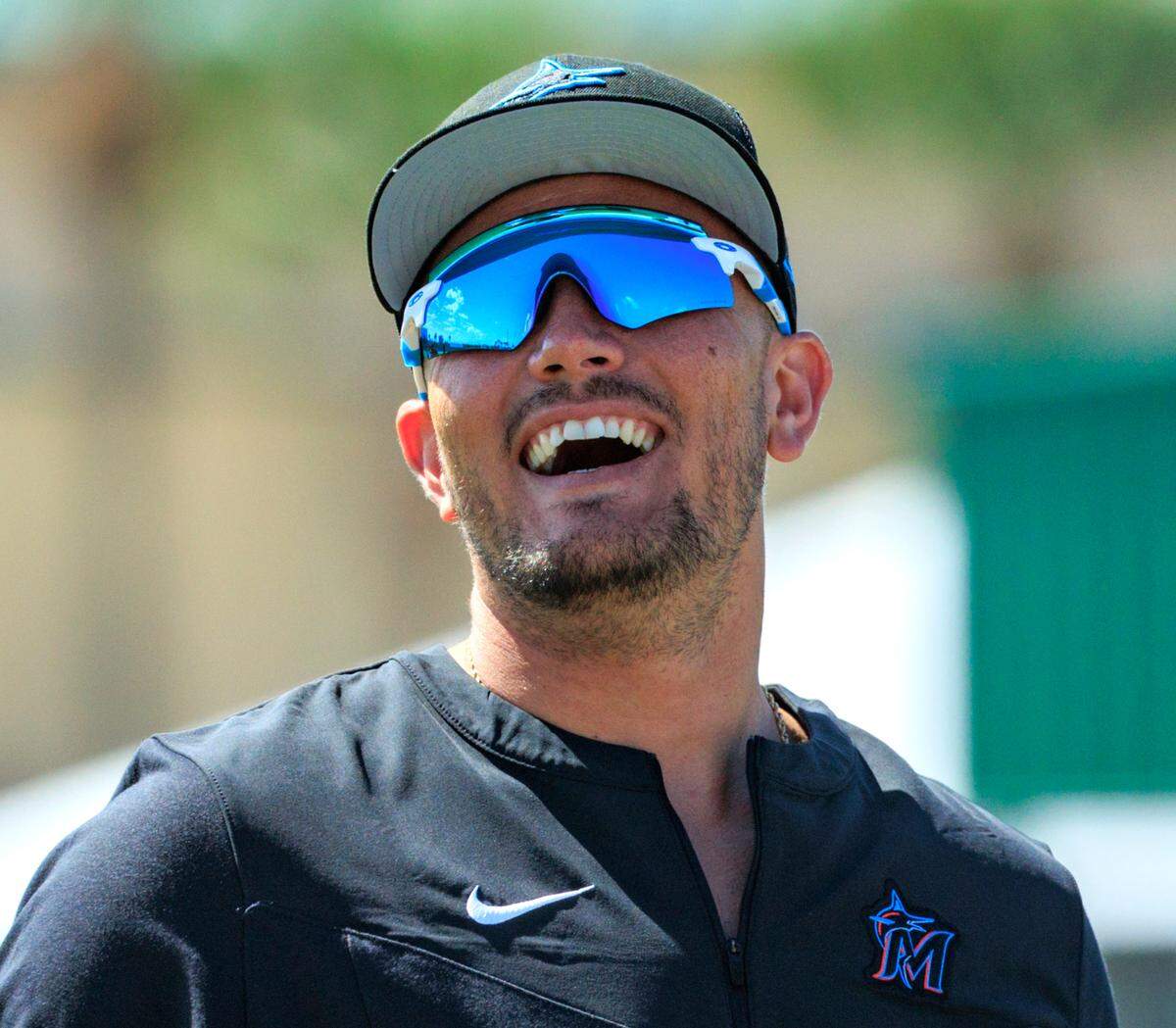
Family first
For Rojas, it all starts with family.
And when it comes to those with the biggest influence on Rojas, Norma and Rafael Naidenoff were among those at the top of the list.
Rojas inherited his positive aura and his ability to balance work and downtime from his mother.
“That’s the way I wanted to live my life,” Rojas said. “Just focusing on the positive things and not worry about the negative. ... I’m the guy who wants to keep it loose, but there’s always a line. I’m pretty objective when it’s time to work and be serious and when it’s time to loosen up a little bit — especially in this game when you’re playing 162 games.”
Even when she was battling breast cancer — her first diagnosis came in 2011 before entering remission in 2012 only for it to return again in 2016 and once more in 2021 — she did her best to stay upbeat.
Norma was a doctor by profession but a singer at heart. Rojas in 2018 helped her release a nine-song album of her singing famous boleros and classic Spanish ballads. It had a healing effect for her and helped her keep her mind off the tough times she was going through.
Rojas tries to embody that optimistic outlook whenever he can.
“That’s who she was her whole life,” Rojas said. “She told me something that was really important for me. It doesn’t matter the circumstance or where you are, you’ve gotta be flexible in all situations. ... And you’re always going to be the same person.”
While Norma gave Rojas the positive perspective on life, Rafael helped bring out his love for baseball. He was Rojas’ coach throughout his amateur career. He wore No. 11 and was integral in Rojas’ foundation for the sport that he still plays at the highest level.
Rojas’ final memory — and one of the most lasting — with his grandfather came in December. Rojas held a home run derby in his hometown of Los Teques, Venezuela, on the same field where he began playing and where Rafael watched his grandson fall in love with the sport.
The respect Rafael had among the community became quickly apparent.
“He was treated like a king,” Rojas said. “He had a body guard right behind him, giving him water and beers and all that throughout the whole day.”
When the derby ended, Rojas put his arm around Rafael’s shoulder and gave him one final thank you for helping spark his career.
“I’m happy he didn’t suffer,” Rojas said. “For me, he was a superhero that I though was never going to die.”
His memory, however, lives on. Rojas is wearing Rafael’s No. 11 this season.
“I want them to know that I’m carrying them in my heart and my number and with me everywhere that I’m playing,” Rojas said. “I know for a fact that they will be really happy to see and to feel that I’m carrying them with me.”
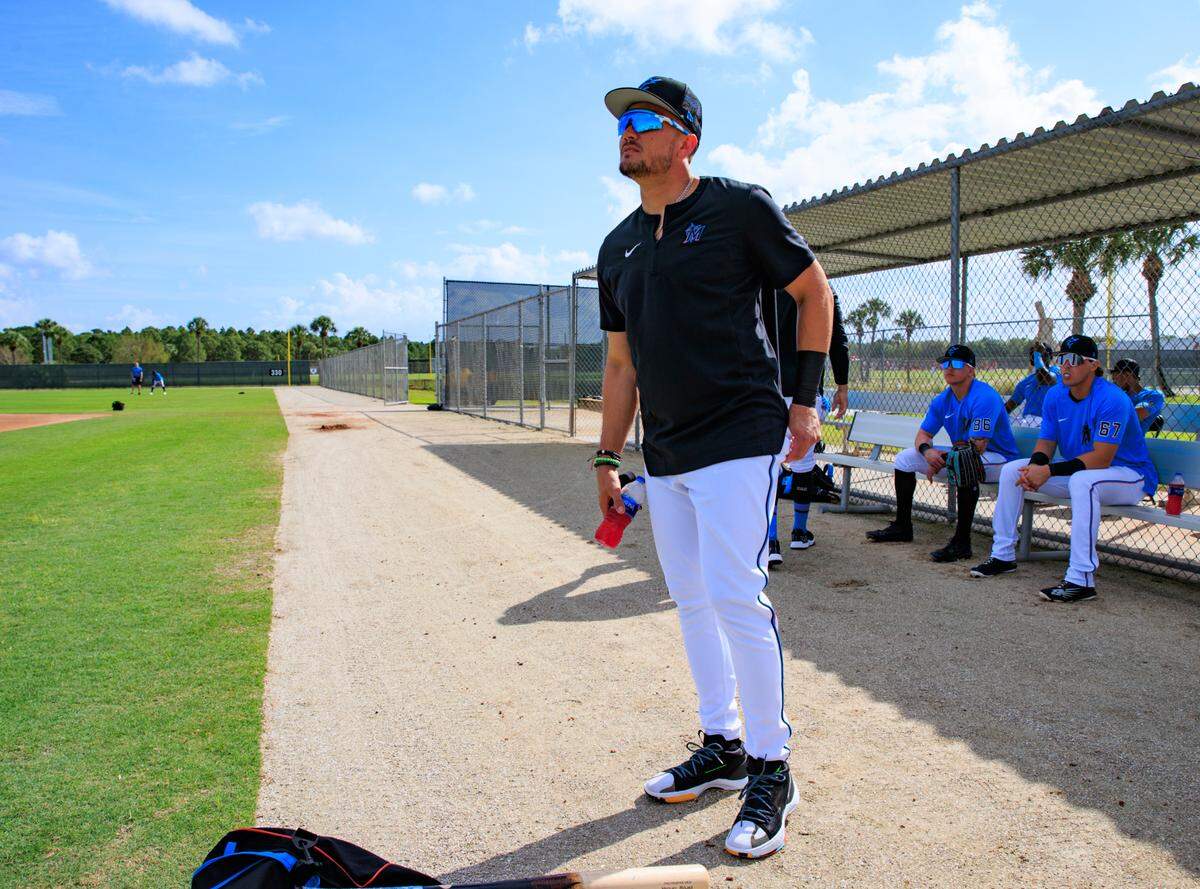
Helping the next generation of baseball
Family for Rojas extends to his teammates on the baseball diamond and making sure the future of the sport is in a better place for the sport’s next generation.
He got a glimpse of how that process works this offseason as the players and league negotiated a new collective bargaining agreement — a process that was at times contentious between the two sides and resulted in a 99-day lockout and delays to both spring training and Opening Day.
In the end, though, the players received some wins on the economic side: an increase in minimum salary for big-leaguers, starting at $700,000 this year and going up $20,000 each year of the five-year agreement; a $50 million annual pre-arbitration pool that is distributed to the top 100 eligible players with fewer than three years of service time; an increase in the competitive balance tax threshold; playoff expansion; and a universal designated hitter.
The financial bumps for pre-arbitration players was especially a focus for Rojas, who represents a team that is annually among the lower payrolls in the league.
“Our focus was on actually getting guys earlier in their career rewarded for what they’re doing,” Rojas said.
And Rojas, who is in his third year as the Marlins’ player representative, wanted to make sure that he was the one having to worry about the particulars while keeping the rest of his teammates updated as developments unfolded.
“You’re not just representing yourself,” Rojas said. “You’re representing the whole clubhouse, all the guys that are playing behind you.”
Leader in the clubhouse
Rojas has done that part of his job well as of late. He began his rise as a vocal presence in the Marlins’ clubhouse in 2019, the year Miami lost 105 games but he affirmed his commitment to Miami’s rebuild as the trade deadline approached. He received a two-year contract extension at the end of that season and another this offseason, keeping him with the Marlins through the 2023 season.
But it wasn’t a role he envisioned having when he made his MLB debut in 2014 with the Los Angeles Dodgers. He wasn’t fluent in English. He was a defensive replacement, one of the guys.
He had help to get to this point. Adrian Gonzalez when he got to the Dodgers. Martin Prado during his early years with the Marlins.
His on-field responsibilities started to grow — he became Miami’s full-time starting shortstop in 2019. His time to step up vocally followed with it.
“He stands up during meetings,” third baseman Brian Anderson said. “He tells us how it is. Sometimes it’s stuff that we don’t want to hear, but he’s definitely grown into a role as the years have progressed. ... He earned his way into the lineup every day and he’s shown us that he can play shortstop every day and he’s earned the right to be a big voice in the locker room.”
Marlins manager Don Mattingly, who also managed Rojas during the shortstop’s one year with the Dodgers, saw the early make-up of a player in Rojas who could turn into a leader but wasn’t sure if the role would materialize.
That changed when the two reunited in Miami.
“He just keeps evolving,” Mattingly said. “He’s a guy that has worked extremely hard to get where he’s at. And he’s a great example for our guys and more willing to share verbally how we need to play, what we’re trying to do. His evolution has come with his confidence and growth as a player.”
“He’s a part of our solution,” general manager Kim Ng added, “and where we want to be in the future.”
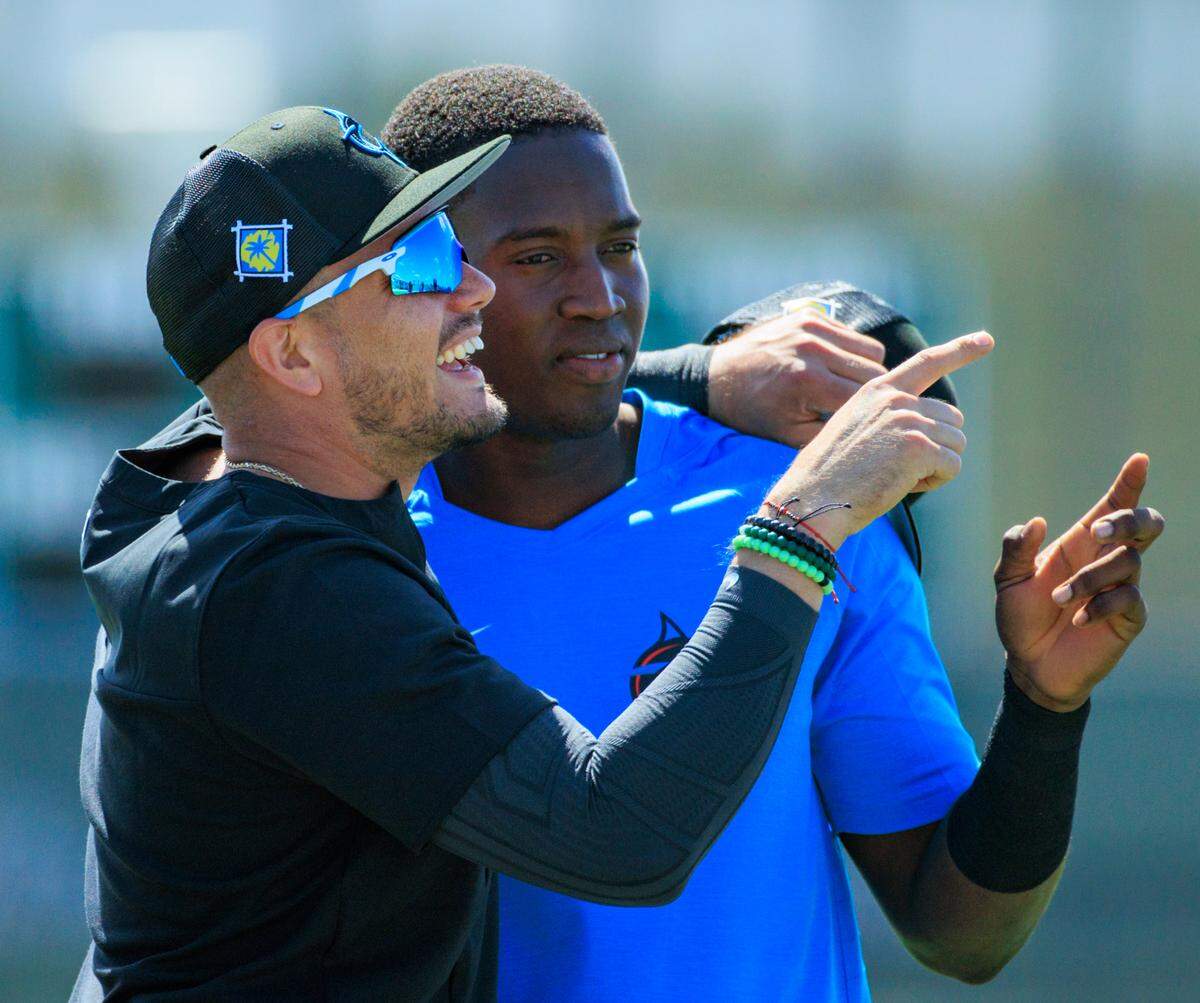
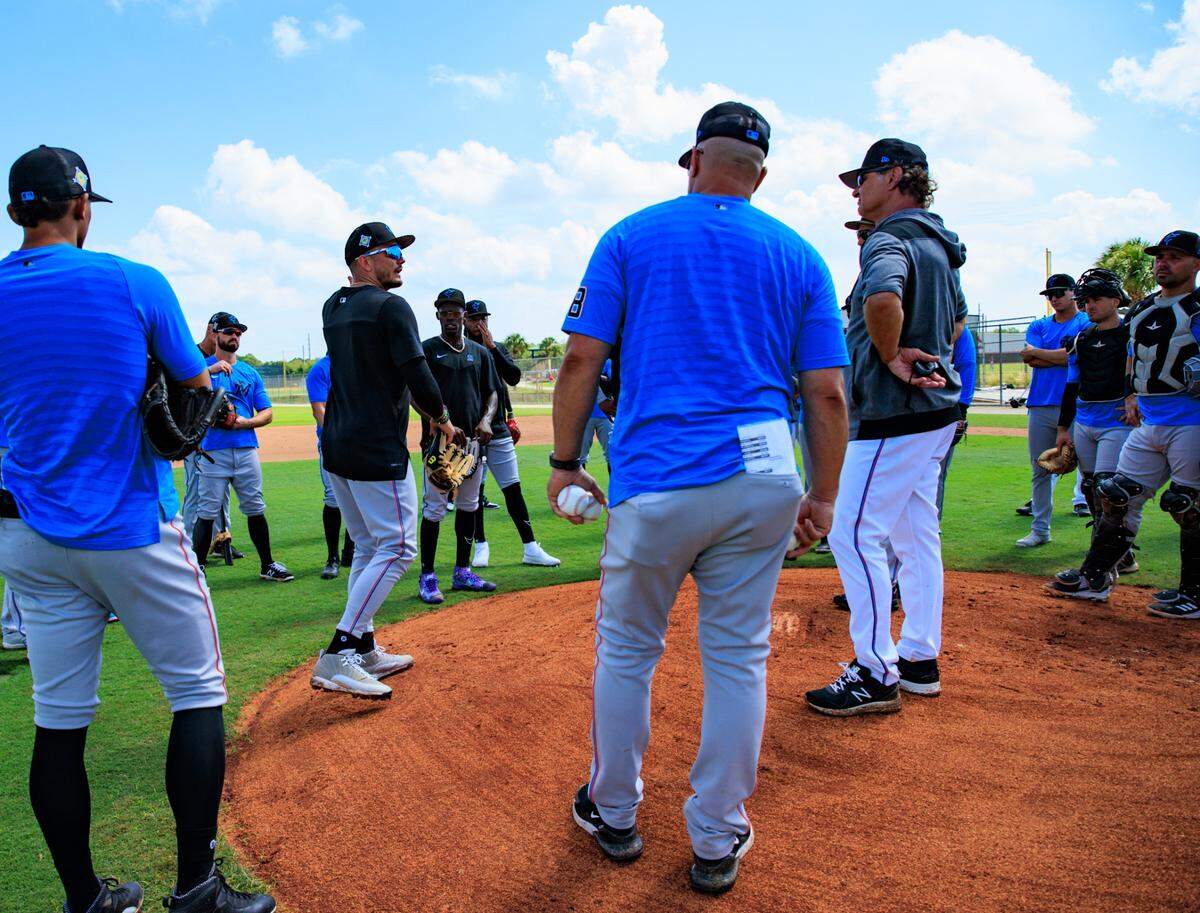
Rojas is now serving in that mentor role to the younger players in Miami — Jazz Chisholm Jr., Jesus Sanchez, Lewin Diaz, Bryan De La Cruz among them.
He organized twice-weekly group workouts during the lockout in West Palm Beach to make sure his teammates were ready when spring training finally began this week.
“I’m at that point in my career,” Rojas said. “Helping everybody else to get where we want to get, which is a championship. If I keep getting better on my own, I might have a great career, but I want to win. If I want to win, everybody else has to get better.”
Will Marlins be in position to compete?
The Marlins, heading into the fifth year of their rebuild since the Bruce Sherman ownership group took over, know they are at the point where wins need to start coming.
No more selling hope. No more explaining when things will turn around.
The talk needs to be backed up on the field in a loaded National League East.
The Marlins added pieces to the roster, signing outfielder Avisail Garcia and trading for catcher Jacob Stallings and infielder Joey Wendle before the lockout and on Saturday agreed to terms on a three-year deal with outfielder Jorge Soler to provide a boost to the lineup that they hope will help ease pressure on the rotation. Miami’s front office says it is still pursuing another impact bat.
“What we have in the clubhouse is something that is going to put us in a good position to compete,” Rojas said.
Just how competitive they will be is to be seen, but Rojas said he got the needed assurances from Ng and Sherman about the organization’s next steps.
“We’re still in the same boat,” Rojas said, “and we’re still paddling in the same direction.”
This story was originally published March 20, 2022 at 7:00 AM.
.JPG)