
Live updates: After selecting Max Meyer, Marlins close MLB Draft with five more picks
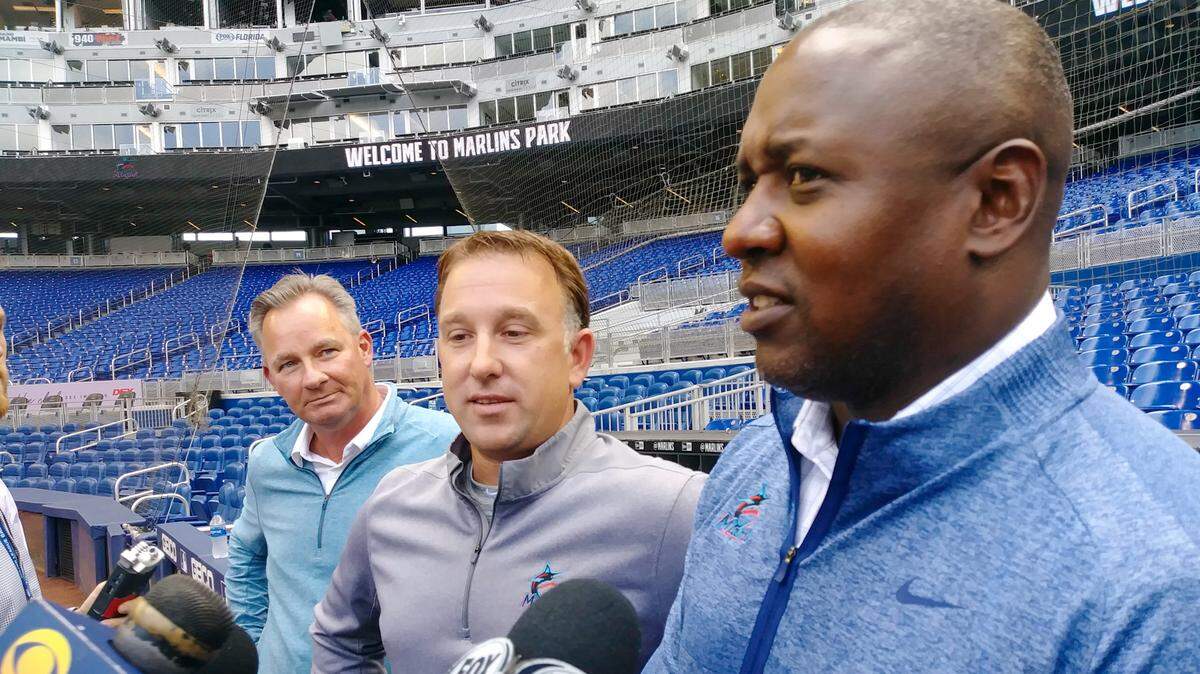
One down, five to go.
The Miami Marlins opened the 2020 MLB Draft by selecting Minnesota right-handed pitcher Max Meyer with the No. 3 overall pick on Wednesday night. They close out the shortened, five-round draft with five more picks on Thursday: Nos. 40, 61, 75, 104 and 134.
Day 2 of the draft is underway and will be televised on ESPN 2 and MLB Network. We will provide quick analysis of each pick as they are selected.
Follow along here for updates throughout the day.
2 (40) LHP Daxton Fulton
School: Mustang High (Oklahoma)
Height: 6-6
Weight: 225
MLBPipeline Ranking: 43
Pipeline Scouting Report: “Before he got hurt at the U.S. 18-and-under national team trials in August, Fulton worked with a 90-93 mph fastball that played better than its velocity because he creates steep downhill plane with his 6-foot-6 frame and high three-quarters arm slot. He’s already strong and has the room to add more muscle, so he could work in the mid-90s once he regains his health. His curveball is a legitimate plus pitch with power and depth, and he shows some feel to manipulate its break. Fulton’s changeup should be an average or better offering once he spends more time developing it. For such a tall teenager, he does a nice job of keeping his long limbs in sync and throwing strikes with his entire repertoire.”
Analysis: If he didn’t have to undergo Tommy John surgery, Fulton likely would have been a first-round pick. His selection continues the Marlins’ early trend of going for pitching in a pitcher-heavy draft. He has high upside so long as he can get back to full strength.
CBB (61) RHP Kyle Nicolas
School: Ball State
Height: 6-4
Weight: 225
MLBPipeline Ranking: 60
Pipeline scouting report: “Nicolas has one of the best fastballs in college baseball, sitting in the mid-90s as a starter and reaching 100 mph in shorter stints this fall. He also can overpower hitters with a slider that resides in the mid-80s, approaches 90 and features sharp break when it’s on. Both his heater and slider have high spin rates as well and are legitimate swing-and-miss offerings. Nicolas’ curveball has its moments, though his use of two breaking balls sometimes causes them to blend together, while his changeup lags behind the rest of his repertoire. There’s nothing glaring with his delivery and he doesn’t throw with excessive effort, but he has trouble keeping his mechanics in sync. He showed little feel for throwing strikes before this spring, so his premium stuff comes with considerable risk that he’ll be a reliever.”
Of note: Another pitcher! The Marlins are making a concerted effort to load up on arms after going heavy on position players early in the last two years. Nicolas is likely a bullpen guy. Also, note his athletic lineage: He’s the nephew of former NFL quarterback Todd Blackledge.
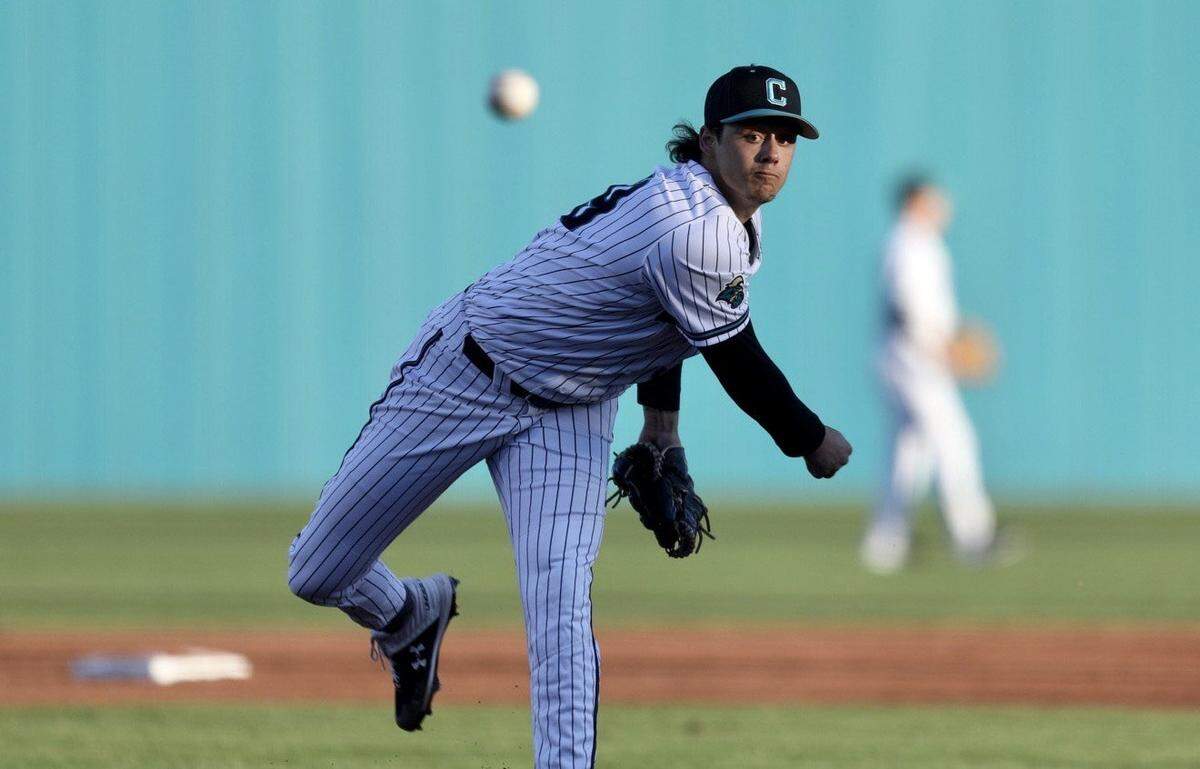
3 (75) RHP Zach McCambley
School: Coastal Carolina
Height: 6-1
Weight: 215
MLBPipeline Ranking: 80
Pipeline scouting report: “McCambley appeals to teams that love high spin rates, which he has on both his curveball and fastball. He owns one of the better curves in his Draft class, with his low-80s bender diving hard at the plate and earning well above-average grades at times. It plays well off his 90-94 mph heater that tops out at 96 and features riding action. To make it as a starter in pro ball, McCambley will need to refine his nascent changeup and improve his control and command. There’s some effort in his three-quarters delivery that restricts him from locating his fastball where he wants, and his curveball breaks so much that more advanced hitters may refuse to chase it. If he can’t stick in the rotation, he has the stuff to serve as a high-leverage reliever.”
4 (104) LHP Jake Eder
School: Vanderbilt
Height: 6-4
Weight: 220
MLBPipeline Ranking: 59
Pipeline scouting report: “When Eder is at his best, he can work at 92-95 mph and touch 97 with his fastball and back it up with a plus curveball. But there also are days when he’ll sit closer to 90 mph and lack feel for his curve. Though he can flash a solid changeup, it’s still a work in progress because he hasn’t used it much in short stints with the Commodores. Eder threw all three offerings for strikes on the Cape but sometimes has trouble finding the zone and can get hit hard when his location is off. His strong 6-foot-4 frame is built for durability and helps create tough angle on his pitches. If he can maintain the consistency and command of his stuff that he showed in the summer and fall, he could be a mid-rotation starter.”
5 (134) RHP Kyle Hurt
School: USC
Height: 6-3
Weight: 215
MLBPipeline Ranking: 175
Pipeline scouting report: “He’s been up-and-down for much of his Trojans career, though he did take over as the Friday night starter during his sophomore year, a role he held at the start of the 2020 season before things were shut down. Hurt has long had the size and pure stuff to make him a very strong pitching prospect. His fastball will sit in the 92-94 range and he will top out at 97 mph, and he could find more consistent velocity at the top end of that scale as he continues to add strength to his 6-foot-3 frame. His best secondary pitch is his changeup, which could be a plus pitch in time. He throws both a hard slider in the upper-80s and a slower, upper-70s curve, both of which show glimpses but are inconsistent breaking pitches. The right-hander hasn’t always commanded his stuff well or maintained it deep into starts, with the sharpness of his stuff often varying from outing to outing. He entered the spring as one of the more enigmatic college pitching prospects in this class and there wasn’t really enough time for scouts’ questions to be completely answered this spring.”
This story was originally published June 11, 2020 at 4:30 PM.
.JPG)