
An offensive coordinator in baseball? The Marlins have one in their bench coach.
James Rowson’s role with the Miami Marlins is a little more complex than his job description on paper.
His official title is bench coach, the highest position he has had at the major-league level after previously serving as the hitting coach for the Chicago Cubs and Minnesota Twins in addition to two stints as a minor-league hitting coordinator for the New York Yankees. He will be second in command to manager Don Mattingly.
But there’s an unofficial designation coming with his role on the Marlins coaching staff in 2020: Offensive coordinator.
No, he’s not going to be drawing up wheel routes or run-pass options, and the Marlins aren’t going to be lining up in the spread — although they do have a former backup college football quarterback in spring training in relief pitcher Tommy Eveld.
Rather, the goal is to have one coach be the final person in the chain of command for any and all things that involve the offensive side of the game, similar to an offensive coordinator in the National Football League.
In the Marlins’ case, that’s Rowson.
“When you look at the NFL and the scheme that they have, they do a good job and I think baseball can fall into that mold a little bit,” Rowson, 43, explained Wednesday. “The hitting side of it is really about run production. You never really look at the hit column as much as you do the runs scored column. ... It just came about looking at the NFL model and thinking maybe there’s that one guy that can kind of go in between and help give Donnie the outlook of the offensive side of the game because you have a grip on the hitting, the baserunning, the bunting, the total offensive scheme of how we score runs.”
Scoring runs — and overall offensive improvement in general — has been a major emphasis for the Marlins this offseason as they head into the third year of their rebuild under the Bruce Sherman and Derek Jeter ownership group. Miami finished last in MLB in runs scored in 2018 (589 ) and 29th out of 30 teams last season (615 runs scored).
They added some players this offseason with high offensive ceilings in Jonathan Villar, Corey Dickerson and Jesus Aguilar. They will complement fixtures in the Marlins lineup in Brian Anderson and Jorge Alfaro. On paper, that’s a needed first step.
But so, too, was hiring a guy in Rowson who played a pivotal role in helping the Twins last season set MLB’s single-season home run record (307) while scoring the second-most runs in baseball (939) and having the fourth-lowest strikeout rate in the league (21 percent).
“He’s going to be Donnie’s right-hand man as our bench coach with an offensive background,” Marlins president of baseball operations Michael Hill said in November after they hired Rowson. “... Without question, when you get a man of James’ experience and ability, you’re going to try to take advantage of the entire package, the entire person.”
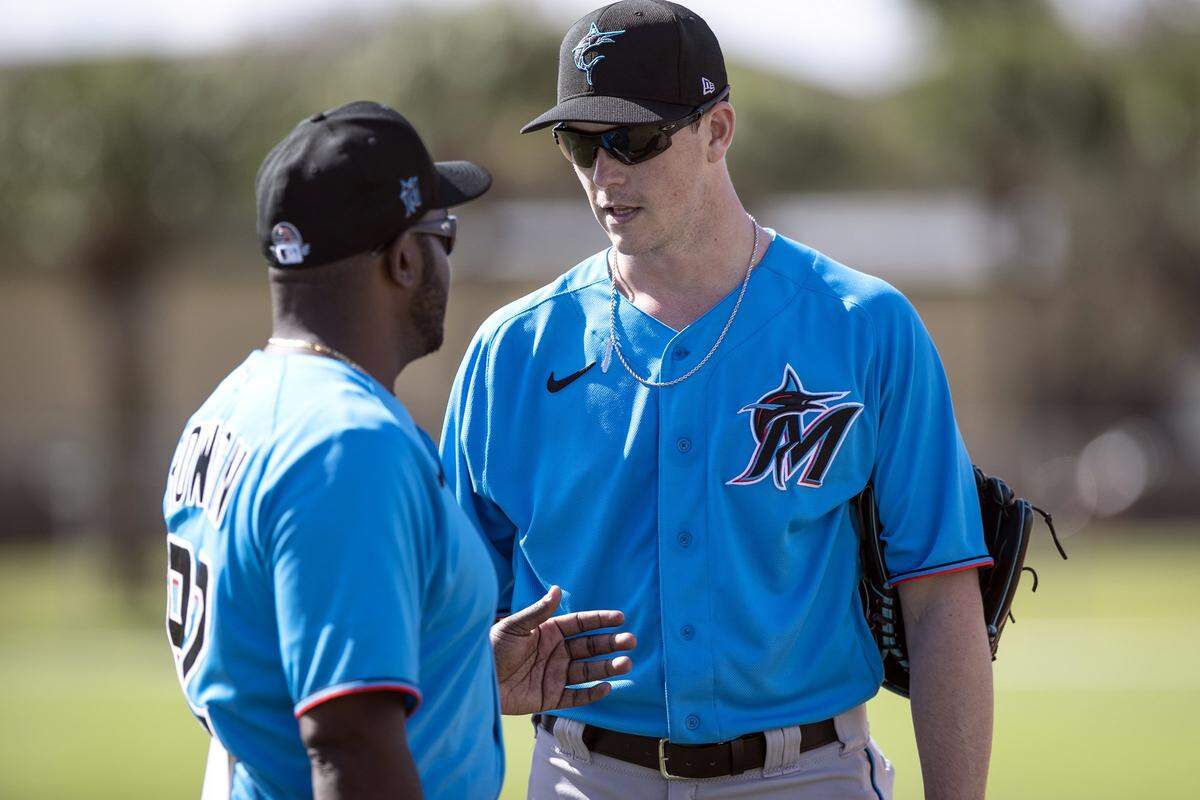
James Rowson’s hands-on approach
Rowson gets that point across by being vocal and visible throughout practice.
He patrols the batting cages and keeps a keen eye while players take batting practice. He talks with them between hitting sessions and shares thoughts and ideas with Mattingly and hitting coach Eric Duncan.
“James is full of energy,” Mattingly said. “When you talk about that offensive coordinator-type thing, he’s going through how we’re going to approach teams, how we’re going to game plan. He’s in the cages all day. He’s with the hitters for the most part.
“It’s not the traditional bench coach-type thing for us. It’s more overseeing the offense.”
And like any other job, Rowson has spent the first half of spring training trying to know the players he will interact with daily for the next seven months. He wants insights, constructive criticism, feedback. Anything to get a better understanding of the club.
“He’s a listener. He’s a learner. He thinks outside the box. He’s up for change, good change,” said Dickerson, who noted he had a 50-minute conversation with Rowson this week. “He’s always listening to us. He wants communication, good or bad.”
Added shortstop Miguel Rojas: “He can help this club in so many ways. Offensively, with the aggressive mentality when you go to the plate and when you run the bases, and with confidence. He’s a guy full of confidence. He’s been around the big leagues. He’s done it. He’s been with pretty good teams that have done special things. That’s one of the most important things that he brings to this club. Our offense is going to be better just because we have him.”
‘Swings to do damage’
Rowson has liked the early results.
He knows it’s only spring training and that the real determinant for how well the Marlins offense will be truly starts on Opening Day.
But he’s watching as players such as Garrett Cooper and Lewis Brinson steady their swings to produce more flyballs and line drives than grounders. He’s seeing how a prospect with true raw power such as Jerar Encarnacion gets the most of each at-bat and improves his contact rates. He’s helping defensive-centric guys such as Rojas become more complete hitters, rounding out their game to provide more impact for a club that needs more offensive production.
“They’ve taken swings to do damage,” Rowson said. “We’re not going out there to take swings and just fillet balls or touch balls. We’re going out there with intent to do damage on every pitch. Hopefully, if the pitches don’t show up where we want it that we take those pitches. These guys have been really good early on.”
The goal now is to keep that mentality going when the season gets underway.
“We’re going to keep punching,” Rowson said. “Regardless of the score, regardless of the situation, regardless of what’s going on up or down, we’re going to keep punching. And as we do that every day, you usually see that manifest into a team that’s tough to beat because they never quit. That’s what we’re hoping to be.”
.JPG)