
The Atlanta Braves’ Freddie Freeman wins NL MVP. Why he was the no-brainer top pick
I knew there were going to be some tough decisions as I was filling out my ballot for National League MVP. I had a list of maybe 20 names that had at least a remote chance for inclusion on my 10 ballot spots when I started the process over the final week of the regular season.
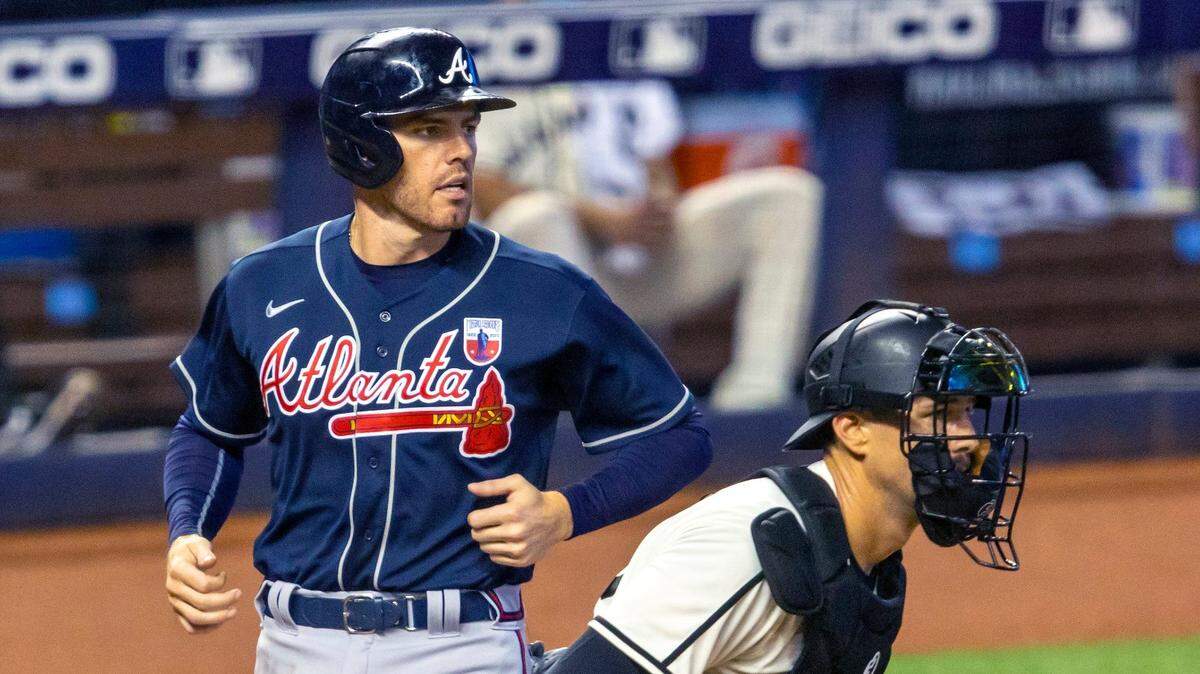
One decision, however, was a no-brainer. Freddie Freeman was going on the top line. The Atlanta Braves’ slugging first baseman to me was the most consistent force in the National League this season.
The majority of the other 29 members of the Baseball Writers’ Association of America who had a vote in the award agreed. Freeman won his first MVP title on Thursday, edging out the Los Angeles Dodgers’ Mookie Betts and San Diego Padres’ Manny Machado for the honor.
Freeman earned 28 of 30 first-place votes and was the runner-up on the other two ballots. Betts finished second, pickup up the other two first-place votes, 21 second-place votes and five third-place votes. Machado was third, with the Padres’ Fernando Tatis Jr. and Washington Nationals’ Juan Soto rounding out the top five.
How the vote works
The MVP ballot is the most exhaustive of the four awards handed out by the BBWAA. Each voter has to rank his or her top 10 players for the honor, compared to five for the Cy Young Award and three for rookie and manager of the year.
The BBWAA lists five criteria to think about when forming an MVP ballot:
1.) Actual value of a player to his team, that is, strength of offense and defense.
2.) Number of games played.
3.) General character, disposition, loyalty and effort.
4.) Former winners are eligible.
5.) Members of the committee may vote for more than one member of a team. You are also urged to give serious consideration to all your selections, from 1 to 10. A 10th-place vote can influence the outcome of an election. You must fill in all 10 places on your ballot.
My ballot
1.) Braves first baseman Freddie Freeman
2.) Padres third baseman Manny Machado
3.) Dodgers outfielder Mookie Betts
4.) Padres shortstop Fernando Tatis Jr.
5.) Nationals outfielder Juan Soto
6.) Braves outfielder/designated hitter Marcell Ozuna
7.) Cincinnati Reds pitcher Trevor Bauer
8.) Dodgers shortstop Corey Seager
9.) Nationals shortstop Trea Turner
10.) Braves outfielder Ronald Acuna Jr.
Why Freddie Freeman was the clear winner
My top four was essentially locked in heading into the final week of the regular season. The order was really all that was left to decide.
And as I kept looking things over, Freeman time and again found his way to the top.
Freeman’s 1.102 OPS (on-base percentage plus slugging) mark led the group and ranked second in the NL behind Juan Soto. Machado was 10th in the National League at .950, Tatis Jr. 12th at .937 and Betts 13th at .928. Freeman also led the group with 53 RBI, with Machado (47), Tatis Jr. (45) and Betts (39) trailing. Moreover, Freeman had a staggering .531 on-base percentage with runners on base, going 41 for 101 with 26 walks and an MLB-best 12 home runs. His 37 extra-base hits led MLB.
Machado vs Betts for second and third place was a closer call for me, but I gave Machado the nod. Fangraphs had the two essentially as equals defensively (Betts had a 3.7 rating, Macahdo 3.6), so I went with Macahdo’s offense for No. 2.
Tatis Jr.’s struggles over the final month of a two-month season (.208/.311/.403 slash line in September after starting the year at .313/.395/.660) pushed the budding 21-year-old to fourth on my ballot.
The rest of the ballot
▪ Soto and Ozuna were the clear-cut second tier of my ballot. Their offensive numbers were incredible.
Soto led the National League with a .351 batting average and a staggering .490 on-base percentage aided by his 41 walks over 47 games. Soto, 22, also hit 13 home runs and drove in 37 runs.
Ozuna, primarily used as a designated hitter, led the National League in home runs (18) and RBI (56) while ranking third in slugging (.636) and OPS (1.067).
I gave the edge to Soto despite his missing 13 games in an already short season, eight of which came at the start of the season while dealing with COVID-19 protocols. The games played mark frankly was a key factor that kept me from ranking Soto higher than fifth.
▪ Bauer would have been my vote for the NL Cy Young Award if I had a vote for that award this season. He led the NL with a 1.73 ERA, a 0.79 WHIP (walks and hits per inning pitched), and averaged just shy of seven innings per start.
▪ Seager was a steady presence for a high-potent Dodgers lineup, hitting second in 39 of Los Angeles’ final 41 games after opening the year primarily fifth or sixth to start the season. Turner led the National League with 78 hits and set career-highs in slugging (.588) and OPS (.982) while playing in 59 of 60 games. Acuna once again had a strong year (.987 OPS, 14 home runs, 46 runs scored in 46 games) but missing nearly a quarter of the 60-game season bumped him down to the lower half of my ballot.
.JPG)