
Making sense of the ACC’s new tiebreaker policy, how it impacts the Hurricanes
The Miami Hurricanes were left on the outside looking in of the Atlantic Coast Conference Championship Game last season — and the league overall nearly missed out on the College Football Playoff — after a messy tiebreaker scenario resulted in the conference’s highest-ranked team missing the conference title game in favor of a five-loss team.
As the ACC looks to avoid a repeat of 2025 and as it embarks on an imbalanced conference schedule this season — 12 of the league’s 17 teams will be playing nine conference games in 2026, while the other five play eight — it modified how ties will be broken in an attempt to provide clarity in what might once again become a muddled situation.
However, the ultimate end goal is clear.
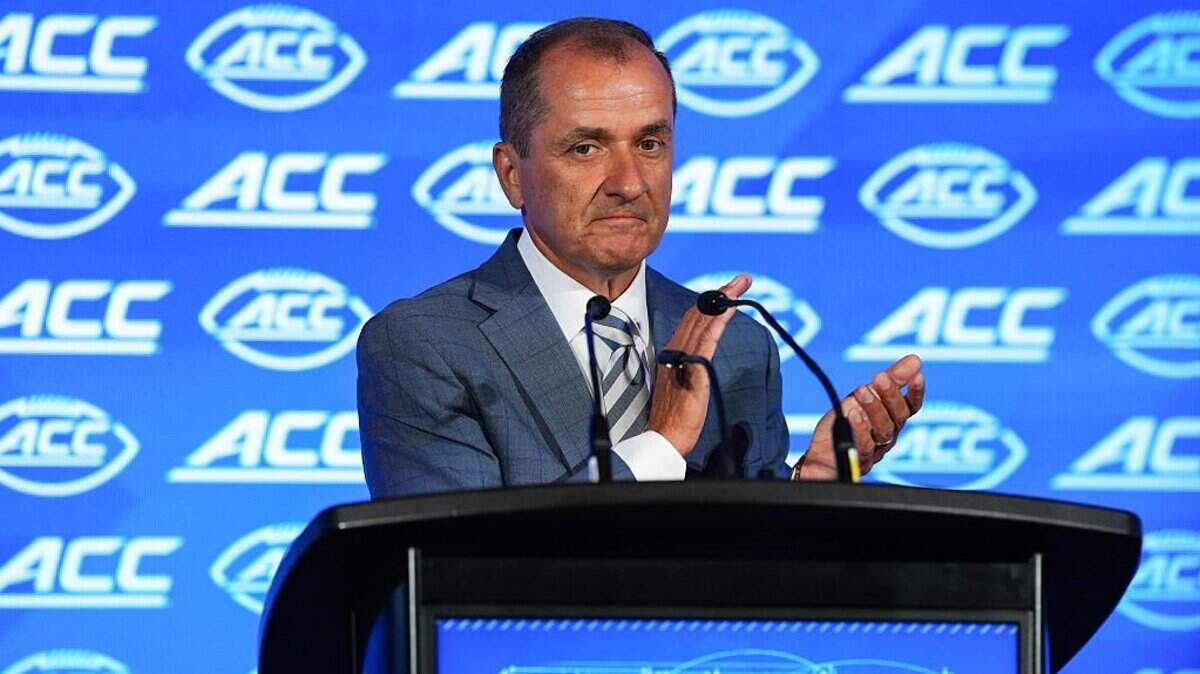
“You have to do everything you can to position your championship game with those two best teams,” ACC commissioner Jim Phillips said Wednesday at the ACC’s Football Kickoff, the league’s annual preseason media days event.
What went wrong last year
The league admittedly didn’t do that in 2025.
Five teams, including Miami, finished tied for second in the conference standings after all of them went 6-2 in league play. The conference had to go down to its fifth tiebreaker — conference opponent winning percentage — to settle who would face Virginia, which went 7-1 in conference action, in the ACC title game. Duke, which went 7-5 overall in the regular season, emerged from the group that also included Pittsburgh, SMU and Georgia Tech. The Blue Devils went on to beat Virginia 27-20 in overtime.
However, Duke wasn’t secured a spot in the 12-team College Football Playoff because the CFP only ensured the five highest-ranked conference champions received automatic bids into the field. Two Group of 5 conference champions — Tulane from the American Athletic Conference and James Madison from the Sun Belt — received bids over Duke to go along with the Big Ten’s Indiana, Southeastern Conference’s Georgia and Big 12’s Texas Tech.
Miami ultimately made the field as the final of seven at-large teams and made a run to the CFP National Championship Game.
How things are changing
The playoff already modified its format for automatic bids this offseason, ensuring that the conference champions from all four power conferences will now be guaranteed a spot in the field along with the highest ranked Group of 5 conference champion.
Even with that, the ACC’s new tiebreaker system is an attempt to take extra measures to ensure its top teams are best positioned to make the playoff field by both making the conference championship, set for a noon kickoff on Dec. 5 from Charlotte’s Bank of America Stadium.
Head-to-head results remain the top tiebreaker. If two teams have the same record and they played each other in the regular season, the team that won that matchup gets the higher ranking. Simple as that.
“Head-to-head results will always matter most,” Phillips said.
However, if two or more teams are tied and didn’t play during the regular season — which is more common nowadays in expanded conferences without divisions — the ACC will use the “Team Success Ranking” from SportSource Analytics, a metric the College Football Playoff selection committee uses when making its rankings to determine the playoff field. This ranking factors in a team’s entire schedule, not just its conference slate. The ACC requires teams to play 10 games each season against Power 4 opponents regardless of whether they have eight or nine league games, which Phillips said will level the playing field in this regard.
“It will come down to body of work,” Phillips said. “Who you play, when you play, the games you win, conference and non-conference will matter. That’s a major change in college sports and certainly for the ACC.”
How the ACC determines tied teams
There is still one way where things can get really muddy: How will the conference make sure it’s not penalizing teams for playing a different number of conference games than the rest of the league because of its imbalanced league slate?
Here’s the simplified version:
The ACC will first identify the team or teams with the highest win percentage regardless of games played.
After that, any team with the same number of wins OR the same number of losses will be factored into the tiebreaker process.
So, yes, a team that goes 7-1 across an eight-game conference schedule would technically be considered tied with teams that go either 8-1 or 7-2 across a nine-game schedule despite having different win percentages.
The league will break ties in these scenarios by starting with the teams that have higher win percentages and working their way down — in other words, it would look at the 8-1 vs. 7-1 teams first, then go down to comparing 7-1 vs. 7-2 teams and so on and so forth.
Phillips said the league worked with consultants and did 10,000 simulated season outcomes to ensure the model addressed an assortment of championship scenarios.
“We’re confident,” Phillips said, “this approach is fair, transparent, data-informed, and assures our game features the two most deserving teams.”
Cristobal calls change ‘a positive step’
This new process would have benefited Miami greatly last year when determining who would make the conference championship.
The Hurricanes were the ACC’s highest ranked team among those in the five-way tie, and while SportSource Analytics’ rankings aren’t made public, it would stand to reason that Miami would have ranked higher than any of the other four teams it was competing with for second in the league.
Miami, which has never won the ACC and only made the championship game once since joining the league in 2004 (a 38-3 loss to Clemson in 2017), is projected to once again be the front-runner to win the league.
“It’s a positive step,” Hurricanes coach Mario Cristobal said. “Who could have predicted [last year] that there were going to be five teams locked at an equal record? But if things worked out differently, this probably would be a different rant.”
.JPG)