
Be racist or be dumb. But don’t be both — and definitely not in public | Opinion
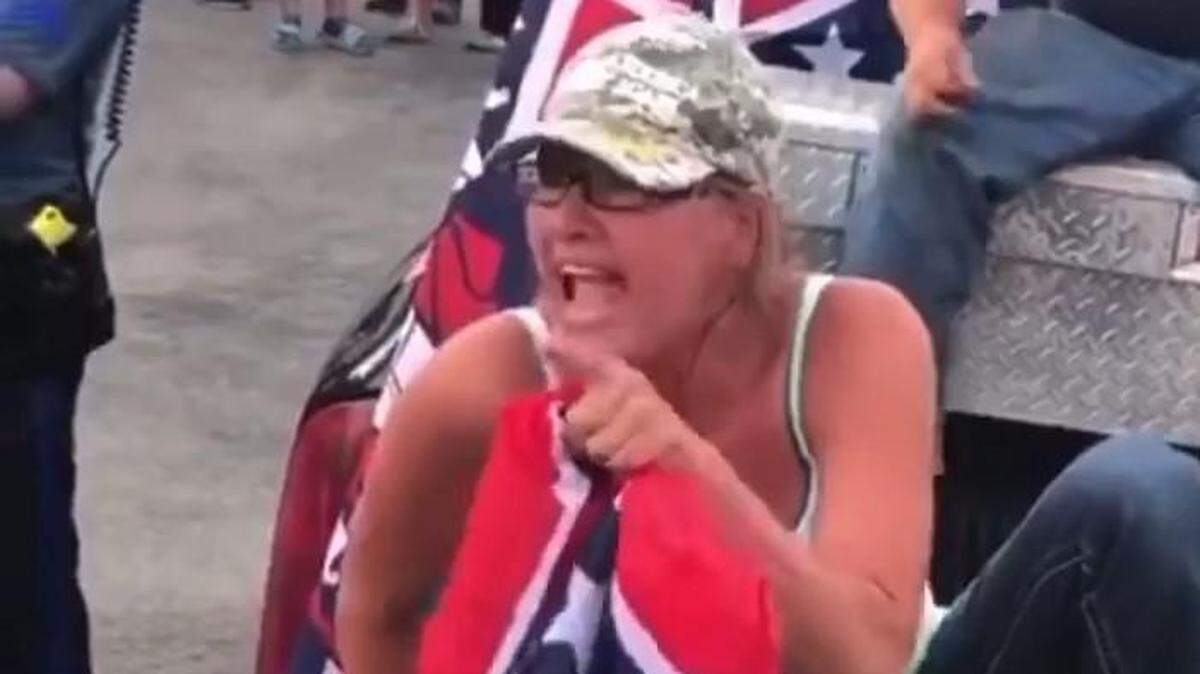
There is a viral video taken in Missouri that probably ought to be required viewing for white people like me, who once thought that the public, defiant, in-your-face racism we saw during our youth had relocated in the shadows.
If George Corley Wallace weren’t dead, he’d obviously still be drawing crowds.
Last week, at a Black Lives Matter rally in Branson, a white woman wearing a Make America Great Again cap angrily exchanged words with protesters as she held — then waved and cloaked herself in — a Confederate flag.
“I will teach my grandkids to hate you all,” she declared, then raised her fist and said, “KKK belief.”
It’s an ugly 37 seconds to behold, but also a useful reminder of how emboldened bigots have become since Donald Trump became president. We’ve always known they were still out there, though not since the ‘60s have they felt so comfortable openly excreting their hate.
This is partly because they believe they’ve got a kindred soul in the White House, and partly because social media has given them a safe, virtual basement in which to gather, seethe and slur — a community of unabashed toxicity.
Instead of grumbling and fuming alone in front of the television, white racists can now instantly connect online with others who vomit the same grievances. And while many of them don’t sign up with white supremacist groups, they can still participate in the conversation with no sense of shame, or fear of social blowback.
Saying it in a Facebook post, however, isn’t the same as saying it out loud, on a city street, to a large group that includes black people.
The woman in the Branson incident has identified herself as Kathy Jenkins. While her outburst was cheered online by bigots, it drew the opposite reaction from the vast majority of people who saw and commented on the video.
A few days later, Jenkins called a local TV station to apologize, saying she didn’t recall saying those terrible things.
“It’s like I blacked out,” she claimed, a somewhat untimely choice of words. “I don’t even remember saying half the stuff that I said.”
The more Jenkins tried to explain what had happened, the more ludicrous it got.
She insisted that she actually came to the rally to support the Black Lives Matter movement, and was chanting along happily when she unwittingly found herself among a group of counter-protesters, a Confederate flag in her hands.
“Obviously, I didn’t understand that whole Confederate flag thing,” she added, saying that she’d thought it stood for “unity.”
So, to recap her incredible yarn: Jenkins put on a MAGA cap, went to march against racial injustice, got abducted by strangers and was placed in the bed of a pickup truck, where she innocently started brandishing a flag that — to her utter astonishment — was highly offensive to Black Americans.
Then an argument broke out, during which Jenkins invoked the KKK, which she imagined was the initials for . . . what? The Kokomo Kiwanis Klub?
For racists who might be considering going public in such a big way, here’s an idea: If you get caught on video saying and doing racist things, don’t call a TV station afterward and pathetically try to walk it back.
Stand firm and stay loud, just like you do in your nameless Facebook posts. That would be a pure test of ideological commitment.
Kathy Jenkins didn’t have a blackout. She had a white-out.
“She knew exactly what she was doing,” said Faith Pittser, who helped organize the Black Lives Matter rally in Branson. “She was there from the start on the counter-protesters’ side shouting obscenities and hateful words at our protesters.”
Jenkins told the TV reporter that she lost her job and has left Branson. She said that the words she spoke at the rally “came out wrong,” and that she’s sorry.
She also made an offer: “I mean, if it would help for me to stand with Black Lives Matter, I absolutely would do that.”
What would help much more is if she could somehow purge that hate and prejudice from her heart.
It’s not possible to know what Jenkins will tell her grandchildren about black people, but they’ll be able to Google her name and see for themselves what happened on the day she came out of the shadows.
This story was originally published June 26, 2020 at 12:28 PM.