
FIU’s diversity and response to racist chat undercut Herald Ed Board’s claim | Opinion
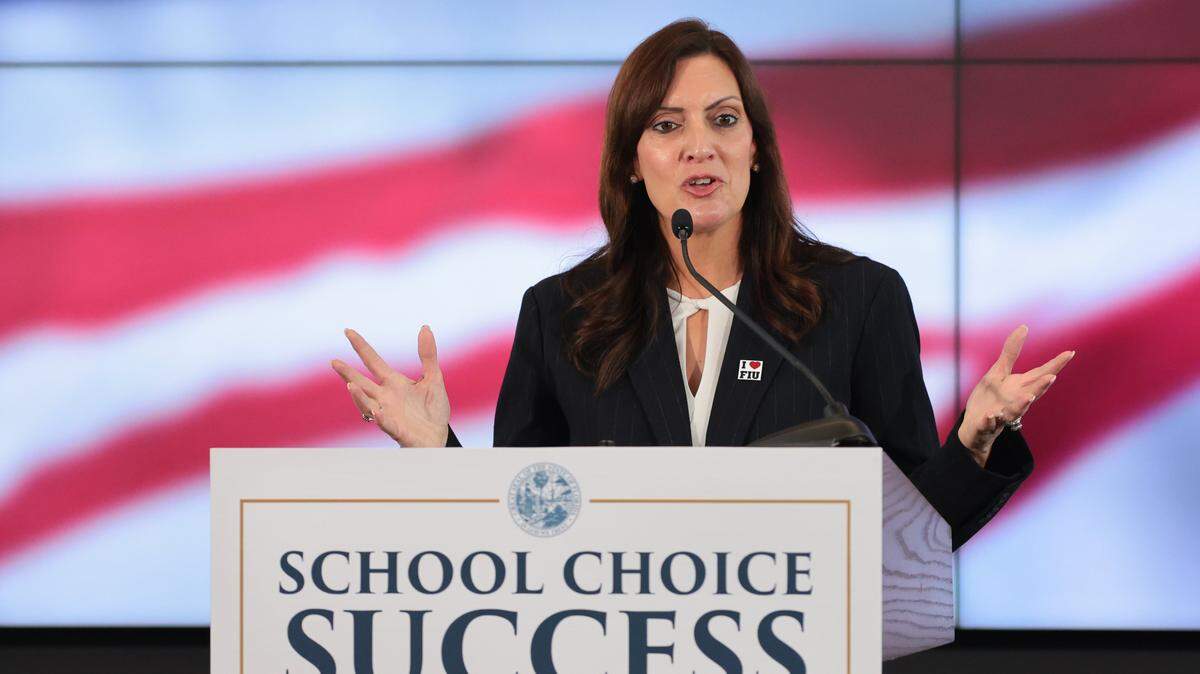
Regarding the Miami Herald Editorial Board’s May 22 editorial, “FIU punished racist chat leaders — now fix the culture that normalized it,” the Herald concludes its editorial by stating that “higher education was meant to challenge students and help them grow — not reinforce prejudice.” The implication is that Florida International University, as an institution, somehow fostered or normalized the antisemitic and racist statements made by former campus Republican leaders Abel Carvajal and Dariel Gonzalez and others involved in a WhatsApp chat.
That conclusion is not supported by the facts.
The comments in the chat were offensive, reprehensible, antisemitic and racist. They deserved condemnation, and they were condemned swiftly and publicly by FIU leadership and by members of the broader university community.
But there is an important distinction between condemning the misconduct of individuals and unfairly assigning that misconduct to an entire institution of more than 55,000 students, thousands of faculty and staff members, and one of the most diverse campus communities in the United States.
FIU is not a small, isolated institution. It is one of America’s largest public universities — a community comparable in size to many American cities. Within any population of that scale, there will unfortunately be individuals who express ignorant, hateful or offensive views. Their existence is not evidence that the institution itself endorses or normalizes those beliefs. To suggest otherwise would mean that no large university in America could ever avoid collective guilt for the actions of a few members of its community.
The lived reality at FIU tells a very different story.
Walk through the Graham Center, attend a student event or spend time in FIU classrooms, and you will encounter students from every background imaginable — multiethnic, multicultural, multilingual and overwhelmingly respectful of one another. FIU has long been recognized nationally as a model of coexistence and opportunity in one of the most diverse regions of the country.
That reality was acknowledged nationally in 2025 following the rise in antisemitic incidents on campuses after the Oct. 7, 2023 terrorist attacks in Israel. In its national Campus Antisemitism Report Card, the Anti-Defamation League awarded FIU an “A” rating — one of only eight universities in the United States to receive that distinction. The ADL recognized FIU as a campus where Jewish students could feel safe, supported and protected.
That recognition matters because it reflects sustained institutional conduct, not isolated incidents.
It is also important to recognize the constitutional framework under which FIU operates. The chat group in question was not an FIU-sponsored forum, was not administered by the university and did not exist under university control. As a public institution and agency of the state of Florida, FIU is bound by the First Amendment. Hate speech, absent direct threats or unlawful conduct, is often constitutionally protected speech no matter how offensive or morally repugnant it may be.
President Jeanette Nuñez nevertheless took decisive action by suspending those students affiliated with FIU. Whether those disciplinary actions ultimately withstand judicial scrutiny remains uncertain and will likely be determined by the courts. Public universities across the country continue to navigate the difficult tension between moral leadership and constitutional limitations.
Reasonable people may debate where those legal boundaries should be drawn. What cannot fairly be argued is that FIU has normalized racism or antisemitism. The university’s record, culture, leadership and national recognition demonstrate precisely the opposite.
FIU should always welcome constructive criticism and continue striving to strengthen its campus community. But criticism should be grounded in fairness and perspective. An institution as large, diverse and dynamic as FIU should not be defined by the reprehensible conduct of a handful of individuals acting outside university channels and contrary to the values the institution has consistently promoted.
Rogelio (Roger) Tovar is the former chair of Florida International University’s Board of Trustees. Marc Sarnoff is a former board vice chair and former Miami city commissioner.