
FIU punished racist chat leaders — now fix the culture that normalized it | Opinion
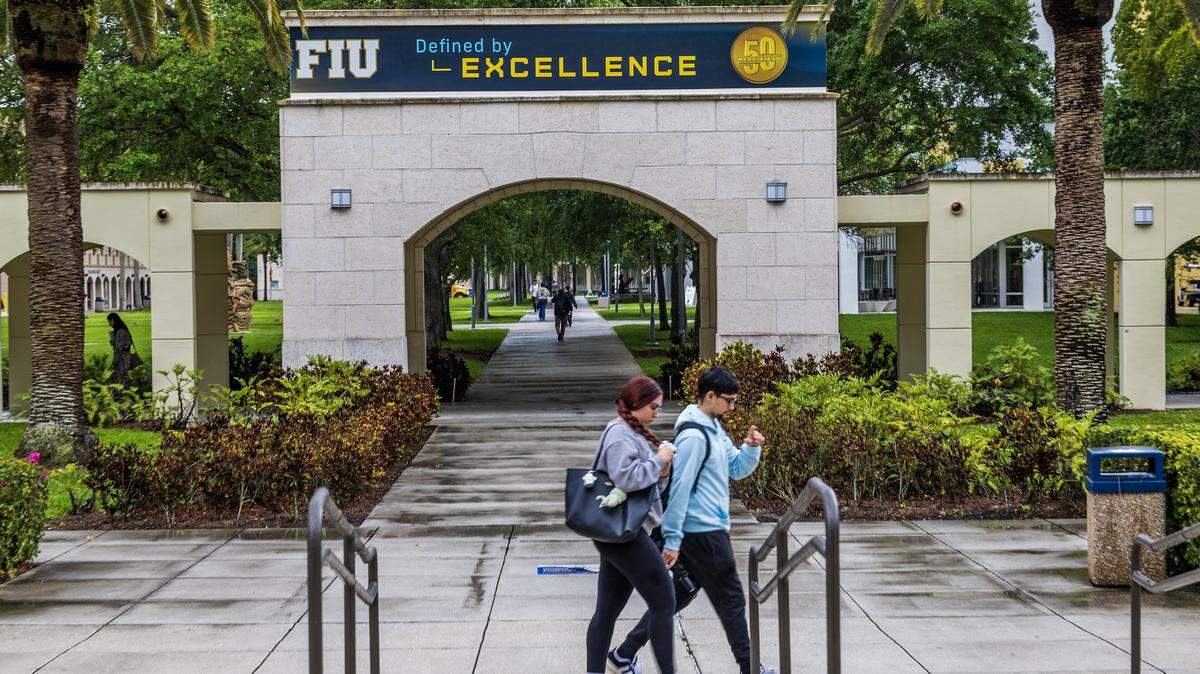
Florida International University suspended two former Republican campus leaders over their involvement in a racist group chat that engulfed South Florida’s largest university in scandal.
Good. So what’s next?
We’re not dismissing the suspension of Abel Carvajal and Dariel Gonzalez as insignificant. FIU President Jeanette Nuñez was under the gun to prove the school was taking this display of bigotry seriously and suspensions are a big punishment, capable of derailing the future careers to these students. Carvajal was a third-year law student and secretary of the Miami-Dade GOP when the chat was leaked to the Miami Herald. Gonzalez was recruitment chair of the FIU College Republicans at the time. They are suspended for two years and are barred from stepping foot on campus, the Herald reported this week. Carvajal has said he’s appealing FIU’s decision.
Carvajal was a third-year law student and secretary of the Miami-Dade GOP when the chat was leaked to the Miami Herald. Gonzalez was recruitment chair of the FIU College Republicans at the time.
Participants in the chats openly used the n-word — more than 400 times — degraded women, calling them “whores,” dehumanized Jewish people, bragged about being authoritarian and exalted Adolph Hitler.
“Ew you had colored professors?!” Gonzalez wrote at one point. “I reguse [sic] to be indoctrinated by the coloreds.”
This reads more like a transcript of a KKK meeting than conversation by students at one of Florida’s largest research universities. Higher education shouldn’t just prepare young people for careers; it’s supposed to enlighten and teach them how to form their own ideas. If those students think it’s acceptable to treat women and Black and Jewish people as inferior, the system has failed.
It’s probably not a coincidence that all of this has happened while Florida has moved to restrict what teachers and professors can say in their lectures about race; when the current political climate has deemed racism in America solved and those still talking about it are the racists; when most Republicans have embraced a leader who sanctions bigotry as “telling it like it is;” when red states are trying to dismantle Black congressional districts.
All of this indicates that racist chats are not an anomaly but more of a symptom of a society — or political party — that tolerates extreme views. Earlier this year, the University of Florida said it was deactivating College Republicans as a registered student group after reports that some members engaged in antisemitism. The group has sued UF. In New York, a Young Republicans chapter was disbanded after a racist group chat was leaked to Politico.
What FIU and other institutions need is more internal review along with some community conversations. Student suspensions alone, as important as they are, can’t be the only action taken. There are also things that are beyond FIU’s control — such as the rise of the “manosphere” online and influencers who package misogyny and hatred as male “self-improvement” or traditional masculinity.
Universities must walk a fine line because some hate speech is protected by the First Amendment. The students have filed a federal lawsuit against Nuñez, accusing her of violating their free speech rights. A judge dismissed the case last week, saying the students did not have the ability to sue since punishment was still pending. Their lawyer told the Herald they plan to refile the complaint.
Regardless of whether the students’ appeal is successful, FIU made the right decision. The university drew a line: racism, antisemitism and misogyny carry consequences. The students involved aren’t outliers or a PR crisis that needs managing, and their views weren’t formed in a vacuum. They grew out of a political culture that has normalized hate.
FIU can only do so much. It can foster dialogue to ensure this doesn’t happen again, but no single institution can fix this. The GOP must continue to do its part to send a clear message that the party won’t allow that ideology to exist within its ranks.
Higher education was meant to challenge students and help them grow as people, not reinforce prejudice. Students should leave college with a better understanding of the world and a sense of responsibility to make their communities better.
BEHIND THE STORY
MOREWhat's an editorial?
Editorials are opinion pieces that reflect the views of the Miami Herald Editorial Board, a group of opinion journalists that operates separately from the Miami Herald newsroom. Miami Herald Editorial Board members are: opinion editor Amy Driscoll and editorial writers Isadora Rangel and Mary Anna Mancuso. Read more by clicking the arrow in the upper right.
What's the difference between an op-ed and a column?
How does the Miami Herald Editorial Board decide what to write about?
The Editorial Board, made up of experienced opinion journalists, primarily addresses local and state issues that affect South Florida residents. Each board member has an area of focus, such as education, COVID or local government policy. Board members meet daily and bring up an array of topics for discussion. Once a topic is fully discussed, board members will further report the issue, interviewing stakeholders and others involved and affected, so that the board can present the most informed opinion possible. We strive to provide our community with thought leadership that advocates for policies and priorities that strengthen our communities. Our editorials promote social justice, fairness in economic, educational and social opportunities and an end to systemic racism and inequality. The Editorial Board is separate from the reporters and editors of the Miami Herald newsroom.
How can I contribute to the Miami Herald Opinion section?
The Editorial Board accepts op-ed submissions of 650-700 words from community members who want to argue a specific viewpoint or idea that is relevant to our area. You can email an op-ed submission to oped@miamiherald.com. We also accept 150-word letters to the editor from readers who want to offer their points of view on current issues. For more information on how to submit a letter, go here.
This story was originally published May 22, 2026 at 9:44 AM.