
AI images of US intervention show desperation has narrowed Cubans’ political vision | Opinion
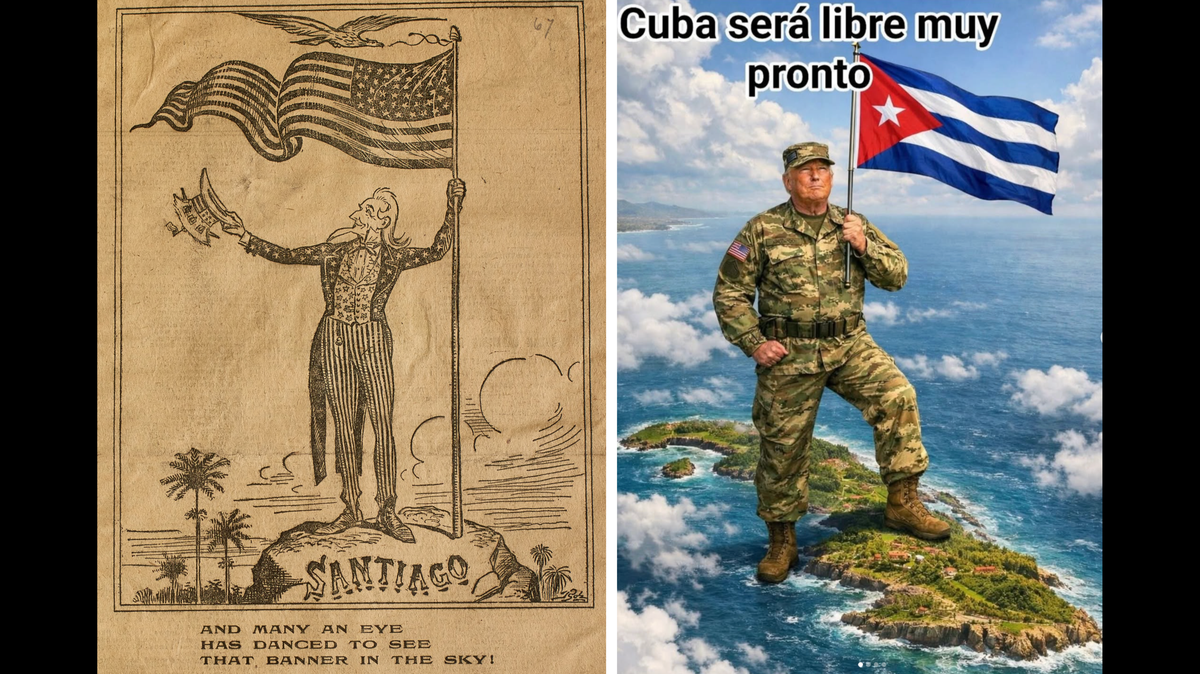
Ever since U.S. commandos removed Nicolás Maduro from power in Venezuela on Jan. 3, speculation has been growing that “Cuba could be next” on the list of the Trump administration’s targets.
The White House has been trying to coerce Cuban authorities to accept negotiated political and economic concessions through a de facto oil blockade since January, with punishing humanitarian effects. But President Donald Trump has reportedly grown frustrated by the Cuban government’s ability to outlast months of sustained U.S. pressure.
That has not stopped many Cubans and Cuban Americans from predicting a military operation’s success or insisting that such a U.S. action is necessary.
Their tool of choice? Not battle plans or political manifestos, but artificial intelligence. For weeks, Cuban social media feeds and WhatsApp groups have been filled with armchair fantasies of deliverance from communist rule, made with tools like Midjourney and DALL-E. In some clips and images, the island nation is represented as a female captive or a child freed by an American protector. In others, magically renovated cityscapes feature statues erected in Trump’s honor.
As a historian of Cuba, I’m troubled by how this visual language mirrors classic U.S. political cartoons made during Cuba’s final war for independence against Spain in the late 19th century.
A fraught history
In the 1890s, American illustrators similarly portrayed Cuba as a feminized victim: weak, often nonwhite and incapable of securing freedom on her own. Such tropes helped legitimize U.S. intervention against Spain in Cuba in 1898. They also paved the way for Washington’s future political interference in island affairs and decades of economic dependence on the United States.
Many Cubans grew to resent this asymmetrical relationship, even as they fell in love with imported American consumer products and culture. Successive Cuban governments’ failure to rebalance the extent of U.S. influence over Cuban life was part of what propelled Fidel Castro’s radical nationalist revolution to power in 1959.
But today, formal and informal polling suggests that many Cubans and Cuban Americans seem willing to welcome, or at least tolerate, the sort of U.S. intervention most of their forefathers rejected.
AI-generated expressions of these views do not appear to be coming only from staunchly anti-communist exiles in South Florida. Comments and reposts suggest they are resonating among Cubans living on the island, many of whom are desperate for “something, anything” to put an end to a daily life mired in worsening blackouts and shortages.
If a U.S. military operation is the only way to escape, one friend in Havana told me, “que sea rápido” – let it be over quickly.
AI is providing this fatalism with a visual vocabulary rooted in imperial attitudes from the 1890s. This makes sense when you consider how the technology works: Generative AI systems have been trained on enormous, often U.S.-centric archives of historical photographs and other materials. As a result, image and video generators appear to be spitting 19th-century American discourses back at 21st-century Cuban users.
Yet even if fantasies of rescue are understandable given the depths of Cuba’s crisis, they should be deeply concerning to anyone who cares about Cuba’s future.
These images offer visions of liberation without requiring Cubans to grapple with the far more difficult dilemmas that any real transition would entail. Those questions include how to rebuild institutions, confront inequality, reconstruct the economy and negotiate competing political visions after decades of polarization and authoritarianism. Cuba hasn’t had a truly competitive election since 1948.
Prolonged desperation has narrowed some Cubans’ political horizons to the point where they outsource their own salvation rather than imagine it from the bottom up.
The coming weeks may determine whether digital fantasies turn into concrete policy or remain wishful thinking. But one thing is certain: AI images of U.S. military intervention in Cuba reveal that many Cubans and Cuban Americans have given up on defining change — and their nation’s future — on Cuban terms.
Michael J. Bustamante is an associate professor of history at the University of Miami. Images for this article were sourced by Jorge Damian de la Paz.
This article is republished from The Conversation under a Creative Commons license.