
Miami’s Art Africa proved Black-led cultural institutions can define the narrative | Opinion
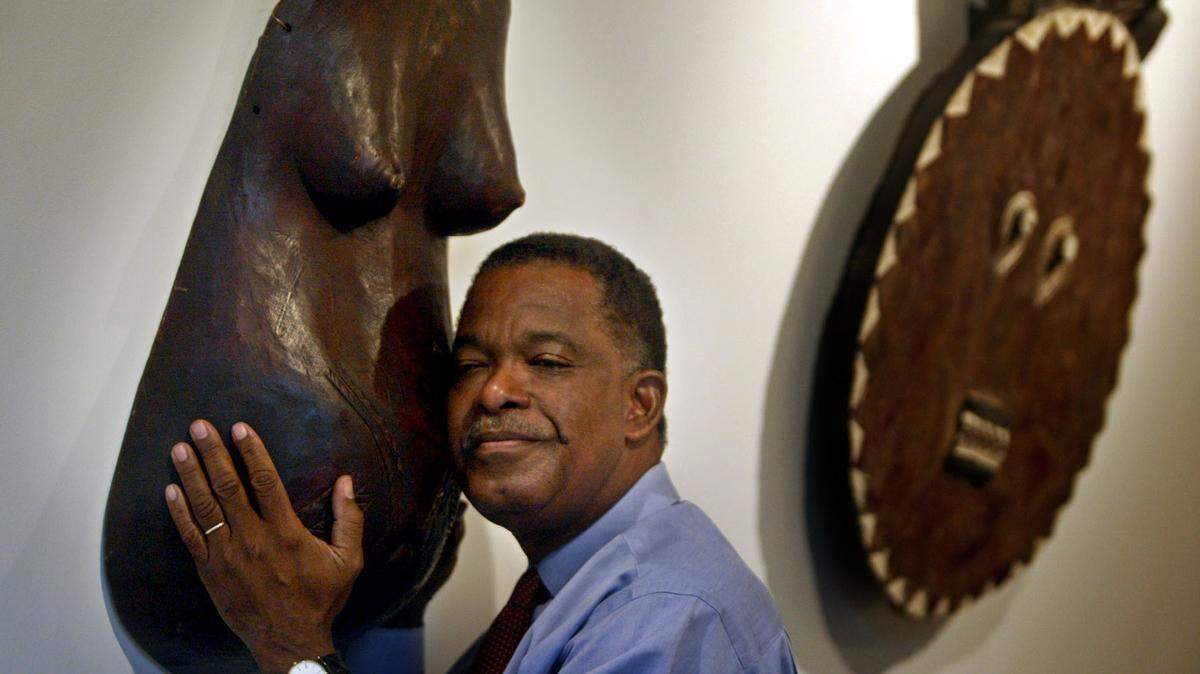
In Raisa Habersham’s recent article in the Miami Herald, “Black curators shift Miami Art Week’s focus to Black neighborhoods,” we are reminded that the movement to center Black spaces during Miami Art Week did not happen by accident. It was built on the work of visionaries like Neil Hall, whose creation of Art Africa became Miami’s first and most enduring Black-led satellite fair during Art Basel.
Long before the art world embraced the language of equity and representation, Art Africa was already shifting the narrative, insisting that Black art, Black histories and Black imagination belong at the forefront of global cultural discourse.
Art Africa was never simply an exhibition; it was an act of cultural sovereignty. At a time when Black creatives were confined to the margins, Hall placed them at the center of Miami’s artistic identity. His vision transformed a block of Overtown into a vibrant cultural district — alive with diasporic expression, contemporary experimentation and the ancestral memory that grounds Black creativity. In doing so, he expanded Art Basel’s geography, vocabulary and conscience.
What made Hall’s work transformative was his understanding that “place” is both political and spiritual. When Art Africa took root in Overtown, it reactivated a historic corridor shaped by generations of Black musicians, churches, craftsmen, entrepreneurs and families whose brilliance defined the neighborhood long before Interstate 95 divided it. Hall restored that lineage to visibility and dignity.
This philosophy deeply influenced Hampton Art Lovers, which I proudly co-founded with Darryl Neverson and Imani Greene. Our mission is grounded in intentional place-making — creating spaces where our history can be taught, preserved and celebrated.
This year, our fair’s theme, “Life and Times of Frederick Douglass,” draws on one of the most important examples of how art, image and narrative shape freedom.
Frederick Douglass understood the power of art. In his famous address “Pictures and Progress,” Douglass argued that images — especially portraits — held the power to transform how Black people were perceived. He became the most photographed person of the 19th century precisely because he used photography as activism: each portrait a declaration of dignity, intellect and full humanity.
Paired with his oratory — he was one of the most widely heard speakers of the century — Douglass used art and image to advance freedom, justice and equality. His life reminds us that controlling our narrative is central to liberation.
Art Africa became a blueprint, proving that Black-led cultural institutions can lead, thrive and define the narrative.
Today, through Hampton Art Lovers, Point Comfort Art Fair and the historic Ward Rooming House, we carry this lineage forward.
Art Africa was — and remains — a beacon. And Neil Hall is the architect who lit that path for us all.
Christopher M. Norwood is a co-founder of Hampton Art Lovers, Point Comfort Art Fair and Show and Historic Ward Rooming House Gallery and Gardens in Miami’s historic Overtown.