
Miami’s Freedom Tower shines again. Other local landmarks aren’t so lucky | Opinion
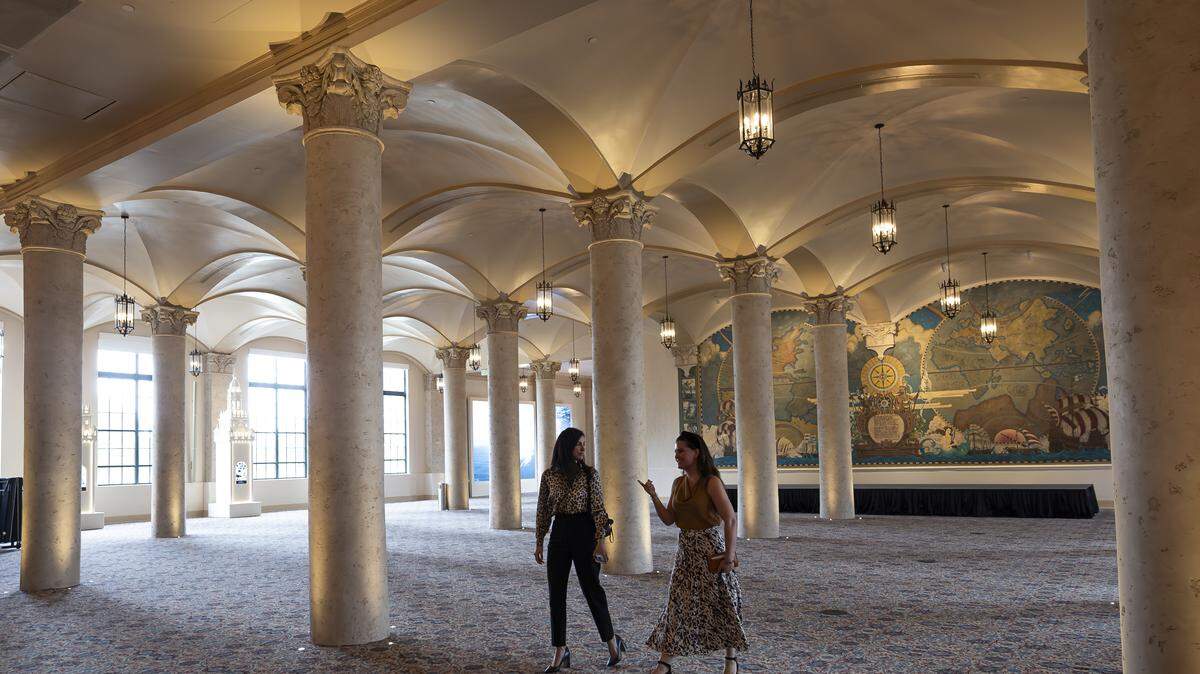
The soft reopening this week of the 100-year-old Miami’s Freedom Tower is a triumph for preservationists and the community.
This Cuban exile landmark, a processing center for the hundreds of thousands of Cubans who fled Fidel Castro’s regime from the 1960s to the 1980s, has been restored for a new chapter as a history museum, thanks to Miami Dade College, which owns the structure originally built in 1925 as the home of the Miami Daily News.
Hundreds of antique items, mainly keepsakes and treasured items brought by some of the Cuban migrants that passed through the doors of what was once called “el refugio,” or the refuge, are displayed in the tower, which fully opens tro the public on Oct. 15.
But while we rightly celebrate the Freedom Tower’s rebirth, we must also ask: Why isn’t this the case for more of Miami’s historic sites?
The Coconut Grove Playhouse, Miami Marine Stadium and Gusman Theater immediately come to mind — all landmarks at various levels of risk amid city and county plans that can be costly and take years or even decades to reach completion. The tower redo took two years and $25 million.
Take Miami Marine Stadium, a modernist waterfront marvel built in 1963 by architect Hilario Candela. It was once the only venue of its kind, a venue on Virgina Key where boaters along with spectators on bleachers could watch concerts from either land or water.
After Hurricane Andrew damaged it in 1992, the marine stadium closed and has since been battered by neglect and vandalism. Efforts to restore it have faltered, with the most recent delay coming this month, when one the former CEO of a company the city of Miami had hoped would redevelop and manage the stadium was indicted amid bid-rigging allegations in a Texas arena deal. Timothy Leiweke, who stepped down as CEO, has pleaded not guilty.
The stadium’s future once again looks bleak. We hope this is a speedbump and not a permanent setback; the marine stadium is a piece of Miami’s history that deserves to be preserved for future generations.
The Coconut Grove Playhouse is another sore point. Opened in the 1920s, it was once a crown jewel of Miami’s theater scene but closed in 2006.
A plan is underway that would preserve a three-story building that includes the historic theater’s well-known facade, while demolishing most of the auditorium and replacing it with a smaller theater, retail and parking. But there have been setbacks. In May, a section of the interior partially collapsed when a load-bearing interior wall was erroneously removed, imperiling the front wall facing Main Highway. Hopefully, after years of delays, the building will be fully restored to its original look and design by the time it reopens in 2027.
Then there’s the Olympia Theater, originally built in 1926 on Flagler Street and eventually given to the city in its old age. On the National Register of Historic Places, it has been largely inactive in recent years.
Now, the city has floated a controversial proposal to hand it over to a charter school, which could fund expensive repairs but could risk losing the theater’s public role as a performing arts space. That would be a serious shame. The Olympia Theater is a key piece of Miami’s cultural identity.
Other endangered places remain on preservationists’ radar, including countless midcentury structures from 1941 to 1981 that have not even been formally evaluated. Work should be done to identify these properties before it’s too late.
We have a model to follow: the Miami Beach Art Deco Historic District shows what success looks like.
This is perhaps the county’s greatest preservation story. The district has protected dozens of buildings, safeguarded the distinctive style that defines South Beach and created a global brand that fuels tourism and civic pride.
Preservation works. It can be an engine of economic vitality and cultural identity.
The reopening of the Freedom Tower proves what’s possible when vision, resources and political will align. But hope is not enough. The Marine Stadium, the Coconut Grove Playhouse, the Gusman Theater and other landmark deserve the same attention.
Miami cannot be a city that saves one icon while letting the rest collapse. We must preserve the full constellation of our past. Let the Freedom Tower’s rebirth be an inspiration.
CORRECTION: An earlier version of this article failed to correctly describe which parts of the Coconut Grove Playhouse are being saved and the damage to the the building while it was undergoing renovations. A section of the interior partially collapsed when a load-bearing interior wall was erroneously removed by workers.
BEHIND THE STORY
MOREWhat's an editorial?
Editorials are opinion pieces that reflect the views of the Miami Herald Editorial Board, a group of opinion journalists that operates separately from the Miami Herald newsroom. Miami Herald Editorial Board members are: opinion editor Amy Driscoll and editorial writers Isadora Rangel and Mary Anna Mancuso. Read more by clicking the arrow in the upper right.
What's the difference between an op-ed and a column?
How does the Miami Herald Editorial Board decide what to write about?
The Editorial Board, made up of experienced opinion journalists, primarily addresses local and state issues that affect South Florida residents. Each board member has an area of focus, such as education, COVID or local government policy. Board members meet daily and bring up an array of topics for discussion. Once a topic is fully discussed, board members will further report the issue, interviewing stakeholders and others involved and affected, so that the board can present the most informed opinion possible. We strive to provide our community with thought leadership that advocates for policies and priorities that strengthen our communities. Our editorials promote social justice, fairness in economic, educational and social opportunities and an end to systemic racism and inequality. The Editorial Board is separate from the reporters and editors of the Miami Herald newsroom.
How can I contribute to the Miami Herald Opinion section?
The Editorial Board accepts op-ed submissions of 650-700 words from community members who want to argue a specific viewpoint or idea that is relevant to our area. You can email an op-ed submission to oped@miamiherald.com. We also accept 150-word letters to the editor from readers who want to offer their points of view on current issues. For more information on how to submit a letter, go here.
This story was originally published September 17, 2025 at 2:00 PM.