
Here’s why Rubio was right to make Central America his first foreign trip | Opinion
President Donald Trump’s foreign policy is unequivocal about making America stronger abroad.
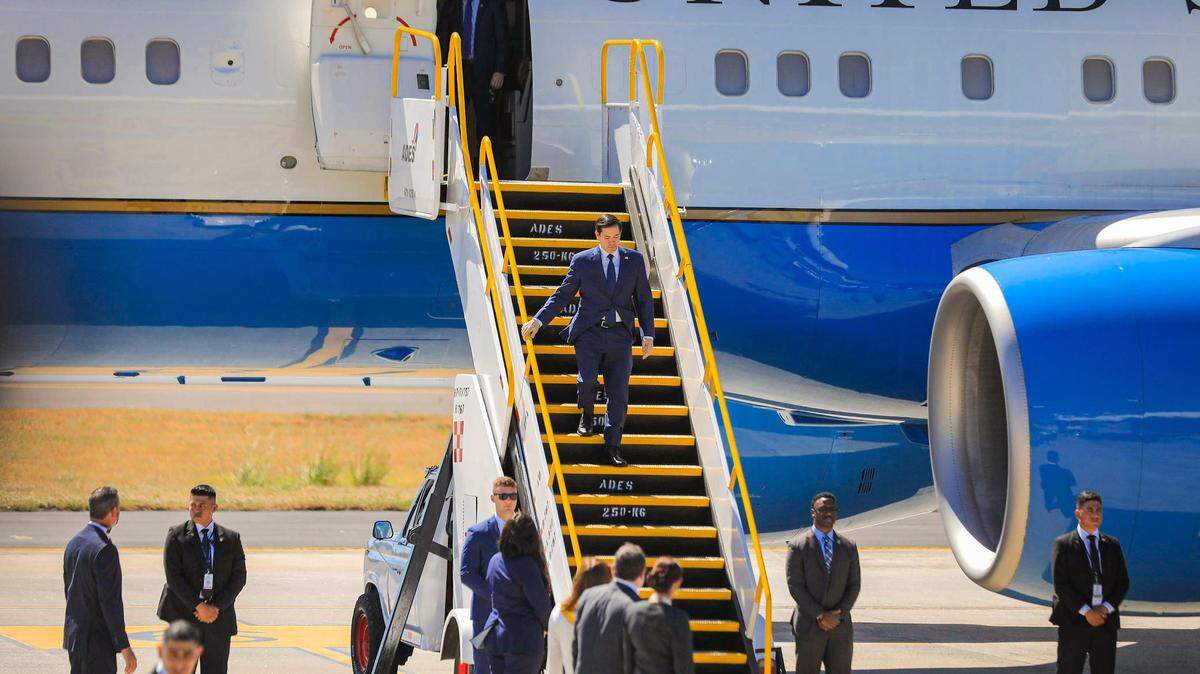
This is why new Secretary of State Marco Rubio made history by traveling to Central America and the Dominican Republic for his first foreign trip — a welcome break from the status quo as these countries have often struggled to compete for Washington’s attention.
Headlines from Rubio’s trip focused on migration agreements and the Panama Canal.
Still, the trip also focused on accelerating U.S. investment and strengthening supply chains, including a major announcement for the U.S. Army Corps of Engineers to help Guatemala expand its port facilities.
This agreement might not have captured mass media coverage, but it followed well the vision laid out by Rubio in advance of his trip: “Relocating our critical supply chains to the Western Hemisphere would clear a path for our neighbors’ economic growth and safeguard Americans’ own economic security.”
In fact, Rubio’s choice to visit these five countries laid clear an emerging playbook of U.S. economic security that is also about America’s economic security. This new vision is incredibly timely — many U.S. partners are keen to deepen their economic ties with the U.S., while grappling with the challenge that Chinese money regularly flows in rather than more trusted U.S. investment.
Both the U.S. and many of its hemispheric partners see the urgent need to capture more U.S. investment, especially in sectors that are vital to the American economy, but where it’s highly improbable to restore that investment outright due to production costs, labor force gaps, or other factors.
Importantly, in addition to Panama, which has its own bilateral trade agreement with the U.S., the Central America-Dominican Republic Free Trade Agreement (CAFTA-DR) countries visited by Rubio are politically stable U.S. allies. Their leaders recognize the importance of a prosperous and safe hemisphere for all, as evidenced by the briefcase full of agreements with which Rubio returned home.
Moreover, while Chinese influence looms large across Latin America and the Caribbean, Central America and the Dominican Republic remain squarely bound to the U.S. for trade.
In fact, the U.S. isn’t just the main trading partner for CAFTA-DR nations and Panama—it consistently runs a trade surplus with all of them. In other words, Central American and Dominican consumers buy more U.S. goods and services than they export, boosting U.S. manufacturing and exports. And if trade balances will shape future U.S. trade policy, the existing surplus proves that U.S. companies can relocate supply chains here without eroding them.
The U.S. doesn’t need to start from scratch to advance its interests and build an economic security strategy with these partners. It can strategically leverage existing agreements and institutions.
Outcompeting China in the region means building off initiatives from the first Trump administration. Improving free trade agreements (FTAs) like CAFTA-DR and the Panama-U.S. Trade Promotion Agreement could counter Chinese influence in the region through U.S. commerce and investment.
The U.S. Trade Representative should assess the effectiveness and limitations of current FTAs and analyze what effects the incorporation of forced labor import prohibitions or Chinese transshipment restrictions could have on limiting Chinese regional influence.
To counter China’s influence in critical infrastructure, including ports, technology, and telecommunications, the Trump administration should direct Congress to update the tools that the U.S. often uses to counter China.
For example, finalizing a loosening of lending constraints on the U.S. International Development Finance Corporation (DFC) would enable more strategic investments in the region. Currently, the BUILD Act’s income-based restrictions prevent DFC from investing in high-income countries like Panama.
Rubio’s trip reaffirmed the strategic importance of many Central American countries and the Dominican Republic. These nations offer political stability, existing trade agreements and a track record of economic cooperation, making them ideal partners in securing U.S. investments and boosting exports.
To forge American economic security, all the Trump administration has to do is look next door.
Jason Marczak is Atlantic Council vice-president and senior director of the Adrienne Arsht Latin America Center and Martin Cassinelli is an assistant director at the Adrienne Arsht Latin America Center.
This story was originally published February 27, 2025 at 7:13 PM.