Rubio’s trip to Latin America is great news. But will he carry the right message? | Opinion
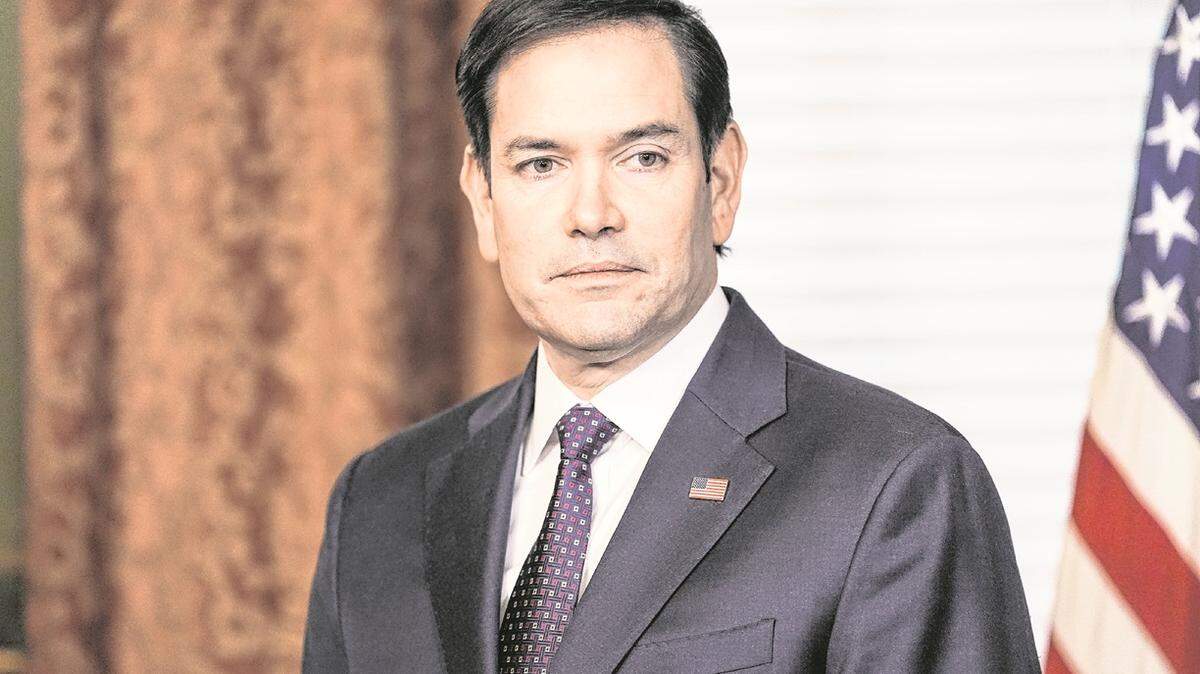
Secretary of State Marco Rubio’s inaugural trip to five Latin American countries is great news, considering that the region has long been overlooked by U.S. administrations. The last U.S. secretary of state who made a comparable tour of the region at the start of his tenure was Philander C. Knox in 1912.
Rubio, a Cuban-American former senator from Florida who speaks Spanish and knows the region well, is scheduled to visit Panama, Guatemala, El Salvador, Costa Rica and the Dominican Republic starting late next week.
The trip is designed to carry out President Trump’s first foreign policy priority — to curb mass migration and secure the U.S. border. On his first stop in Panama, Rubio may also discuss Trump’s vow to try to “retake the Panama Canal,” which has been managed by Panama under the 1977 U.S.-Panama treaties since 1999.
But reading Rubio’s official document titled “Priorities and mission of the second Trump administration’s State Department,” published Jan. 22 on the State Department’s website, I wonder whether he shouldn’t be spreading a broader message abroad.
I wish that, in addition to focusing on border and security problems, he had mentioned things such as advancing the cause of democracy in countries such as Venezuela, Cuba and Nicaragua. And I wish he had included offers to explore new trade and investment opportunities in Latin American democracies, among other things, to help reduce poverty and migration.
But there’s no explicit mention of anything like that in Rubio’s mission statement. Nada.
The document says the State Department’s first priorities will be curbing mass migration, conducting a pragmatic foreign policy, and other things such as “do away with climate policies that weaken America.”
Referring to its first priority, it says, “Our diplomatic relations with other countries, particularly in the Western Hemisphere, will prioritize securing America’s borders, stopping illegal and destabilizing migration, and repatriation of illegal immigrants.”
But notably absent from Rubio’s 451-word mission statement are the words “democracy,” “human rights,” “fundamental freedoms” and “economic prosperity.” The document reads like an entirely negative agenda, which could end up being counter-productive.
These omissions are not only morally wrong, but also are not conducive to the Trump administration’s own goals of reducing migration. It’s going to be hard for Trump to slow down the flow of Venezuelans, Cubans and Nicaraguans — who make up a sizable chunk of undocumented migrants to the U.S. border — if their countries continue to be ruled by brutal dictators.
To be sure, Rubio has shown throughout his career that he cares about the lack of freedoms in Venezuela, Cuba and Nicaragua, and he will probably talk about these dictatorships during his Central American trip. But I wonder whether Trump and his newly-appointed special envoy to Venezuela, Richard Grenell, care as much about democracy.
Trump, for instance, did not meet nor pose for a picture with Edmundo Gonzalez Urrutia, the opposition leader who the United States and several other democracies recognize as the winner of Venezuela’s 2024 elections. Gonzalez Urrutia has visited Washington twice since Trump’s election.
While Trump has said he is considering stopping oil purchases from Venezuela, his special envoy, Grenell, wrote in his X social media account Jan. 20 that he has already started talks with senior Maduro regime officials.
Many Venezuelan opposition activists fear that, now that curbing immigration and deporting migrants is officially Trump’s No. 1 foreign policy, the administration may be exploring an oil-for-deportees deal with Maduro. Under such a potential deal, Venezuela would take thousands of deportees from the United States in exchange for Trump not revoking current U.S. firms’ oil licenses in Venezuela.
Rubio would most likely oppose such a deal. But it remains unclear how much power he will have within Trump’s inner circle. Trump has appointed several ultra-loyalist friends, such as Grenell, as special envoys and ambassadors. They may have as much influence as Rubio in the new administration.
The other major omission in Rubio’s document on the new administration’s foreign policy priorities — exploring new economic opportunities for everybody’s gain — is just as significant.
Trump has an excellent opportunity to curb immigration and help contain China’s growing influence in the region by promoting “nearshoring.” That’s the term economists use to refer to the relocation of U.S. factories in China to Latin American democratic countries that are closer to the U.S. market, and offer similar or lower labor costs than China.
Rubio should have mentioned the words “democracy” and “economic prosperity” in his State Department’s mission statement. Let’s hope that, in addition to migration and drugs, he also carries a positive agenda to Central America on his upcoming trip, because a rising tide lifts all boats.
Don’t miss the “Oppenheimer Presenta” TV show on Sundays at 9 pm E.T. on CNN en Español. Blog: andresoppenheimer.com
This story was originally published January 24, 2025 at 3:05 PM.