
If agroecology embraces the community, the community will return that embrace | Opinion
READ MORE
The agroecological movement
Agroecological farmers aim to work hand in hand with nature, reducing dependence on external materials, like purchased seeds, and shunning synthetic chemicals used in
conventional farming.
Expand All
Planting seeds in the Earth can teach our children to grow, blossom — and heal | Opinion
‘A national call for food production:’ Sustainable farming seeks revolution in Puerto Rico
If agroecology embraces the community, the community will return that embrace | Opinion
How to start a sustainable farm project in your community
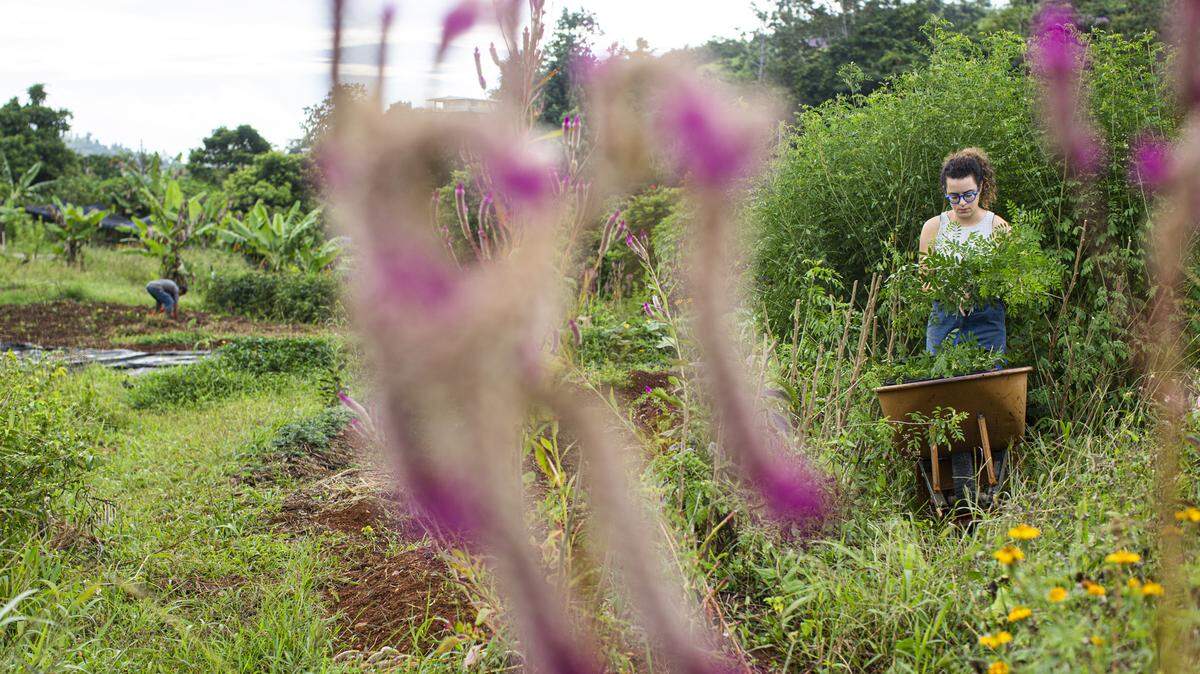
The first time we heard the word “agroecology” was around 2014. The members of our agroecologic collective Güakiá, based in Dorado, Puerto Rico, were looking for something that made sense and contributed to society and our communities, and reflected our political beliefs. After taking the course for agroecologic promoters and producers at El Josco Bravo, we understood that agroecology was the answer we were looking for.
First, let’s define agroecology. According to the U.N.’s Food and Agriculture Organization (FAO), agroecology is a scientific discipline as well as a set of practices and a social movement.
▪ As a science, it studies how the different components of the agroecosystem interact.
▪ As a set of practices, it seeks sustainable agricultural systems that optimize and stabilize production.
▪ As a social movement, it promotes social justice, nourishes identity and culture, and reinforces the economic viability of rural areas.
The more we learned about agroecology, the more we knew that we did not want to do it alone. In 2015, we met to talk about our individual dreams and how they could be transformed into one collective dream. That’s how our journey began.
We sought access to land and, in 2017, signed our first lease and cooperation agreement with the owners of the 10.7-acre plot that we work today in the Higuillar de Dorado neighborhood.
One of the first things we did was explore the neighborhood. We walked around the San Carlos community, handing out fliers with the name of the project, our location and our contacts. Then we focused on creating the proper conditions for planting. That’s when hurricanes Irma and Maria hit, one disaster after another. The hurricanes forced us to pause work on the farm, so we focused on San Carlos.
Normally, when we talk about the Dorado municipality, we think about the people who live in the most expensive homes ever sold in Puerto Rican history. But that’s not true for the majority of communities there, including San Carlos. Weekly hot meals for the community were a first step in our becoming one with the community. We needed to understand residents’ needs and how to meet them. We needed to understand that the community and the farm were united in many ways, that its problems were also our problems.
This process returned power to the people within the crisis, because they knew how to recognize, achieve and continue. The farm was able to support their process and create new spaces to gather, talk and share. In August 2018, almost one year after the hurricanes, we held our first summer festival on the farm, which featured live music, markets, sessions on personal defense, circus performances, food, bingo and a domino tournament. Families jammed the farm. Neighboring communities have learned that the farm is a safe space open to all.
We repeated the event in 2019, with more than 300 people attending. This year, we reopened the farm for students doing volunteer work and held a children’s session on the importance of water as a resource. The natural disasters in recent years have been powerful, but they also have shown the resilience of the communities and the agroecologic farms.
Agroecology does not happen in isolation from the community. In fact, the community gives meaning to agroecology. The people who consume it are the same as the people who produce it.
These are complicated times, with many social vulnerabilities, the constant threat of climate change, the economy and access to healthcare and food. It becomes more urgent to accept agroecology as a project for sustainability and community development. Community sustainability is possible and can only be achieved from the bottom up. It’s important that national policies capture the urgency of creating access to the land by people who want to work it with agroecological practices. That’s how sustainability is achieved.
Today, San Carlos residents are not the only ones who know the Güakiá farm is open to them. It is reaching other communities that are expanding their field of vision and understanding of the urgency of projects like these. Güakiá is not alone in this undertaking. There are other farms doing a monumental job, allowing access to healthy food cultivated collectively. We hope the number of those farms continues to grow and work toward a level of food security that leads to food independence. We know how to adapt, listen and work as a community — for the community.
Marissa Reyes-Díaz is a member of Güakiá, an agroecological collective in Dorado, Puerto Rico, whose other members are Stephanie Monserrate, Marissa Reyes, Jan Poul Lebrón and Francisco Díaz. “Guakiá” comes from the native Taíno language and means “ours.”
This story was originally published October 3, 2021 at 6:00 AM.