
Surfside collapse shows solid construction and climate resiliency are interdependent | Opinion
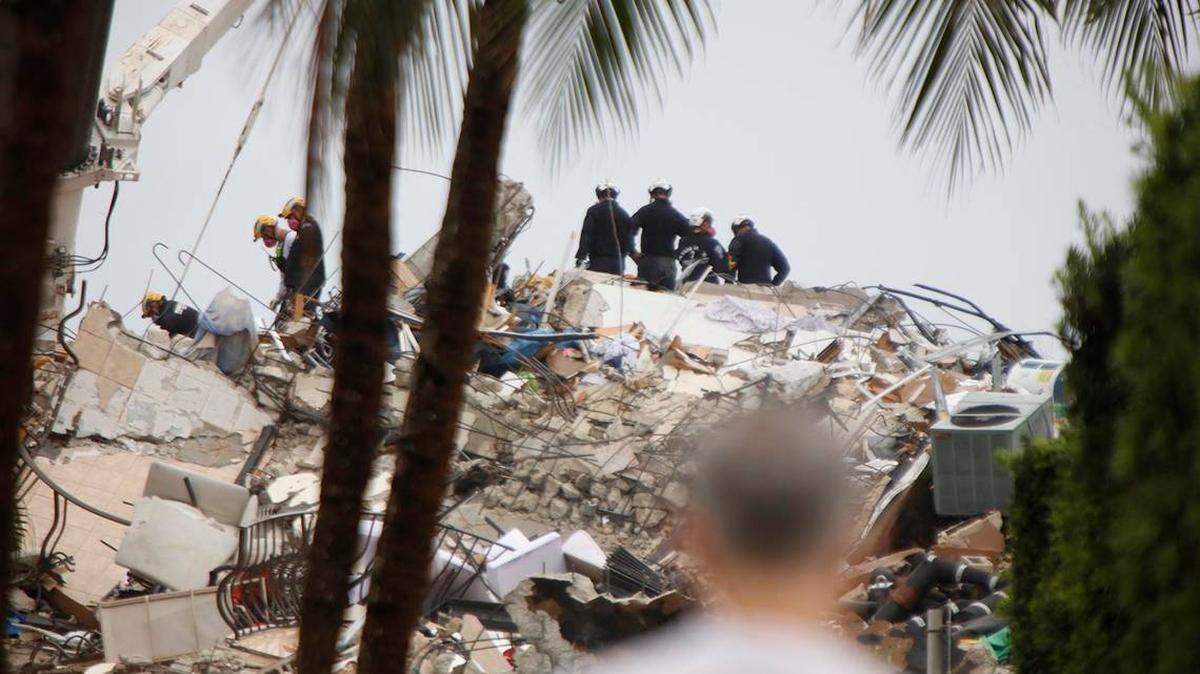
The tragic Surfside condo collapse is a stark reminder of the fragility of our seaside communities and the urgent need for a stronger and safer built environment. My hometown of Miami Beach is among the world’s most climate-vulnerable places. Our community must confront this reality by investing in resilience — our ability to withstand physical hazard events, maintain functionality and adapt to growing risks.
Many of Miami’s buildings were constructed between the 1960s and 1980s, when building standards and practices were lax. Faced with prolonged exposure to wind, water and saltwater encroachment, building management frequently has overlooked the critical maintenance needed to counter structural corrosion. Furthermore, the absence of a sustained municipal focus has exacerbated the situation.
Regrettably, we often only think about disaster preparedness after disaster strikes.
In the 1970s, a different building collapse prompted Miami-Dade to adopt the 40-year recertification requirements that we have today. However, these continue to face widespread noncompliance and poor enforcement. A recent review by Miami Beach revealed that 507 buildings from this period are undergoing recertification, and 22% are overdue. In 1992, the aftermath of Hurricane Andrew caused South Florida to adopt wind-resilience standards. Now, in response to the Surfside tragedy, Miami-Dade County is considering mandatory 20-year recertifications with added waterproofing criteria.
In both human and economic terms, it pays to be less reactive and more proactive.
MIT research reveals that, in disaster-prone areas, resilient construction pays for itself within a couple of years. Over the course of a building’s lifespan, repair costs associated with natural hazards often exceed the cost of initial construction. Projects that invest in small resilience upgrades up front are cost-effective for everyone.
This is especially true in Miami Beach, where a direct hit from a Category 4+ hurricane is considered very likely by 2040. To mitigate the potentially devastating impact of such an event, buildings would benefit from a combination of resilient investment and enhanced municipal standards, inspections and enforcement:
- Permitting criteria should be updated for buildings to withstand Cat 4 flooding.
- New construction should stand more than 6 feet above base flood elevation.
- Building designs should incorporate wet floodproofing, a design technique that allows water to flow through a structure to minimize contact with walls and inner contents.
- Columns and slabs should contain enough concrete to protect rebar reinforcements and prevent water infiltration.
- Concrete mixes should include a higher pozzolan content to reduce corrosion in columns and slabs that support buildings. Pozzolan is a fine-grained cementitious component that reduces permeability (the ability of water to penetrate concrete) and adds strength.
- Critical road arteries and feeders should be resilient to Cat 4 hurricanes, enabling post-disaster relief and recovery. Currently, many are not.
- All structures four stories and higher built before 1995 should be inspected now, and include 2-year correction requirements. If they are particularly at risk, it would be prudent to require subsequent 5-year intervals for checkups.
- Older buildings should invest in dry floodproofing, a design technique that strengthens structural components and protects essential utilities.
- To improve transparency, there should be a public database of buildings undergoing recertification. Renters and potential buyers deserve to understand any risks that lurk in their homes.
To better adapt to natural hazards, we must think more broadly — reintegrate the natural habitat to both protect and improve our quality of life.
Miami Beach should:
- Rethink land use — create parks with artificial lakes to improve stormwater drainage and manage urban pollutants.
- Consider innovative projects to address storm surges — build sediment berms and plant mangroves in Biscayne Bay along the low-lying west side of the island.
- Repurpose low-lying properties that abut Biscayne Bay – offer equitable floodplain buyouts to replace vulnerable structures with promenades and small beaches that double as flood barriers.
Let’s embrace our future of living with water and give it some Miami Beach flair. Imagine jumping on a high-speed elevated train instead of sitting in traffic on congested and often-flooded roads. Suppose there were canals in place of low-lying streets. We could walk, bike, boat or even paddle board along our canals to get to restaurants, shops and music venues. Now is the time to safeguard and evolve our slice of paradise.
Will we rise to the occasion?
Robert Henry Fetell is currently pursuing his Masters of Applied Geosciences at the University of Pennsylvania. He is the founder and chair of the Resilience Youth Network, and serves on the board of the Miami Beach Next Generation Council.
A previous version of this op-ed incorrectly used the word “articulated” to describe rebar in a description of how columns and slabs should be contructed.
This story was originally published August 18, 2021 at 4:10 PM.