
Venezuela’s democracy is on hold as Washington keeps its grip on Caracas | Opinion
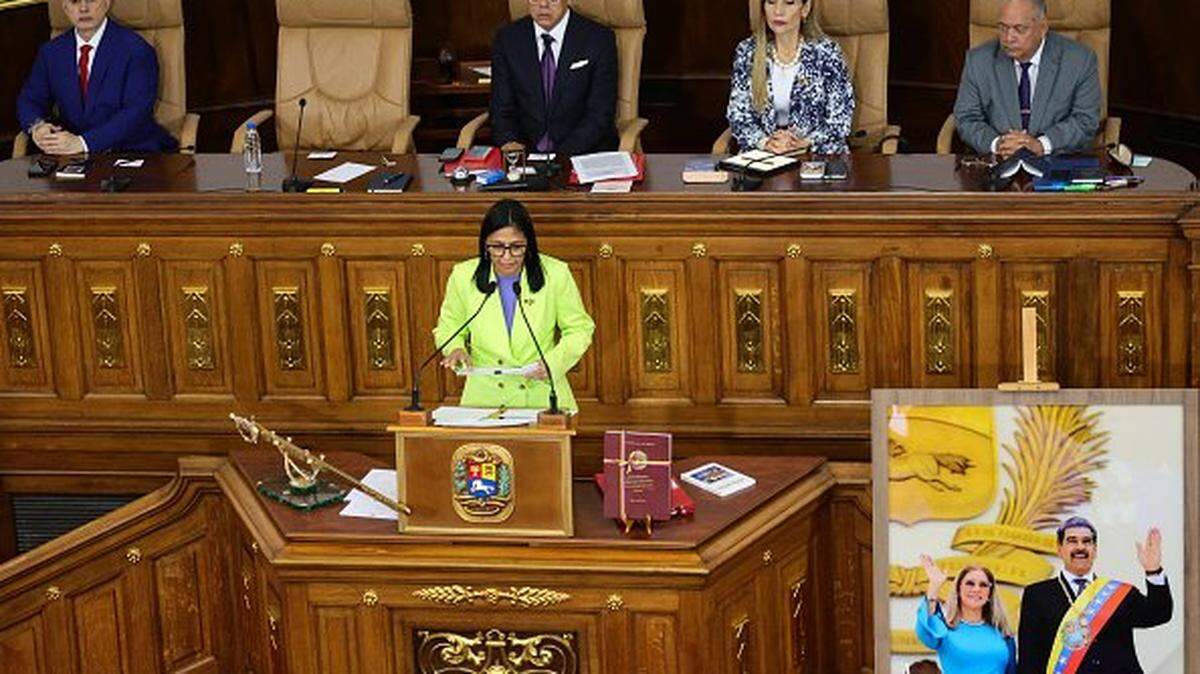
Venezuelans eager to see democracy return to their country will have to wait longer than they probably anticipated.
How much longer? It’s unclear. And who gets to decide when elections will be held? Increasingly, it looks as though the U.S. is calling the shots on even the most routine aspects of running the South American country.
For now, the Chavista status quo remains: Nicolás Maduro’s second-in-command, Delcy Rodriguez, is still the interim president six months after Maduro’s capture by the U.S. in January. Over the weekend, the interim government signaled that eagerly anticipated elections will take a back seat to recovery efforts after twin earthquakes struck the nation last month, killing almost 4,500 people. The Herald reported that the National Assembly president said his government is focused entirely on responding to the humanitarian crisis and is not interested in shifting attention to electoral matters.
No surprises here: It’s clearly both impractical and inappropriate to call elections when almost 20,000 Venezuelans are living on temporary camps and tens of thousands are still missing. Even if election planning had been in full swing before the earthquakes — which it wasn’t — we have no doubt the regime would take this opportunity to stay in power longer.
We wouldn’t expect anything different from Maduro’s allies. But what can we expect from the Trump administration, which is helping run Venezuela? We worry about whether the U.S. is legitimately interested in a swift democratic transition or just in extracting as much benefit from the oil-rich country as it can while allowing elections to be postponed with Washington continuing to call the shots.
An extensive report by the New York Times over the weekend described Secretary of State Marco Rubio as “the de-facto viceroy of Venezuela” who is “running Venezuela from afar.” The title of viceroy hails from colonial times and was given to the powerful governors who ruled provinces of the Spanish empire on behalf of the crown. That’s an ironic moniker for the Miami native and son of Cuban immigrants who spent most of his career in the U.S. Senate promoting democracy in Latin America.
Rubio effectively controls Venezuela’s finances, its natural resource decisions and government, the Times reported, based on interviews with more than a dozen officials and people close to both governments. The U.S. Treasury receives revenue from Venezuelan exports and distributes it through Venezuela’s banking system. Rubio sets the conditions on how that money can be spent, the Times reported.
Rubio weighs in on key decisions by the interim government run by Rodriguez, with whom he keeps close contact and exchanges messages on WhatsApp. According to the Times, Rodriguez even consulted with him before posting a note on social media in March thanking President Trump for saying she was “doing a great job” in a post of his own.
It’s been two years since Maduro claimed he won a presidential election he clearly lost. Venezuelans didn’t elect Maduro and they certainly didn’t elect Rodriguez.
Since the U.S. captured and indicted Maduro, the U.S. has promoted a three-phase transition centered on stabilization, reconstruction and, ultimately, democratic elections. However, there is no clear timeline for when that final phase might happen. Rubio has acknowledged that the earthquakes were a “setback” on his stated mission to return democracy to Venezuela.
Just days after Maduro’s capture, Trump told The New York Times that he expected the U.S. to run Venezuela for years. Americans and Venezuelans who celebrated Maduro’s downfall must now question whether the role of the U.S. should be to run other countries.
The U.S. alliance with Rodriguez may have been a necessary evil to keep Venezuela from descending into chaos, but Venezuelans have made it clear they want a definitive end to Chavismo — not Chavismo dressed up in American colors. The best way to accomplish that goal is through fair elections.
The earthquakes have certainly made the logistics of holding elections much harder but didn’t make it less of a priority.
BEHIND THE STORY
MOREWhat's an editorial?
Editorials are opinion pieces that reflect the views of the Miami Herald Editorial Board, a group of opinion journalists that operates separately from the Miami Herald newsroom. Miami Herald Editorial Board members are: opinion editor Amy Driscoll and editorial writers Isadora Rangel and Mary Anna Mancuso. Read more by clicking the arrow in the upper right.
What's the difference between an op-ed and a column?
How does the Miami Herald Editorial Board decide what to write about?
The Editorial Board, made up of experienced opinion journalists, primarily addresses local and state issues that affect South Florida residents. Each board member has an area of focus, such as education, COVID or local government policy. Board members meet daily and bring up an array of topics for discussion. Once a topic is fully discussed, board members will further report the issue, interviewing stakeholders and others involved and affected, so that the board can present the most informed opinion possible. We strive to provide our community with thought leadership that advocates for policies and priorities that strengthen our communities. Our editorials promote social justice, fairness in economic, educational and social opportunities and an end to systemic racism and inequality. The Editorial Board is separate from the reporters and editors of the Miami Herald newsroom.
How can I contribute to the Miami Herald Opinion section?
The Editorial Board accepts op-ed submissions of 650-700 words from community members who want to argue a specific viewpoint or idea that is relevant to our area. You can email an op-ed submission to oped@miamiherald.com. We also accept 150-word letters to the editor from readers who want to offer their points of view on current issues. For more information on how to submit a letter, go here.