Rodriguez puts elections on hold as Venezuela’s quake reconstruction takes priority
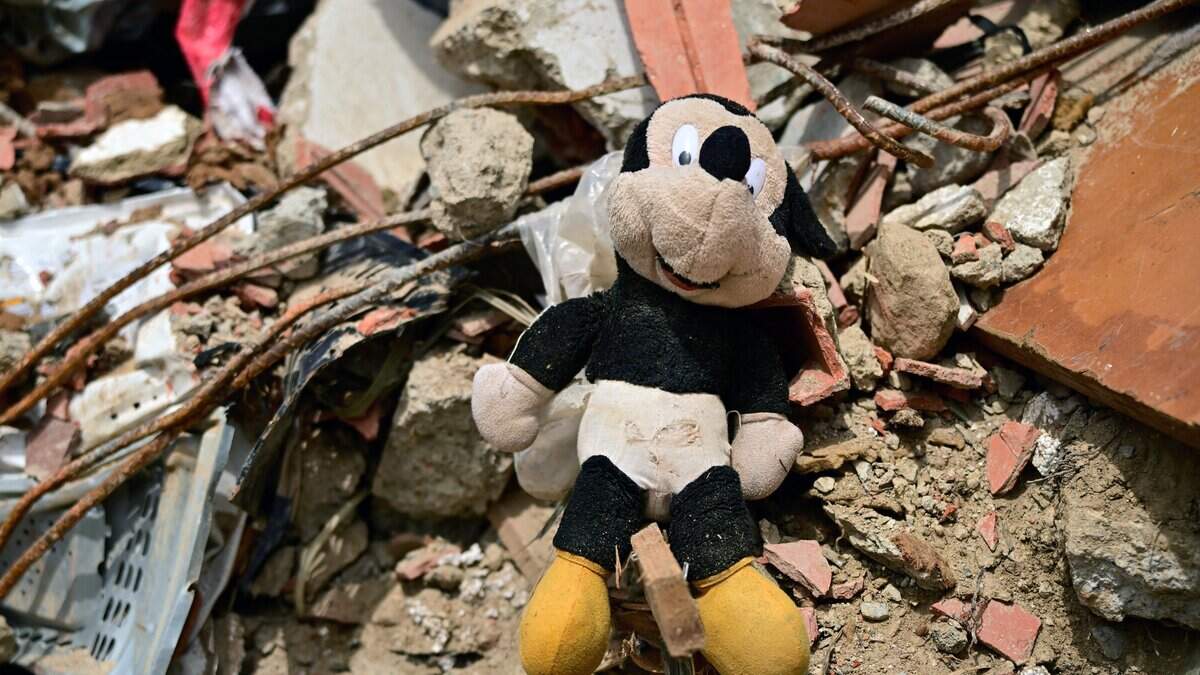
Venezuela’s interim government signaled over the weekend that democratic elections have taken a back seat to the country’s massive reconstruction effort, dismissing questions about electoral preparations as inappropriate while officials struggle to respond to the devastating earthquakes that have now claimed 4,490 lives.
Speaking on Saturday at a news conference, National Assembly President Jorge Rodríguez said his government is focused entirely on responding to the humanitarian crisis unleashed by the June 24 earthquakes and has no interest in shifting its attention to political appointments or electoral matters while thousands of families remain displaced.
“We are not in a position to stop the processes that are moving forward,” Rodríguez said. “What we don’t have is our heads in worrying about the Supreme Court right now. Right now we’re worried about people who have suffered the unimaginable.
“It is disrespectful, it is rude, to be meeting as politicians deciding who goes to the National Electoral Council or who goes to the Supreme Court,” he added. “There will be time for that.”
The remarks provide the clearest indication yet that the interim government intends to prioritize reconstruction over political reforms, reinforcing growing expectations that Venezuela’s transition to democratic elections may take considerably longer than many opposition supporters had hoped following the January capture of former strongman Nicolás Maduro in a U.S. military operation.
For many Venezuelans eager for a swift return to the ballot box, Rodríguez’s comments are likely to deepen concerns that postponing elections has become an increasingly accepted component of the Trump administration’s broader strategy for Venezuela. Since Maduro’s removal, Washington has promoted a three-phase transition centered on stabilization, reconstruction and, ultimately, democratic elections, but neither the White House nor the interim government has provided a timetable for when that final phase might begin.
The uncertainty has become one of the most politically sensitive issues facing the country.
Although interim President Delcy Rodríguez has won praise abroad for cooperating with Washington, coordinating international humanitarian assistance and opening strategic sectors of the economy to foreign investment, many Venezuelans continue to view her administration as a temporary extension of the former Chavista establishment because it remains led by senior officials who served under Maduro, including Rodríguez herself and Interior Minister Diosdado Cabello.
Cabello remains under U.S. indictment on narcotics-related charges, and Washington continues to offer a $25 million reward for information leading to his arrest, alleging he is a senior leader of the Cartel de los Soles.
Opposition leaders have argued that rebuilding the country should proceed alongside preparations for internationally monitored elections, maintaining that only a democratically elected government can provide the legitimacy needed to lead Venezuela’s long-term recovery.
Rather than discussing electoral issues, Rodríguez said lawmakers should devote their attention to legislation needed to confront the humanitarian emergency.
“If you want to meet with me to talk about how to help, to reform the rental law, to create a national emergency law, to buy homes or help us find land to build housing, then welcome,” he said. “But if you know how to count, don’t count on me for those kinds of political meetings.”
His comments came as the interim government unveiled one of its most detailed reconstruction plans since the disaster struck.
Rodríguez said the interim president will begin delivering the first 200 newly assigned homes to displaced families next week and pledged that all 90 temporary shelters currently operating inside schools will be closed before classes resume in September.
Families whose homes were destroyed will either return to repaired residences, move into homes purchased or rented by the government, or be relocated to temporary single-family housing while permanent replacement homes are built, he said.
“We cannot allow children to remain without schools because classrooms are serving as shelters,” Rodríguez said, adding that no family would be forced to leave without being offered alternative accommodations.
The government is also seeking to accelerate construction by working with private companies regardless of their political affiliations.
“We are meeting with every builder in the country capable of moving quickly,” Rodríguez said. “We’re not asking anyone for a party membership card.”
He said several companies owned by businessmen identified with the political opposition are participating in reconstruction discussions alongside firms that traditionally worked with previous governments.
The housing effort represents only one part of what officials describe as one of the largest reconstruction programs in Venezuela’s modern history.
According to the latest official figures, 17,907 people remain without permanent housing and 19,583 displaced residents are living in 108 temporary camps established after the twin 7.2- and 7.5-magnitude earthquakes, which struck north-central Venezuela just 39 seconds apart.
Authorities also continue confronting the enormous logistical challenge posed by an estimated 1.28 million tons of debris left by collapsed buildings throughout the disaster zone.
Rodríguez rejected social media reports alleging that rubble was being dumped into the Caribbean Sea, insisting the government intends to recycle much of the material.
He said officials are studying technologies capable of separating concrete, steel and other construction materials so they can be reused in rebuilding projects.
Among the proposals under evaluation is using recycled material in future infrastructure projects, including a planned expansion of the runway at Simón Bolívar International Airport near Caracas.
The press conference also highlighted the continuing uncertainty surrounding people whose whereabouts remain unknown after the disaster.
After journalists asked about reports that at least six bodies recovered from collapsed buildings had disappeared after being turned over to forensic authorities, Rodríguez said he had not previously been informed of the allegations but ordered an immediate review.
He explained that all recovered victims must undergo expedited forensic examinations before being released to relatives and promised that authorities would investigate the reported cases and make the results public.
Rodríguez also said officials continue comparing hospital admissions, morgue records and reports submitted by relatives in an effort to identify people who remain unaccounted for.
Currently, families are encouraged to report missing relatives through the government’s Patria digital platform, although Rodríguez acknowledged officials are evaluating additional reporting mechanisms as recovery efforts continue.
The government’s latest update illustrates both the scale of the disaster and the gradual transition away from emergency rescue operations.
Authorities reported 4,490 deaths, 16,740 injuries and 6,462 rescues since the earthquakes struck on June 24. Officials said 120,794 families have received government assistance, nearly 10,000 metric tons of food have been distributed and more than 18.5 million liters of drinking water have been delivered to affected communities.
Health authorities have also treated 32,401 patients, while emergency officials reported 1,222 aftershocks since the main earthquakes.
The international emergency response is also beginning to contract as hopes of finding additional survivors fade.
Officials said the number of foreign rescue specialists has fallen to 2,422, roughly half the level reported during the height of rescue operations, while 31,837 Venezuelan military personnel, police officers, firefighters and civil defense workers remain deployed alongside more than 30,500 registered volunteers.