
If hurricane season is the reason, why build Alligator Alcatraz in July? | Opinion
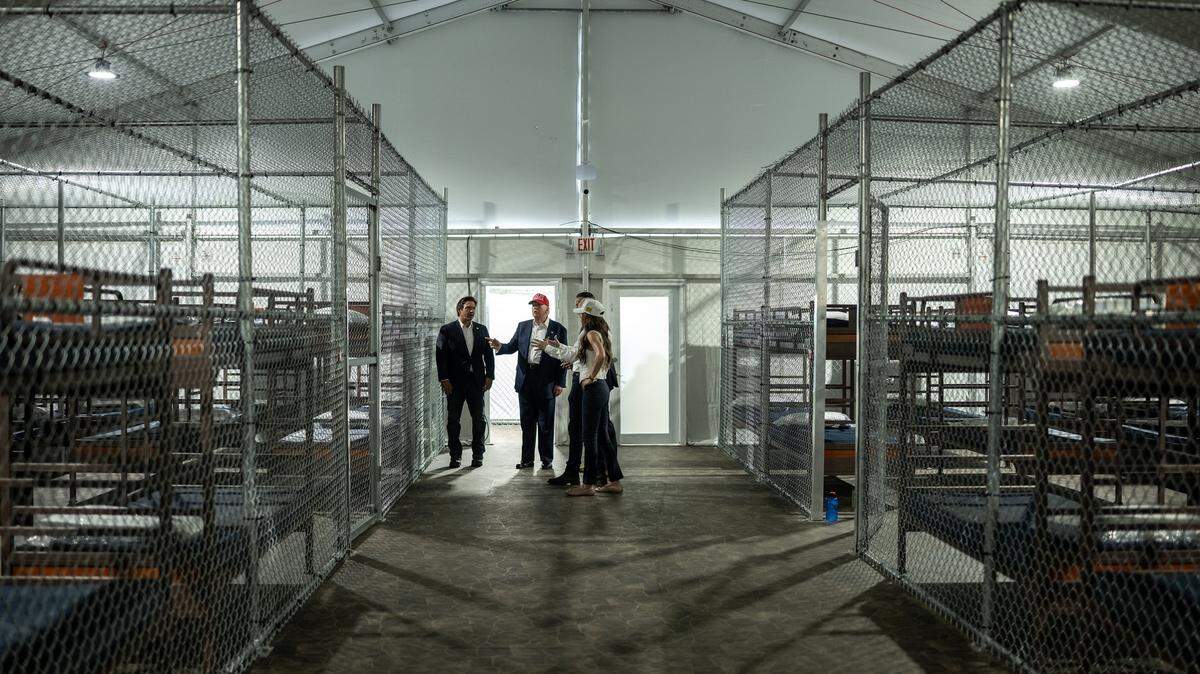
Has Alligator Alcatraz finally been emptied out?
In typical Florida-government fashion, it’s unclear. The Herald and other news outlets reported Wednesday that inmates at the immigration detention center have been moved to other facilities. Immigration and Customs Enforcement has not clarified how many people have been moved, only that they were relocated for “safety” reasons as “as we enter into hurricane season,” according to the Herald.
Wait a minute: for “safety” reasons?
The 2025 hurricane season was well under way when Gov. Ron DeSantis’ administration built the center within days last July. Migrant advocates warned of the risks of putting up a tent-and-trailer structure in a remote area of the Everglades where there’s little infrastructure. State and federal officials scoffed at those concerns.
Perhaps they have grown more humane over the 11 months, or, more likely, they are obfuscating. The facility was supposed to be temporary, and officials have said it’s on the verge of closing.
Secrecy and lack of transparency have been the hallmark of Alligator Alcatraz. It is projected to cost about $1 billion — money Florida could have used for something else or saved before the state faces projected budget deficits in coming years. The federal government is supposed to reimburse part of those costs, but the state has received only a fraction of it, the Herald reported this month.
Getting information about what happens inside the center — from costs to the actual number of people housed there and their living conditions — has often required investigative work by journalists. That’s unacceptable: The state built Alligator Alcatraz with tax dollars.
DeSantis said on Tuesday he doesn’t believe the facility is empty, but he wouldn’t be surprised if that happens soon. Last month, U.S. Rep. Maxwell Frost, a Central Florida Democrat, toured the detention center and told reporters: “It is apparent that they are winding down this facility.”
If Frost is correct, what’s next? Don’t expect DeSantis or the Trump administration to do any post-mortems (there were several reports of inhumane and unsanitary conditions) other than to declare victory. But DeSantis owes Floridians an explanation about whether the site will return to what it was.
To build Alligator Alcatraz, his administration seized an idle air strip, known as the Dade-Collier Training and Transition Airport, from Miami-Dade County. If the site is emptied, the state will have to clean up its mess: the pavement, lights, fences and other structures that environmental groups suing the state have argued disturb wildlife and the Everglade’s fragile ecosystem.
“They built a secret gulag in the Everglades without even pulling one permit, without conducting any environmental review, without complying with environmental law, and now they hope that they can slink away in the middle of the night without explaining to anyone what they did, why they did it or how they propose to clean up the mess that they’ve made,” Paul Schwiep, a lawyer representing the group Friends of the Everglades, said on a Wednesday conference call with journalists.
The uncertainty and mixed messages over whether Alligator Alcatraz still holds detainees feel intentional. Using hurricane season as a reason to move people out “strains credulity,” as Noelle Damico at the social justice organization The Workers Circle said in a Wednesday statement.
There was no transparency and accountability when Alligator Alcatraz opened. The public must demand that now as the end of this misguided experiment appears in sight.
BEHIND THE STORY
MOREWhat's an editorial?
Editorials are opinion pieces that reflect the views of the Miami Herald Editorial Board, a group of opinion journalists that operates separately from the Miami Herald newsroom. Miami Herald Editorial Board members are: opinion editor Amy Driscoll and editorial writers Isadora Rangel and Mary Anna Mancuso. Read more by clicking the arrow in the upper right.
What's the difference between an op-ed and a column?
How does the Miami Herald Editorial Board decide what to write about?
The Editorial Board, made up of experienced opinion journalists, primarily addresses local and state issues that affect South Florida residents. Each board member has an area of focus, such as education, COVID or local government policy. Board members meet daily and bring up an array of topics for discussion. Once a topic is fully discussed, board members will further report the issue, interviewing stakeholders and others involved and affected, so that the board can present the most informed opinion possible. We strive to provide our community with thought leadership that advocates for policies and priorities that strengthen our communities. Our editorials promote social justice, fairness in economic, educational and social opportunities and an end to systemic racism and inequality. The Editorial Board is separate from the reporters and editors of the Miami Herald newsroom.
How can I contribute to the Miami Herald Opinion section?
The Editorial Board accepts op-ed submissions of 650-700 words from community members who want to argue a specific viewpoint or idea that is relevant to our area. You can email an op-ed submission to oped@miamiherald.com. We also accept 150-word letters to the editor from readers who want to offer their points of view on current issues. For more information on how to submit a letter, go here.