
DeSantis’ board did the unthinkable — saved Miami from its own bad expressway | Opinion
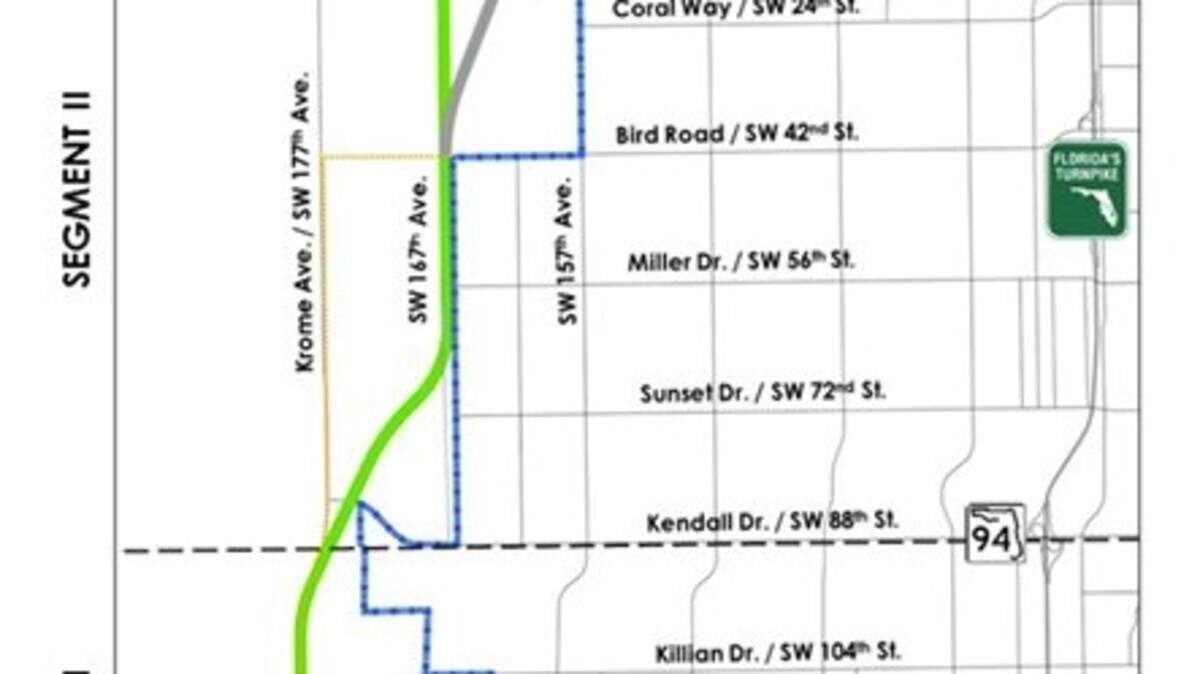
The plans for a 14-mile extension of the Dolphin Expressway were so poorly conceived, we were surprised to learn they were still under consideration eight years after the Miami-Dade County commission approved them despite environmental concerns.
Finally, this week, the board that oversees the proposed Kendall Expressway cancelled the project and opted for a scaled-backed version of it.
The original proposal would have connected the Dolphin, also known State Road 836, to Southwest Miami-Dade, along 137th Avenue and ending at Southwest 136th Street. The road would have been built over environmentally sensitive lands that are important to guaranteeing drinking water for South Florida.
Environmentalists tried to stop construction with a lawsuit but failed. In the end, concerns about fiscal responsibility prevailed, and the ax came from the state-controlled agency in charge of the project, the Greater Miami Expressway Agency (GMX), with one board member bluntly declaring: “We will never be able to build that highway,” the Herald reported.
The new design appears more reasonable: four miles instead of 14 that will connect the Dolphin to where Eighth Street meets Southwest 157th Avenue. The price tag dropped from $3 billion to $1.5 billion, which is still expensive because the extension will be elevated, the Herald reported.
GMX members argue that the widening of Southwest 137th and 157th avenues have made the full Kendall Expressway less necessary. They also said the lower costs of the sized-down project free up money for improvements of other toll roads the agency oversees. We cannot wait for the planned renovation of State Road 112, known as Airport Expressway, where a new partial interchange at Northwest 37th Avenue is expected to relieve congestion on LeJeune Road.
There are still issues, however, with how this decision came to be. GMX was created after the state took over a locally-run body called the Miami-Dade Expressway Authority, which oversaw county toll roads and approved the Kendall Expressway. The majority of the members of the new panel were appointed by Gov. Ron DeSantis. This is the state infringing on local control but once in a while, the results aren’t catastrophic. What a relief.
No doubt traffic in Southwest Miami-Dade has become unbearable. That’s largely because of urban sprawl and home construction that would only accelerate if a new 14-mile road were built. When the county approved the Kendall Expressway in 2018, the commission allowed it to be built past the Urban Development Boundary, a line that separates urban sprawl from rural and environmental lands. A new road would only add pressure to push the boundary even further into the Everglades, creating more infrastructure problems. Those billions of dollars would be better spent expanding public transit options in the region.
There were also questions about how much traffic relief drivers would have actually seen. A county analysis estimated the expressway would have saved only six minutes on a typical two-hour round-trip commute from West Kendall to downtown.
Project supporters pushed back on the report. Then-County Mayor Carlos Gimenez, now a congressman, said in 2020 the traffic projections were “hypothetical” and brought a consultant to say travel times on Dolphin Expressway could be cut in half. But, as the Herald Editorial Board wrote in 2021, all traffic estimates are hypothetical.
Back then, we also called the Kendall Expressway a “boondoggle.” Five years later, it looks like we were proven right.
BEHIND THE STORY
MOREWhat's an editorial?
Editorials are opinion pieces that reflect the views of the Miami Herald Editorial Board, a group of opinion journalists that operates separately from the Miami Herald newsroom. Miami Herald Editorial Board members are: opinion editor Amy Driscoll and editorial writers Isadora Rangel and Mary Anna Mancuso. Read more by clicking the arrow in the upper right.
What's the difference between an op-ed and a column?
How does the Miami Herald Editorial Board decide what to write about?
The Editorial Board, made up of experienced opinion journalists, primarily addresses local and state issues that affect South Florida residents. Each board member has an area of focus, such as education, COVID or local government policy. Board members meet daily and bring up an array of topics for discussion. Once a topic is fully discussed, board members will further report the issue, interviewing stakeholders and others involved and affected, so that the board can present the most informed opinion possible. We strive to provide our community with thought leadership that advocates for policies and priorities that strengthen our communities. Our editorials promote social justice, fairness in economic, educational and social opportunities and an end to systemic racism and inequality. The Editorial Board is separate from the reporters and editors of the Miami Herald newsroom.
How can I contribute to the Miami Herald Opinion section?
The Editorial Board accepts op-ed submissions of 650-700 words from community members who want to argue a specific viewpoint or idea that is relevant to our area. You can email an op-ed submission to oped@miamiherald.com. We also accept 150-word letters to the editor from readers who want to offer their points of view on current issues. For more information on how to submit a letter, go here.