
Wilson’s retirement shouldn’t be a victory lap for gerrymandering in Tallahassee | Opinion
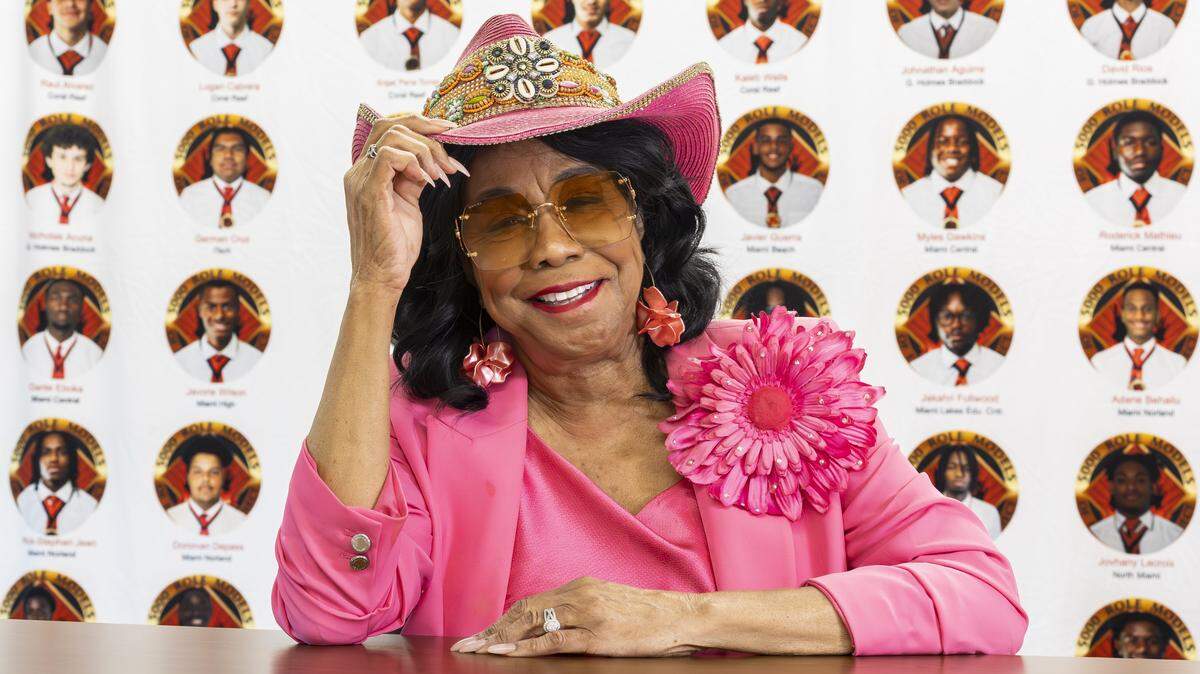
U.S. Rep. Frederica Wilson, one of Miami’s most instantly recognizable figures for her famous hats, is leaving Congress. Fortunately for our community, though, she’s not going away.
Wilson, a Democrat, confirmed rumors Friday that she’s not running for a ninth term representing Congressional District 24, which includes parts of Miami, Little Haiti, North Miami, Opa-locka and Miramar in Broward County.
She will stay politically engaged, as she told the Herald, writing her memoirs, promoting her 5000 Role Models program, aimed at helping young men and boys of color, and perhaps helping to register voters.
Wilson’s voice as a homegrown leader with deep roots in Miami’s Black community is more important than ever. The Black vote in Florida has been under assault, with Republican lawmakers redrawing the state’s congressional district maps to make them even friendlier to the GOP.
Wilson delayed her announcement until the end of this week, she said, in part because she wanted to make sure District 24 wouldn’t be an “easy target” for the Legislature and governor if she wasn’t there anymore. She has represented the district, which was created to concentrate Black voting power, since 2011, following in the footsteps of trailblazing U.S. Rep. Carrie Meek, who died in 2021.
“I’m a strong candidate,” Wilson said. “With me not here, would that weaken the survival of District 24?”
Unfortunately, her worry is entirely justified. Gov. Ron DeSantis signed new district maps into law earlier this month that could help the GOP pick up four more seats in the House. The new maps seem to violate the Fair Districts constitutional amendments, approved by voters in 2010 to ban partisan gerrymandering.
Four years ago, DeSantis eliminated a historic Black district in North Florida. Now there are only two Black-majority seats left in the state: District 20 in Broward and Palm Beach counties and District 24, Wilson’s seat, which became even more concentrated with Black voters under the new boundaries. Both are safely Democratic.
The state could erode Black representation even further in the future. The U.S. Supreme Court last month issued a ruling that limits how states can use race when drawing political boundaries, even if it’s done to avoid racially discriminatory maps that diminish Black voters’ power.
The ruling came more than three decades after Florida sent its first Black representatives since Reconstruction to Congress: Meek in Miami, Alcee Hastings in Broward and Corrine Brown in Jacksonville. They were elected after maps were redrawn in 1992 to ensure Black people had adequate representation in Congress. Now it seems we are turning the clock back again.
As an elected official, Wilson’s voice has always had the added authority of a teacher who became a school principal at Skyway Elementary in Miami Gardens, where she got her start in politics in the early 1990s fighting a landfill near her school. She won a seat on the School Board, then the Legislature and finally Congress in 2010.
Along the way, she adopted her signature look: colorful clothes and a hat to match. She wears hats to be like her grandmother, who was also named Frederica.
Among her accomplishments over the years: Wilson worked to require that Black history be taught in Miami-Dade schools and eventually statewide, created prison reform that allows incarcerated mothers to be closer to their children, and established and built up the 5000 Role Models program. During her 15 years in Congress, she worked to deliver significant sums of money for projects in South Florida.
This spring, at 83, she had eye surgery and missed a month of votes. Now she’s decided to let someone else represent District 24. Rudy Moise, a Miami physician who twice ran against Wilson, has declared he’s running again. Others may include Democratic Florida state Sen. Shevrin Jones and Miami-Dade County Commissioner Oliver Gilbert.
About her decision to leave, Wilson told the Herald: “God said to me, ‘Frederica, stay put and trust the process, and when it’s time, you will know.’”
Now, apparently, it’s time. Her former school has been renamed after her. There will be many more accolades to come. She hasn’t endorsed a successor, but she knows one thing: District 24 needs “a strong, strong advocate.”
BEHIND THE STORY
MOREWhat's an editorial?
Editorials are opinion pieces that reflect the views of the Miami Herald Editorial Board, a group of opinion journalists that operates separately from the Miami Herald newsroom. Miami Herald Editorial Board members are: opinion editor Amy Driscoll and editorial writers Isadora Rangel and Mary Anna Mancuso. Read more by clicking the arrow in the upper right.
What's the difference between an op-ed and a column?
How does the Miami Herald Editorial Board decide what to write about?
The Editorial Board, made up of experienced opinion journalists, primarily addresses local and state issues that affect South Florida residents. Each board member has an area of focus, such as education, COVID or local government policy. Board members meet daily and bring up an array of topics for discussion. Once a topic is fully discussed, board members will further report the issue, interviewing stakeholders and others involved and affected, so that the board can present the most informed opinion possible. We strive to provide our community with thought leadership that advocates for policies and priorities that strengthen our communities. Our editorials promote social justice, fairness in economic, educational and social opportunities and an end to systemic racism and inequality. The Editorial Board is separate from the reporters and editors of the Miami Herald newsroom.
How can I contribute to the Miami Herald Opinion section?
The Editorial Board accepts op-ed submissions of 650-700 words from community members who want to argue a specific viewpoint or idea that is relevant to our area. You can email an op-ed submission to oped@miamiherald.com. We also accept 150-word letters to the editor from readers who want to offer their points of view on current issues. For more information on how to submit a letter, go here.
This story was originally published May 29, 2026 at 3:38 PM.