
What happened to Trukita Scott? After 12 years, her family got part of the answer | Opinion
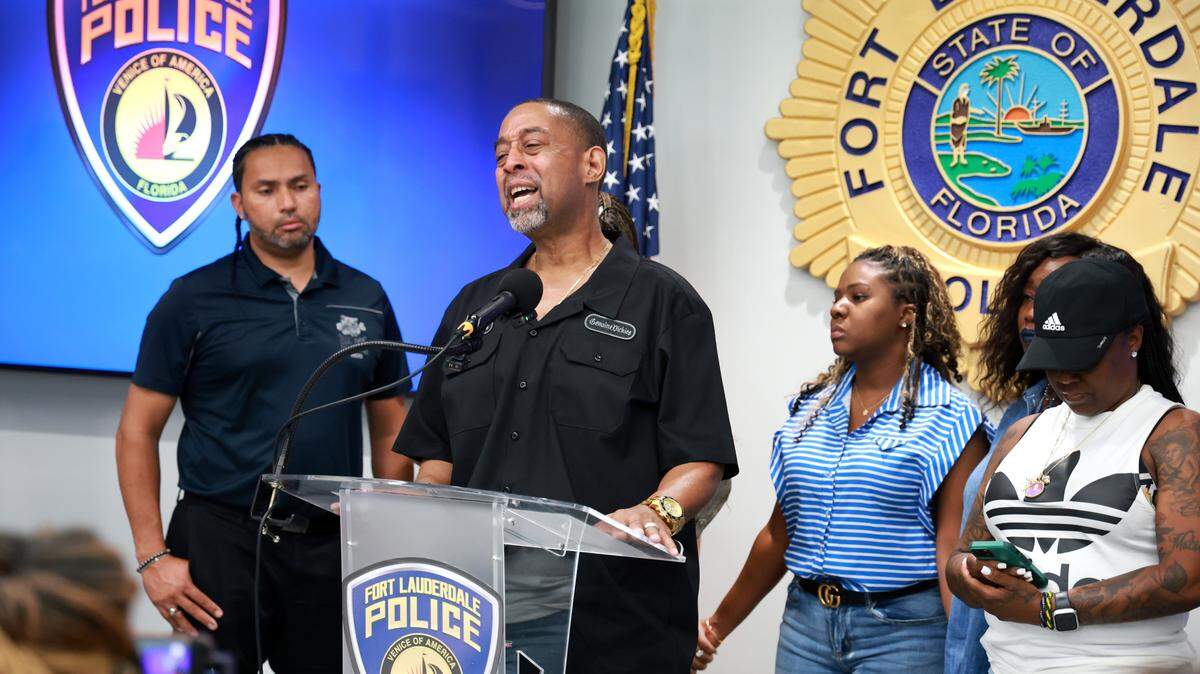
For almost 12 years, Trukita Scott’s family fought for answers about her disappearance in South Florida, even when her case fell out of the public eye.
The announcement on Tuesday that her remains were found last week, buried in the yard of a home in Little Haiti, is a major breakthrough in a case that could have slipped through the cracks. But now there are more questions: How did her body get there? Who is responsible? For family members who have been in the dark for over a decade, this latest development helps — but not enough.
Police said they are still working to determine a cause of death. No charges have been filed. They have looked into Scott’s ex-boyfriend — Carl Watts Jr., now in prison for the murder of his estranged wife eight years later — several times since Scott was reported missing in 2014 after leaving work in Fort Lauderdale. She was 24 and had two children.
“A part of my soul has been ripped out of me.. We don’t have closure!” Scott’s mother, Kengeral Allen, wrote in a text to a member of the Herald Editorial Board hours before Fort Lauderdale Police held a news conference to announce the discovery of Scott’s remains.
At the press conference, Allen appeared too upset to speak. A family member held her by the arms as her sister read her remarks: “My grandson has lived questioning his mother’s love, asking if his mom loves him... My grandkids will never feel their mother’s hugs.”
Scott’s case is especially heartbreaking because it might extend beyond this family’s tragedy. Her parents for years have believed Watts had something to do with her disappearance. On the day she went missing, Scott was going to meet Watts, who promised child-support money for their son, her father said in 2022.
Eight years after Scott’s disappearance, Watts shot and killed his estranged wife, Shandell Harris, at a community center pool in North Miami Beach, where Harris took her daughter for swimming lessons. He pleaded guilty to second-degree murder in 2024 and avoided the potential of a death penalty, court records show. He is serving a 45-year sentence.
Police said Tuesday they are also aware of a 2009 unsolved case involving the death of a third woman who had been in a relationship with Watts, according to her family. Watts has not been charged in the case.
Domestic violence cases involving the death of women, sometimes at the hands of current or former romantic partners, is sadly nothing new in South Florida. In April, Coral Springs Vice Mayor Nancy Metayer Bowen was killed in her house, and her husband was arrested for murder. Her death received widespread attention, which many other victims don’t get. It’s commendable that Fort Lauderdale Police did not give up on solving Scott’s missing-person case.
Watts has maintained over the years he did not know what happened to Scott. But, in the end, he led investigators to her remains, police said.
“During recent court proceedings, Carl Watts made admissions regarding his involvement in Trukita’s disappearance and, ultimately, provided us with information that led to the location where she had been buried,” said Steve Novak, a retired Fort Lauderdale Police sergeant now with the Broward Sheriff’s Office. Novak did not specify what those court proceedings were, but said Watts’ statement happened in the past month.
A coalition of law enforcement agencies and a forensic anthropology team from Florida Gulf Coast University found Scott’s remains last Tuesday in the 7500 block of Northeast First Court in Miami. The Miami-Dade County Medical Examiner’s office identified her through her dental records.
Scott’s parents have lived with the possibility that the lives of their daughter and Harris may have been spared had Watts been arrested sooner — and they need to know if they are right. Her father, Charles Scott, told the Herald Editorial Board in 2022: “This last young woman didn’t have to die if police had arrested him for my daughter’s murder and my daughter would be alive if they had arrested him for the first girl’s murder.”
Living with these what-ifs must be excruciating for a family who’s waited for answers for so long. This week, they got closer to the truth. We hope we will know soon what happened to Trukita Scott.
BEHIND THE STORY
MOREWhat's an editorial?
Editorials are opinion pieces that reflect the views of the Miami Herald Editorial Board, a group of opinion journalists that operates separately from the Miami Herald newsroom. Miami Herald Editorial Board members are: opinion editor Amy Driscoll and editorial writers Isadora Rangel and Mary Anna Mancuso. Read more by clicking the arrow in the upper right.
What's the difference between an op-ed and a column?
How does the Miami Herald Editorial Board decide what to write about?
The Editorial Board, made up of experienced opinion journalists, primarily addresses local and state issues that affect South Florida residents. Each board member has an area of focus, such as education, COVID or local government policy. Board members meet daily and bring up an array of topics for discussion. Once a topic is fully discussed, board members will further report the issue, interviewing stakeholders and others involved and affected, so that the board can present the most informed opinion possible. We strive to provide our community with thought leadership that advocates for policies and priorities that strengthen our communities. Our editorials promote social justice, fairness in economic, educational and social opportunities and an end to systemic racism and inequality. The Editorial Board is separate from the reporters and editors of the Miami Herald newsroom.
How can I contribute to the Miami Herald Opinion section?
The Editorial Board accepts op-ed submissions of 650-700 words from community members who want to argue a specific viewpoint or idea that is relevant to our area. You can email an op-ed submission to oped@miamiherald.com. We also accept 150-word letters to the editor from readers who want to offer their points of view on current issues. For more information on how to submit a letter, go here.