
‘I always knew he killed my daughter.’ Shocking new case shows Florida father might be right | Editorial
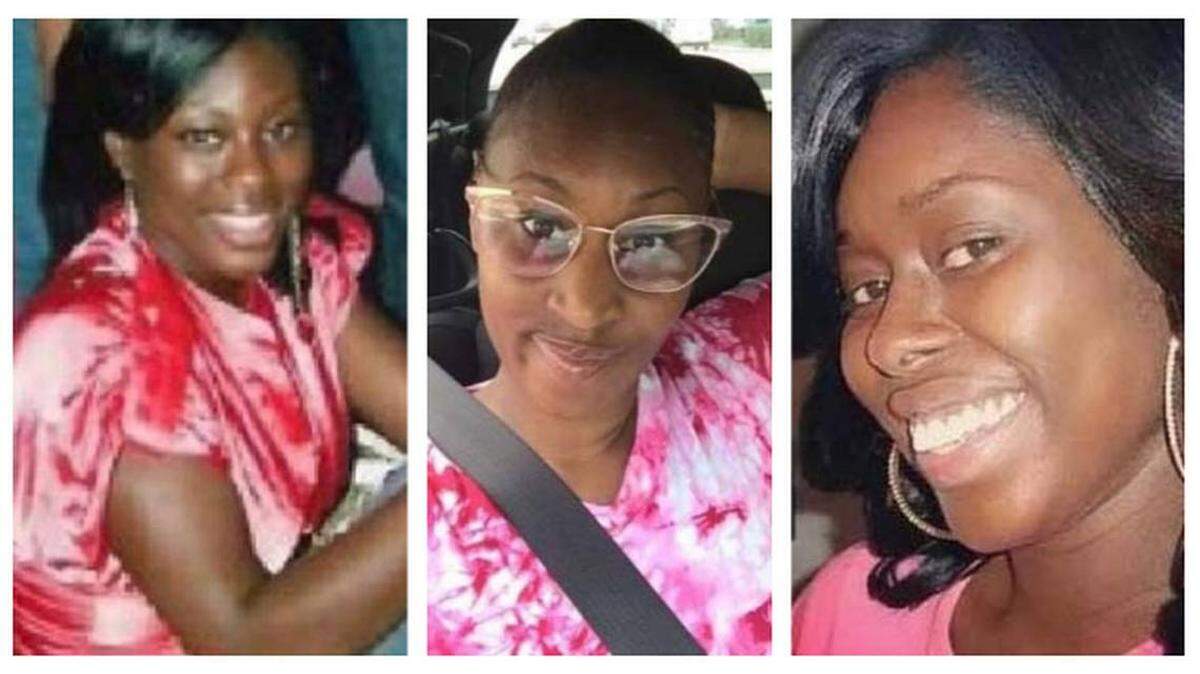
In his heart, Charles Scott always knew his daughter’s angry, estranged boyfriend had snatched her near her Fort Lauderdale job in 2014, killed her and discarded her body somewhere, never to be found. The only clue: Her abandoned Altima later turned up in Liberty City.
The disappearance of his daughter, Trukita Scott, 24 — which, Fort Lauderdale police say, is an open “missing person case” — came roaring back to life this week when the “person of interest” in her case, Carl Monty Watts Jr., 45, brazenly shot and killed his latest estranged wife at a Jewish community center in North Miami Beach.
Until now, what possibly happened to Scott’s daughter was only a theory. He now considers what happened to Watts’ latest victim confirmation of his daughter’s horrible fate, he told the Miami Herald Editorial Board.
Trukita Scott’s disappearance is not just one about the challenges of policing and worried families’ difficulty in maintaining law enforcement’s attention. It’s also about a cultural divide. There was no public outrage or attention as women in Watts’ life died or disappeared, except from their family members, who sometimes felt unheard by police.
Murder at community center
Police say that Watts opened fire on Shandell Harris in front of her daughter, family and scores of children and parents watching their kids learning to swim at the Michael-Ann Russell Jewish Community Center on Sunday. A day earlier, Watts, an ex-convict with a long string of attacks, allegedly had stabbed Harris. He approached her at the public pool with cash to persuade her not to press charges. When she said No, police say that he opened fire and killed her.
Scott believes something like this happened to his own daughter, “but not in broad daylight with witnesses.” He says on June 25, 2014, when his daughter left work to pick up her two young kids, she said that she was going to stop to meet Watts, who promised child-support money. She was never seen again. “Her mom and I told her not to go,” he said, but she did,” he says with regret.
“I told detectives Watts did it and he would do it again if not stopped,” Scott told the Board. Watts now sits in the Miami-Dade jail, charged with second-degree murder. Back then, Scott said detectives told him they had no evidence to implicate Watts and arrest him.
“We called his cell more than 20 times to ask him what happened to our daughter; he never answered,” she said.
Scott’s story is a painful glimpse at how domestic-violence cases can fall through the cracks. A woman disappears; no one gets arrested. There is no community outrage, just from the victim’s family. The crime is soon forgotten. Often, these victims are women of color.
Third victim
And there’s more. A third case from 2009 involving a woman named Vickie Simmons, 24, whose body was found under a bed in a Biscayne Boulevard hotel, is now being reexamined by police, too. Simmons was also involved with Watts, her family said, but there was no evidence linking Watts to her death 13 years ago.
How was Watts a free man last week, although he was linked to other women who tried to break up with him? He was walking around free until police say he opened fire on Sunday.
Wracked with regret and frustration, Scott said: “This last young woman didn’t have to die if police had arrested him for my daughter’s murder and my daughter would be alive if they had arrested him for the first girl’s murder.
“It’s just a shame, but now detectives believe what we told them.”
Watts had a long string of crimes against women. He went to jail for trying to grab a girl from a bus stop in Broward.
“I told my daughter to stay away from him. He was a con man and a petty criminal,” Scott told the Editorial Board. He now adds killer to that list.
Scott wishes detectives had done more and stayed on the case longer. He put up homemade posters and said he received tips about what may have happened to his daughter, but they quickly went cold before detectives interviewed tipsters. He and his wife, Kengeral, held a news conference asking for help in finding their daughter and named Watts as the person they suspected. Nothing came of it.
We must ask ourselves: Is race at play here? If these were cases of young, white women missing or murdered with concerned loved ones and a “person of interest” in common, would we be here today?
When Watts was around, women died or disappeared. But little appears to have been done to stop that cycle. Who’s to blame for that?
BEHIND THE STORY
MOREWhat's an editorial?
Editorials are opinion pieces that reflect the views of the Miami Herald Editorial Board, a group of opinion journalists that operates separately from the Miami Herald newsroom. Miami Herald Editorial Board members are: opinion editor Amy Driscoll and editorial writers Isadora Rangel and Mary Anna Mancuso. Read more by clicking the arrow in the upper right.
What's the difference between an op-ed and a column?
How does the Miami Herald Editorial Board decide what to write about?
The Editorial Board, made up of experienced opinion journalists, primarily addresses local and state issues that affect South Florida residents. Each board member has an area of focus, such as education, COVID or local government policy. Board members meet daily and bring up an array of topics for discussion. Once a topic is fully discussed, board members will further report the issue, interviewing stakeholders and others involved and affected, so that the board can present the most informed opinion possible. We strive to provide our community with thought leadership that advocates for policies and priorities that strengthen our communities. Our editorials promote social justice, fairness in economic, educational and social opportunities and an end to systemic racism and inequality. The Editorial Board is separate from the reporters and editors of the Miami Herald newsroom.
How can I contribute to the Miami Herald Opinion section?
The Editorial Board accepts op-ed submissions of 650-700 words from community members who want to argue a specific viewpoint or idea that is relevant to our area. You can email an op-ed submission to oped@miamiherald.com. We also accept 150-word letters to the editor from readers who want to offer their points of view on current issues. For more information on how to submit a letter, go here.
This story was originally published April 6, 2022 at 2:19 PM.