
Florida Republicans who broke ranks on redistricting defended democracy | Opinion
There was a flicker of courage this week, and some of it came from South Florida.
By now, you’ve heard that Florida lawmakers approved a new congressional district map on Wednesday, escalating a national redistricting war that may shape the midterm elections in favor of Republicans even as President Donald Trump’s approval ratings continued to slip.
Under the map they approved, four new GOP-leaning seats were added for a total of 24 out of 28 seats considered red. Only four seats on the map — which was drawn in secret by Gov. Ron DeSantis’ administration and not revealed until Monday — are blue-leaning.
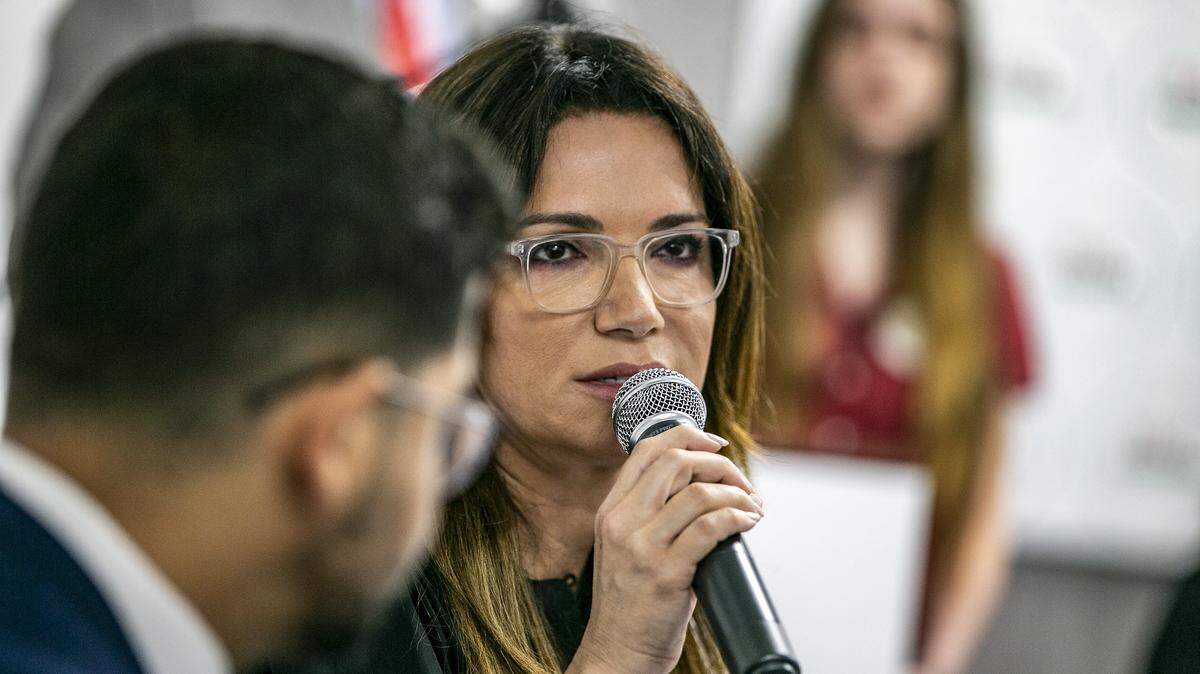
The maps were approved largely along party lines, but a handful of Republican lawmakers broke ranks, raising concerns about process and precedent. In the Senate, that included Miami-Dade Republican Sens. Alexis Calatayud and Ileana Garcia. In the House, Broward Republican Rep. Hilary Cassel — who switched parties from Democrat to Republican last year — also voted against the bill.
The Republicans who broke with their party did the right thing. It’s hard to buck your party, especially in today’s winning-at-all-costs mentality.
The dozens of others, including House Speaker Daniel Perez of Miami, who rubber-stamped the governor’s partisan maps chose political gamesmanship over democratic norms.
Florida Republicans have been making the rules — and drawing the lines — for elections since DeSantis’ first map was enacted in 2022. But a supermajority in the Florida Legislature doesn’t give you the right to disenfranchise hundreds of thousands of voters as these maps do.
Redistricting is, by definition, a political exercise. But it has generally operated within established standards, including oversight by an independent redistricting commission in other states. When those guardrails break down in pursuit of power — in the form of drawing seats to elect people of a certain party — it reinforces the idea that manufacturing an outcome is more important than earning it.
As the Editorial Board has previously written, redistricting mid-census is nothing more than a power grab by the Florida GOP to try to manipulative the system in their favor.
No doubt there will be a slew of lawsuits over the new maps. That’s necessary. This effort relies on the legal theory that the Fair Districts Act — a constitutional amendment passed by voters in 2010 — no longer applies. The courts will have the final say but no matter the outcome in the legal system, it won’t change the fact that 63% of Floridians approved a constitutional amendment that was supposed to stop partisan gerrymandering. The governor and Legislature may wiggle away from the constitution but voters remember.
Meantime, the political calculation is glaring. Republicans are betting big that the new lines will stand until the election and deliver the gains they (and Trump) want. But recent elections suggest it’s not a slam dunk.
Less than a month ago, in Palm Beach County, Democrat Emily Gregory flipped a district that President Donald Trump carried in 2024 by 20 points — and where Mar-a-Lago is located. Across the state in Tampa, there was another flip involving a Senate seat. The electorate may not be as predictable as Republicans may have assumed.
There’s also the precedent this sets. Mid-decade redistricting invites either party to revisit maps whenever it’s politically convenient. That would leave Florida voters at the mercy of politicians.
The integrity of the election process is part of what’s at stake. The Republicans who voted against this openly partisan redistricting effort may have understood that. Even within the Republican Party, there are those who see that power exercised without restraint isn’t democracy.
DeSantis will have the chance to use his blue Sharpie to sign these maps into law. The courts will weigh the constitutional merits. But Florida voters — the ones who in 2010 voted to abolish redistricting for partisan gain in the Fair Districts Act — will have their say in November. And that could be less predictable than lines on a map.
BEHIND THE STORY
MOREWhat's an editorial?
Editorials are opinion pieces that reflect the views of the Miami Herald Editorial Board, a group of opinion journalists that operates separately from the Miami Herald newsroom. Miami Herald Editorial Board members are: opinion editor Amy Driscoll and editorial writers Isadora Rangel and Mary Anna Mancuso. Read more by clicking the arrow in the upper right.
What's the difference between an op-ed and a column?
How does the Miami Herald Editorial Board decide what to write about?
The Editorial Board, made up of experienced opinion journalists, primarily addresses local and state issues that affect South Florida residents. Each board member has an area of focus, such as education, COVID or local government policy. Board members meet daily and bring up an array of topics for discussion. Once a topic is fully discussed, board members will further report the issue, interviewing stakeholders and others involved and affected, so that the board can present the most informed opinion possible. We strive to provide our community with thought leadership that advocates for policies and priorities that strengthen our communities. Our editorials promote social justice, fairness in economic, educational and social opportunities and an end to systemic racism and inequality. The Editorial Board is separate from the reporters and editors of the Miami Herald newsroom.
How can I contribute to the Miami Herald Opinion section?
The Editorial Board accepts op-ed submissions of 650-700 words from community members who want to argue a specific viewpoint or idea that is relevant to our area. You can email an op-ed submission to oped@miamiherald.com. We also accept 150-word letters to the editor from readers who want to offer their points of view on current issues. For more information on how to submit a letter, go here.