What’s on the ballot for Coral Gables’ April election? A look at the referendums
Coral Gables voters will soon weigh in on election date changes, salary raises, inspector general services and other topics in the city’s upcoming vote-by-mail election.
First-time Miami-Dade County voters have until March 23 to register to vote, if they haven’t already, to get their ballots ahead of Election Day, which is April 21. March 23 is also the deadline to change your address.
This time around, voters can only cast their vote by mail. Ballots need to be submitted to Miami-Dade County’s Supervisor of Elections Office by 7 p.m. on April 21.
READ MORE: An election with no poll sites? What Coral Gables voters need to know
Voters will weigh in on eight proposed charter amendments. Here are the referendums, in order:
What will be on the Gables election ballot?
Referendum One
“Shall the City Charter be amended to change the month and day when the City of Coral Gables holds its general elections from April of each odd year to the date of the national election in November of each even year commencing in 2026, resulting in an approximately four-month reduction of current elected official’s terms and adjustment of associated dates with the intention of increasing voter turnout and decreasing the cost of general elections?”
Impact: If voters agree to move elections to November, the next city election would be held in November 2026 to coincide with national and state elections. That would reduce the terms of Mayor Vince Lago, Vice Mayor Rhonda Anderson, and Commissioners Melissa Castro, Ariel Fernandez and Richard Lara by about four months. If voters say yes, elected officials whose terms are currently on track to expire in April 2027 and April 2029 would instead expire in late 2026 and late 2028, according to the city. The dates of runoff elections and qualifying periods will also change.
Background: City elections have traditionally been held in April of odd-numbered years. Lago, Anderson and Lara voted last year to move elections to November, saying it would save the city thousands in election-related costs and increase voter turnout. After the city of Miami faced a lawsuit for doing something similar, they later voted with Commissioner Melissa Castro to walk back the date change and instead let voters weigh in to avoid any potential legal trouble.
Commissioner Ariel Fernandez was absent the day of the vote, though he’s previously opposed moving elections. Both Castro and Fernandez have raised concerns that national partisan elections could drown out information about local candidates and have suggested there are political motives behind the date changes.
Referendum Two
“Shall the City Charter be amended to prohibit changing the City’s municipal general election date away from November of even-numbered years through the adoption of an ordinance by the City Commission, in so far as that prohibition is not in conflict with state law?”
Impact: A yes vote means that you want the city’s charter, the governing document of the Gables, to indicate that if elections were to ever be held in November, future commissioners would not be allowed to change the date of elections through a vote of the commission — and that you believe that election date changes should always require voter approval.
Referendum Three
“Shall the City Charter be amended to allow the City Commissioner, or appointed official, who appointed a member to a City board or committee, to remove that member from that position prior to the expiration of their term, for any reason, in so far as that removal is not in conflict with state law?“
Impact: Coral Gables has a lot of advisory boards, such as the Parks and Recreation Advisory Board and the influential Board of Architects. Members of the different boards are nominated and voted on by the commission.
Currently, board members can only be removed by a majority vote of the City Commission, with some boards requiring cause under state law, according to city spokeswoman Martha Pantin. A yes vote means you support giving commissioners and the city’s charter officers — the city manager, city attorney and city clerk — the ability to remove members he or she appointed on a board without a commission vote, regardless of how much time is left in their term. The commission will also retain its ability to remove members by a majority vote.
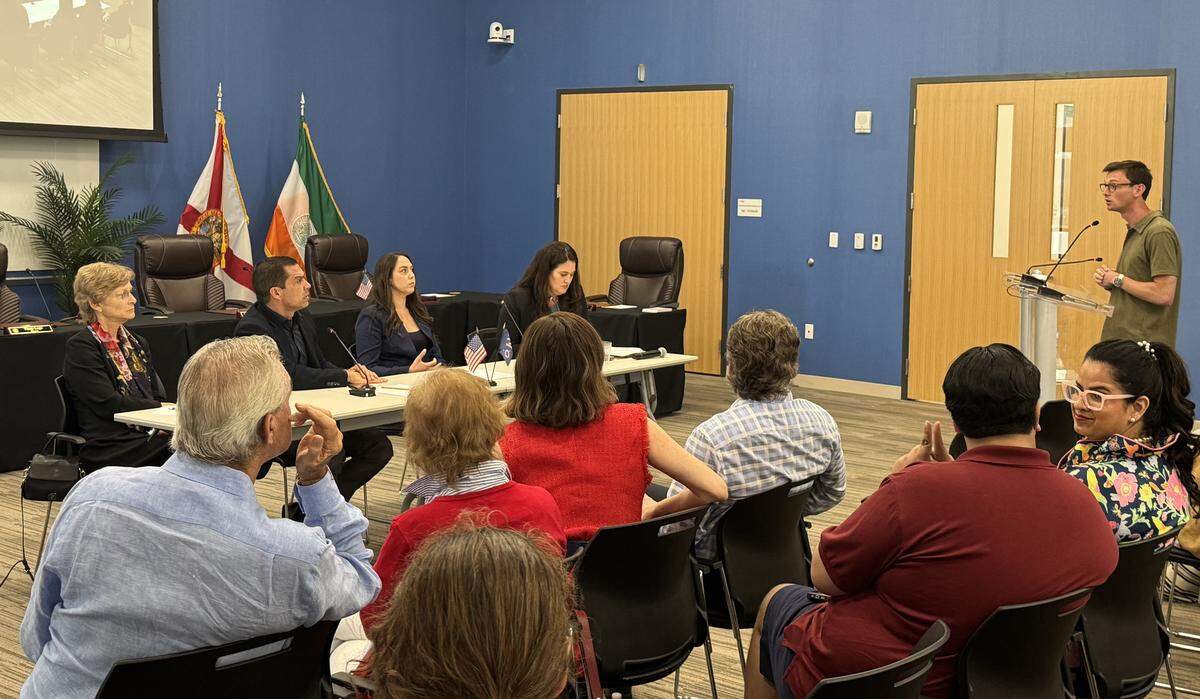
Referendum Four
“Shall the City Charter be amended to require that the City Commission convene a Charter Review Committee every ten (10) years beginning in 2035, to review the Charter and provide recommendations on potential amendments, with the Committee consisting of seven members with the Commissioners and City Manager each appointing a resident of the City and the City Attorney appointing a current or former municipal or county attorney?”
Impact: Charter review committees are not new to the city of Coral Gables. The committee has historically convened every 10 years to seek resident input and give recommendations on which proposed amendments to the city’s charter — the document that governs the city — should be put in front of voters. Commissioners are not required to follow the recommendations.
A yes vote would update the charter to include a recent change made last year through a vote by the City Commission to increase the number of committee members from five to seven members and would also support requiring the committee to meet every 10 years beginning in 2035. Every commissioner appoints one member to the board. The two other members are appointed by the city manager and city attorney.
Referendum Five
“Shall the City Charter be amended to authorize a contract with Miami-Dade County or a private entity to provide inspector general services, as needed, to the City to investigate, audit, and oversee municipal matters in order to identify efficiencies and investigate and prevent fraud, waste, mismanagement and abuse of power, and who can subpoena witnesses and require production of documents, and whose appointment, term, functions, and powers shall be established by ordinance?”
The impact: A yes vote means you want the city to contract with the county or a private entity to provide inspector general services as needed. Inspector general offices are independent bodies that investigate potential fraud, mismanagement and abuse of power. Pantin said the cost would be negotiated with the Miami-Dade County Office of the Inspector General or other entity based on provided services.
Background: The city has been in public turmoil in recent years, with accusations thrown around about bribes, special favors and abuses of power. Lago has repeatedly said he wants an inspector general to build up resident trust, increase transparency and weed out any corruption in the city, a concept the other commissioners have indicated support for. But the topic has also caused tension.
In 2024, Lago and Anderson tried to get the City Commission on board to begin the process of establishing an Office of Inspector General through a majority vote, with plans to then ask voters to lock in the inspector general’s independent powers into the city’s charter so it “becomes ironclad.”
The measure failed 2-3 after Castro, Fernandez and former Commissioner Kirk Menendez voted against it. At the time of the vote, the three commissioners raised various concerns about initially creating the office through a majority vote on the commission. The three said they would prefer sending the issue to the charter review committee first, and if it drew support there, to then place a charter amendment on the ballot for voters to weigh in. Castro’s ask to do just that received unanimous support, including from Anderson and Lago.
City Attorney Cristina Suarez, at the time, explained that if the inspector general is established only by a majority vote on the commission, it could later be dissolved by the commission. If voters approve adding the inspector general into the city charter, its role can only be dissolved by voter approval. If voters decide they do want inspector general services, the commission would still need to vote on specifics, including qualifications, defined powers and structure.
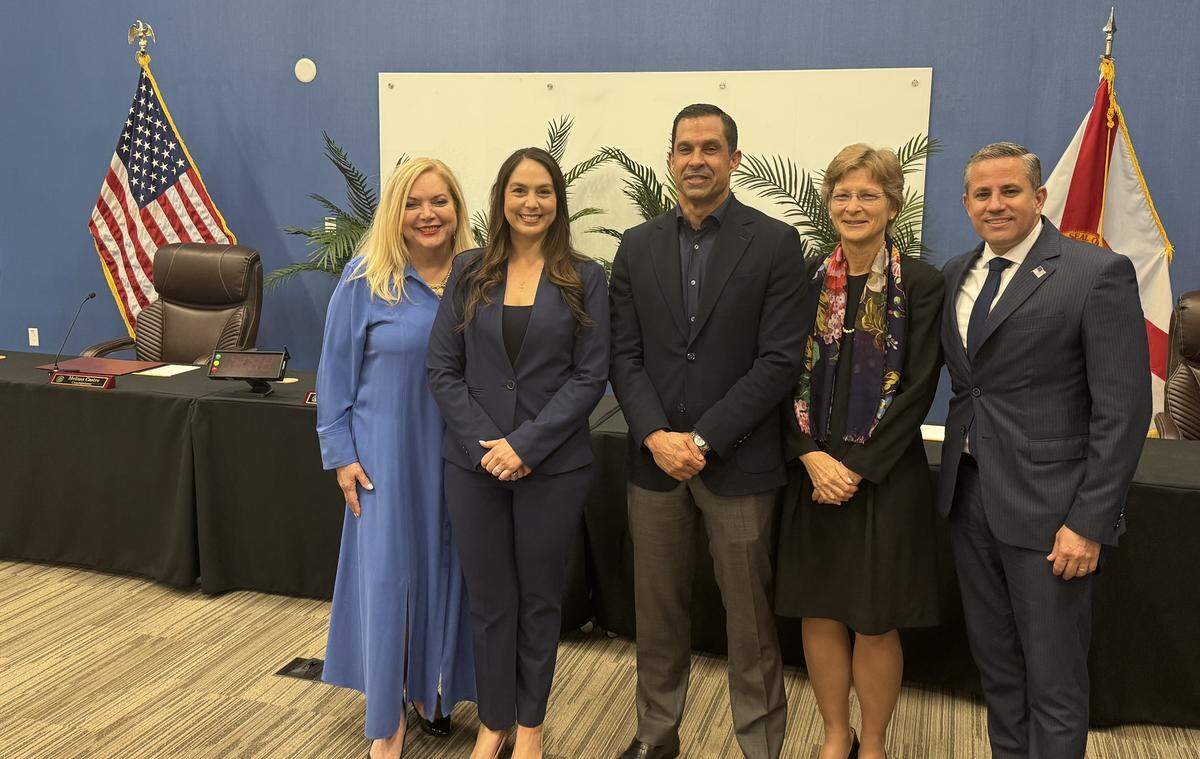
Referendum Six
“Shall the City Charter be amended to require that any change to the compensation of the City’s elected officials, beyond the annual adjustment to compensation based on the Consumer Price Index as set forth in the Code, requires an affirmative vote of the electors prior to adoption by the City Commission?”
Impact: The city’s charter currently allows for yearly October pay raises for the mayor, vice mayor and commissioners based on the annual increase in the federal Consumer Price Index — essentially, a cost-of-living increase.
A yes vote means that any additional raises that go beyond that will need voter approval, instead of just a majority vote by the commission.
Currently, the annual compensation for the mayor is about $47,400; vice mayor, $41,400; and for the other three commissioners, $38,500. That does not include travel and expense allowances. All of those positions are considered part-time.
Background: The compensation question comes after Lago and Anderson, shortly after being reelected last year, joined with newcomer Lara to rescind the hefty pay raise and car allowance that was approved by the previous commission in 2023.
At the time, Commissioners Castro, Fernandez and former Commissioner Menendez had voted 3-2 to raise salaries. Anderson and Lago voted against it.
Referendum Seven
“Presently the City Charter requires a runoff between the two candidates with the highest vote totals where no candidate received a majority (50 percent plus 1) in the general municipal election. Should the runoff provision be eliminated so that a mayor or commissioner may be elected with a plurality vote (the most votes) even if this does not constitute a majority, understanding that the runoff would be eliminated regardless of when general elections are held?”
Impact: A yes vote means you support eliminating runoff races in the general municipal election. A no vote means you still want the city to host runoff elections as needed.
If voters decide they want to move elections to November of even years, and they also want to continue hosting runoff elections if no candidate gets the majority of votes, then runoff elections would be held in early December of even years, according to the city’s Charter Review Committee. However, no early voting sites would be available for the runoff election.
Background: Currently, the city holds runoff elections if no candidate reaches over 50% of votes in the general election and has “held a run-off in each election since the change to the Charter was adopted by the voters in 2016,” according to the city’s Charter Review Committee.
But voter turnout “has been so extremely dismal” in previous runoff elections, which are costly to do, according to Anderson, who spoke on the topic during a town hall Lago hosted last week to discuss the upcoming ballot questions.
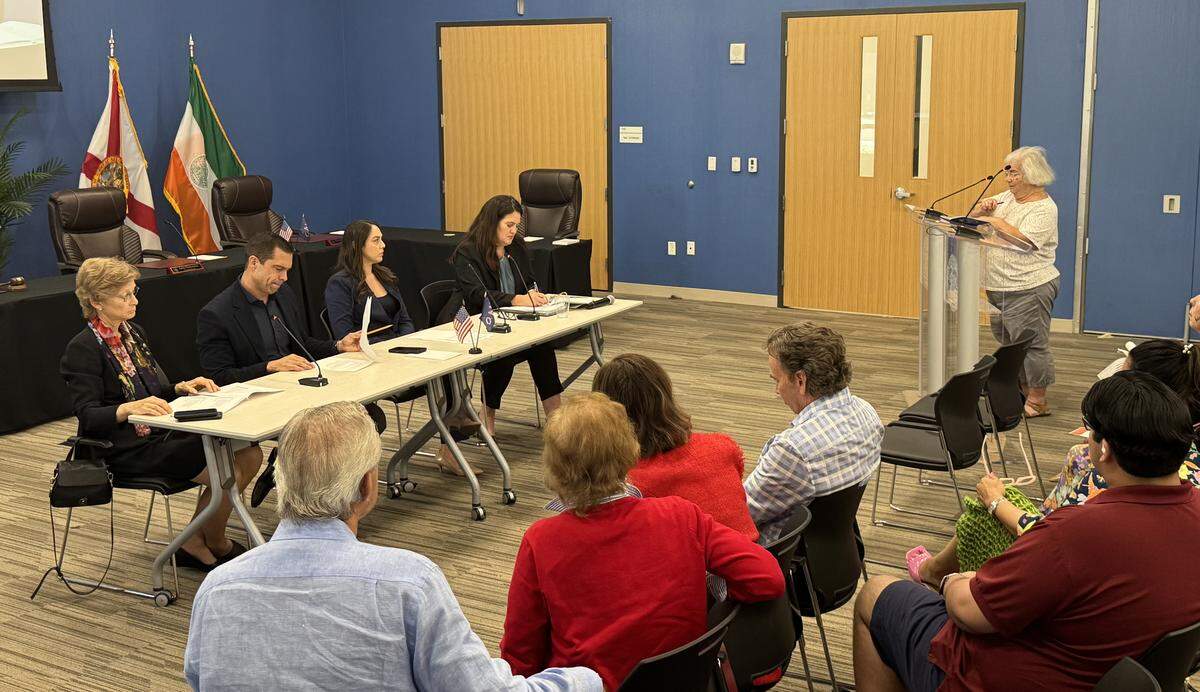
Referendum Eight
“Shall the City Charter be amended to require that the City maintain a General Fund Reserve at twenty-five percent (25%) of the City’s operating budget and that a four-fifths vote of the City Commission is required to otherwise amend the fund reserve policy adopted in Ordinance No. 2025-05 or to expend funds from the General Fund Reserve, except in those emergency situations outlined in the Ordinance?”
Impact: A yes vote will reaffirm what commissioners codified in a 3-1 vote into the charter back in May: that the city will be required to maintain a “minimum General Fund reserve equal to 25 percent of the sum of the City’s total operating expense and debt service budget,” and would need four out of five commissioners to approve spending the savings and to make changes to the existing general reserve fund policy, according to Pantin. The city can still dip into the funds for emergency situations. A no vote means that while the policy would still be in place through the vote of the commission, it would not be incorporated into the charter and could be modified by a future commission vote, Pantin said.
City Manager Peter Iglesias and Lago, who sponsored the ordinance and the ballot question, describe the fund as the city’s emergency savings for a rainy day. Lago previously told the Herald that the policy is to ensure the city has the money needed to pay bills and handle hurricanes and other emergencies.
Background: Lago, Anderson and Lara voted in May to codify the stricter reserve rules that are now up for voter approval. Castro was absent the day of the meeting. Fernandez voted in opposition at the time.
Fernandez said he also supports not touching the money that is in the city’s reserves. However, he believes the city should take out a line of credit, similar to other cities like Miami Lakes, in order to reduce the reserve to 10% and use taxpayer money for capital projects.
Lago vehemently opposes Fernandez’s proposal, describing it as an irresponsible business decision that would put the city in financial risk and the reason why the fourth-fifth vote requirement needs to exist.
The city is one of a handful in Florida to have a triple bond rating, which lets the city borrow money at a cheaper rate for projects.
If you have questions
If you have questions about your ballot or the election, call the Elections Department hotline at 305-722-VOTE (8683).