
If the Super Bowl show was too ‘multicultural,’ so is Miami, even if that’s under attack | Opinion
Miami has long been a symbol of an America that thrives because of its cultural diversity.
Now that symbol has come under attack. It’s President Trump’s mass deportations and the stripping of legal status from hundreds of thousands of Venezuelans and Haitians. It’s Florida’s new requirement that driver’s license tests be taken in English only. It’s the conservative backlash against a Super Bowl halftime show that felt like Miami.
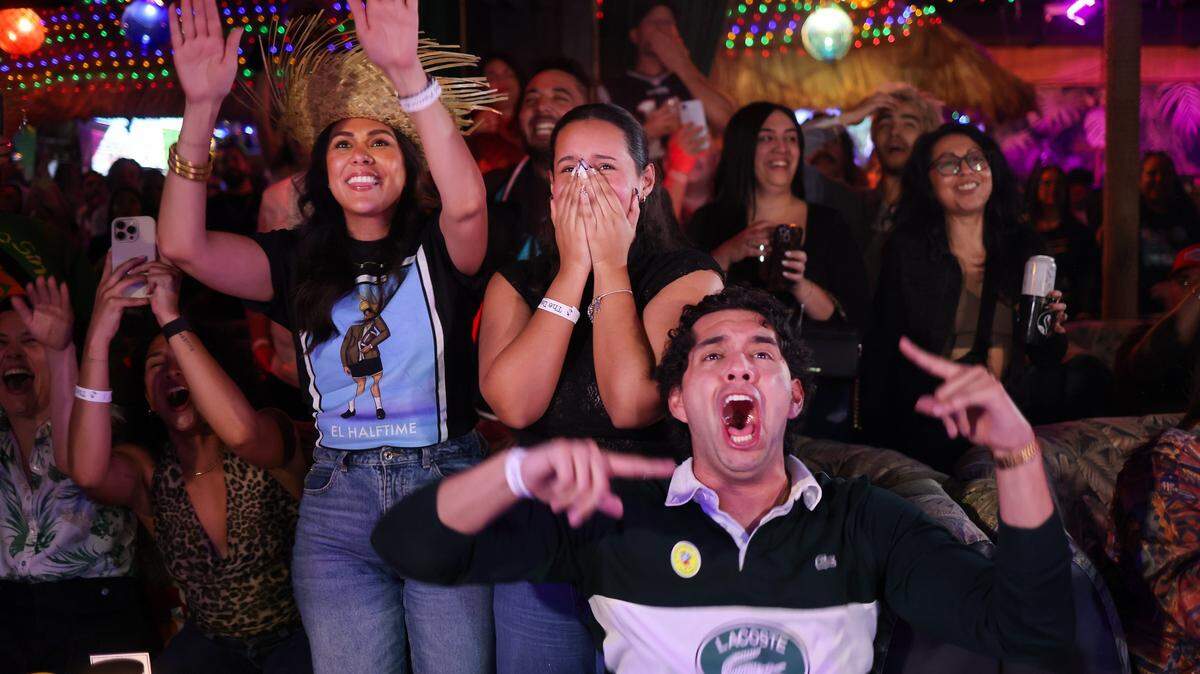
Bad Bunny’s performance was a celebration of his Puerto Rican roots, but it also was quintessentially Miami. The abuelos and tios playing dominos, the people of all ages dancing at a wedding and the little boy falling asleep during a long family function are images we’re used to seeing in South Florida.
But that celebration was a bit too “multicultural” for the Super Bowl — at least, based on what Miami’s own U.S. Rep. Maria Elvira Salazar posted on social media. Salazar, a Republican, is a former Spanish TV news anchor who represents one of the most Latino congressional districts in the U.S.
“The Super Bowl is the biggest game of America’s most iconic sport. It’s a national moment to bring the whole country together. And let’s be honest—it should not be a multicultural fair,” Salazar wrote on X on Tuesday. “Its audience is overwhelmingly English-speaking, and they deserve a half time show they can understand and enjoy. To have a fully Spanish-language halftime show, with no subtitles, isn’t inclusive. It’s exclusive. Unfortunately, today, instead of talking about the great contributions Hispanics make to our country — the legal ones and the undocumented — we are debating how poorly this event missed the mark.”
Subtitles during Bad Bunny’s performance could have bridged the gap with non-Spanish speakers. But it’s a bit strange that Salazar, who’s Cuban American, decided to weigh in on a culture war that hits so close to home. Especially when Salazar and other Florida Republicans were silent when President Donald Trump shared a since-deleted racist video on Friday, which he later said he didn’t watch entirely before a staffer posted it.
Salazar has spent a lot of political capital defending immigrants’ contributions and pushing for her immigration-reform bill, called the Dignity Act. She’s faced backlash from conservatives, who accuse of her of supporting so-called amnesty for undocumented immigrants, which is a distortion of her bill. Perhaps the Super Bowl was an opportunity for Salazar to prove her conservative credentials.
Bad Bunny’s performance should have been a non-issue. Born in Puerto Rico, a U.S. territory, he’s an American citizen. Yet many conservatives believe his show was an attempt to shove a non-American culture down America’s throat during an American sports event. But this country is becoming increasingly Latino and reggaeton, salsa — and, yes, even the Spanish language — are now very much American.
Miami proves that, making our community a subject of fascination and consternation for people from other parts of Florida and the country. With Trump back in power and declaring war on diversity, equity and inclusion, many of the cultural grievances that existed before — mainly the widespread use of Spanish — have bubbled to back to the surface.
The Florida Department of Highway Safety and Motor Vehicles has announced that written and oral exams for all driver’s licenses will be administered only in English, without the option of an interpreter or translator. Supporters of the change say this will make roads safer.
We agree that people who live in this country should speak enough English for basic communication. Assimilation isn’t a bad thing; it helps build a common national identity.
The problem is how this policy’s intent appears to be more about making a point. As Politifact reported, there are no studies that show that allowing people to take the driver’s license test in a foreign language poses a safety issue. Experts point out that traffic signs normally use universal symbols, not words. And it’s likely that people will forego getting a license, making roads less safe.
Miami is a special, vibrant place where immigrants have thrived and strengthened the community — whether that’s in English, Spanish, Creole or some other language. We wouldn’t have it any other way.
BEHIND THE STORY
MOREWhat's an editorial?
Editorials are opinion pieces that reflect the views of the Miami Herald Editorial Board, a group of opinion journalists that operates separately from the Miami Herald newsroom. Miami Herald Editorial Board members are: opinion editor Amy Driscoll and editorial writers Isadora Rangel and Mary Anna Mancuso. Read more by clicking the arrow in the upper right.
What's the difference between an op-ed and a column?
How does the Miami Herald Editorial Board decide what to write about?
The Editorial Board, made up of experienced opinion journalists, primarily addresses local and state issues that affect South Florida residents. Each board member has an area of focus, such as education, COVID or local government policy. Board members meet daily and bring up an array of topics for discussion. Once a topic is fully discussed, board members will further report the issue, interviewing stakeholders and others involved and affected, so that the board can present the most informed opinion possible. We strive to provide our community with thought leadership that advocates for policies and priorities that strengthen our communities. Our editorials promote social justice, fairness in economic, educational and social opportunities and an end to systemic racism and inequality. The Editorial Board is separate from the reporters and editors of the Miami Herald newsroom.
How can I contribute to the Miami Herald Opinion section?
The Editorial Board accepts op-ed submissions of 650-700 words from community members who want to argue a specific viewpoint or idea that is relevant to our area. You can email an op-ed submission to oped@miamiherald.com. We also accept 150-word letters to the editor from readers who want to offer their points of view on current issues. For more information on how to submit a letter, go here.