
Bad Bunny’s halftime show reminds the world ‘America’ is more than just the U.S.
Fans and critics expected Bad Bunny to make a major political statement at the Super Bowl halftime show. With a pan-American parade of flags, he met those expectations.
Just a week after his “Debí Tirar Más Fotos” became the first Spanish-language album to win Album of the Year at the Grammys, Bad Bunny made history again by performing the first Spanish-language Super Bowl halftime show. The halftime show has been a powder keg for political discourse for months as many anticipated the Puerto Rican superstar, whose full name is Benito Antonio Martínez Ocasio, would make some kind of statement in support of Latino immigrants.
In Latino-centric Miami, where you can’t throw a stone without hitting a Benito fan, Bad Bunny’s performance has been the talk of the town. “Benito Bowl”-themed watch parties were hosted all around the 305 to let fans witness the historic show together, like at Little Havana bar The Dead Flamingo. Owner Eddie Fuentes told the Miami Herald that Bad Bunny has been pushing the narrative of unity among Latinos. “Bad Bunny has been waving that flag,” he said.
Read more: What songs did Bad Bunny perform at the Super Bowl? Here’s the setlist
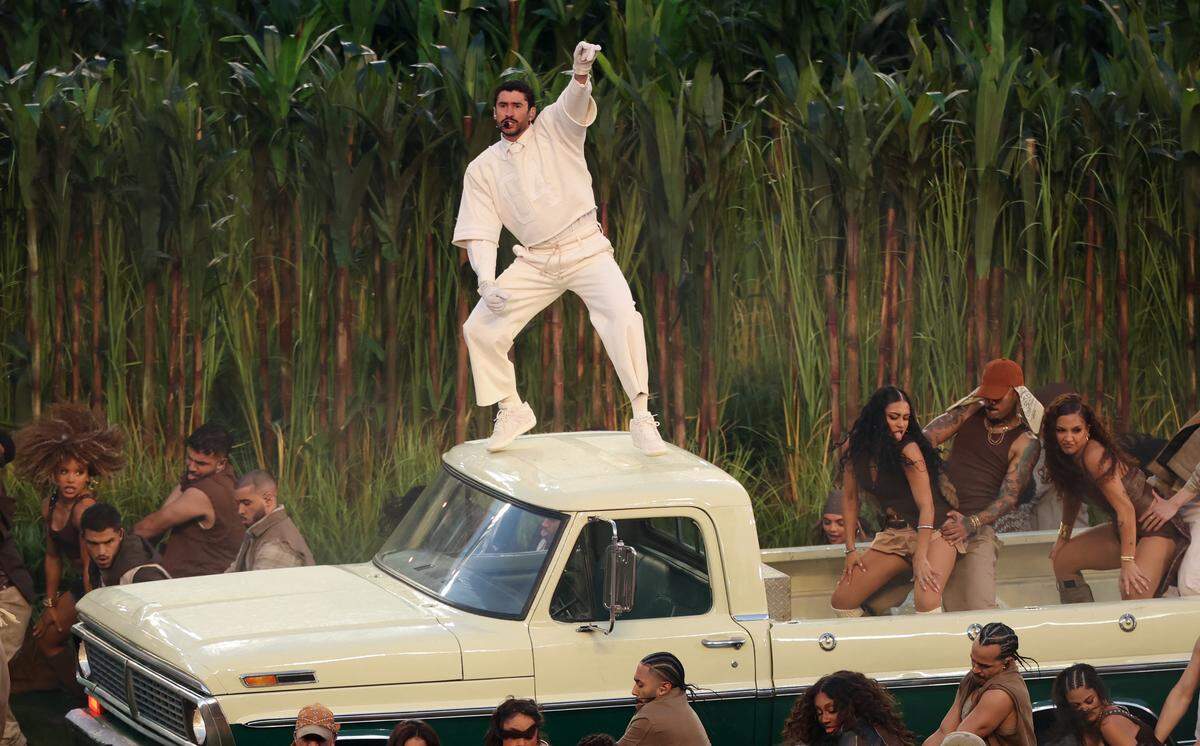
The elaborate performance, which featured stars like Lady Gaga, Ricky Martin and Cardi B (who didn’t perform, but made a cameo), turned the football field into a Puerto Rican sugarcane field where aspects of Puerto Rican life were around every corner. At the very end of the 13-minute performance, dancers ran through the field carrying flags of countries from North, Central and South America and the Caribbean.
Read more: Bad Bunny’s Super Bowl halftime show was main event for Miami partygoers
Though the United States of America is colloquially referred to as just “America,” Bad Bunny reminded the audience — and perhaps some U.S. politicians — that America is the entire western hemisphere, as he named checked dozens of countries as the show concluded.
“God bless America,” Bad Bunny said, holding a football that read “TOGETHER, WE ARE AMERICA.”
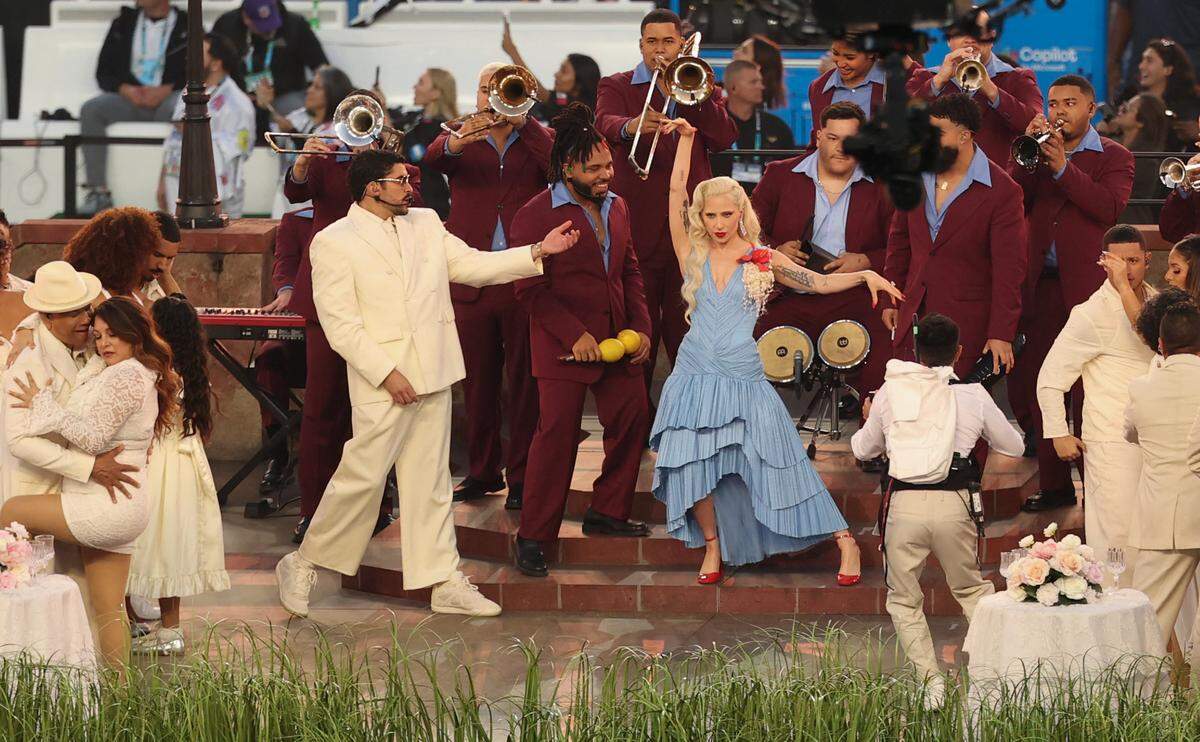
The halftime show was a sweeping celebration of Puerto Rican culture. Latino celebrities like Cardi B, Karol G and Pedro Pascal danced on the patio of La Casita (the little house), the famous set from Bad Bunny’s current tour. There was a traditional Puerto Rican wedding, where Lady Gaga performed a salsa rendition of “Die With a Smile” as a wedding singer while a little boy took a nap on some chairs. (You know how there’s always a little kid sleeping on some chairs at a family party?) And there was a set that resembled a New York City neighborhood, complete with a barbershop.
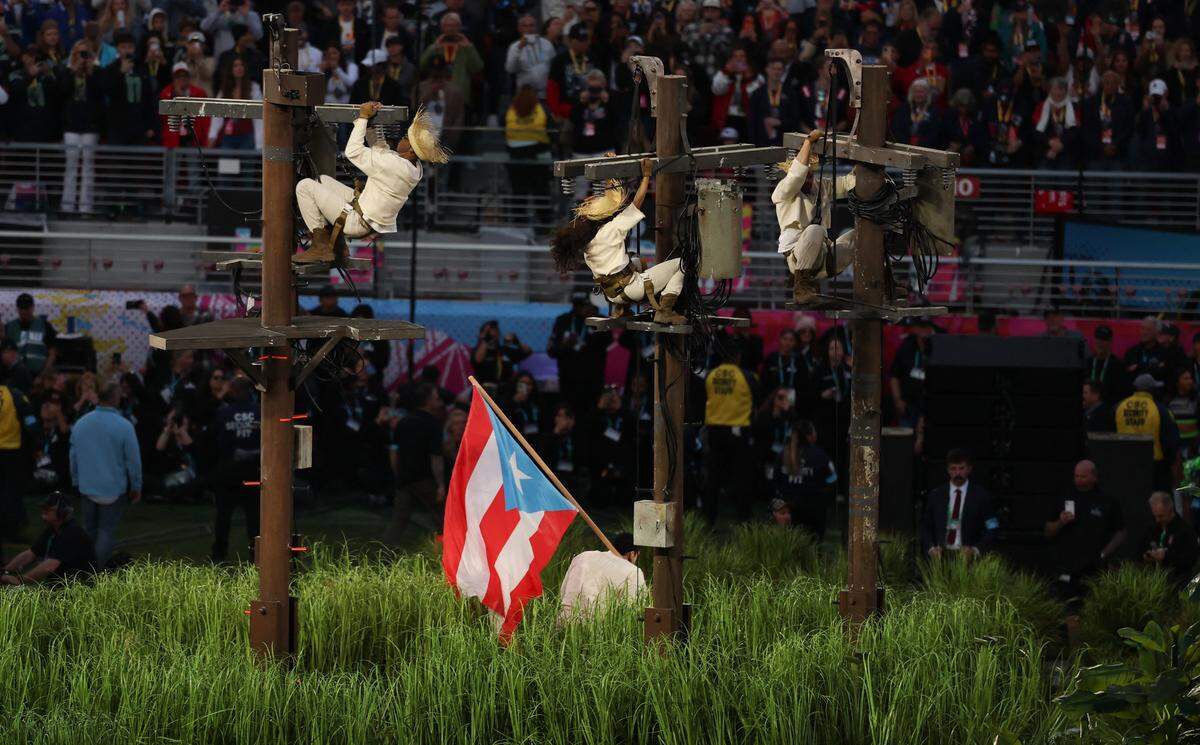
Bad Bunny carried the pro-Independence Puerto Rican flag as he performed “El Apagon,” a house music banger about Puerto Rico’s electricity crisis and constant power outages that became international headlines after Hurricane Maria. During that number, dancers swung from power lines.
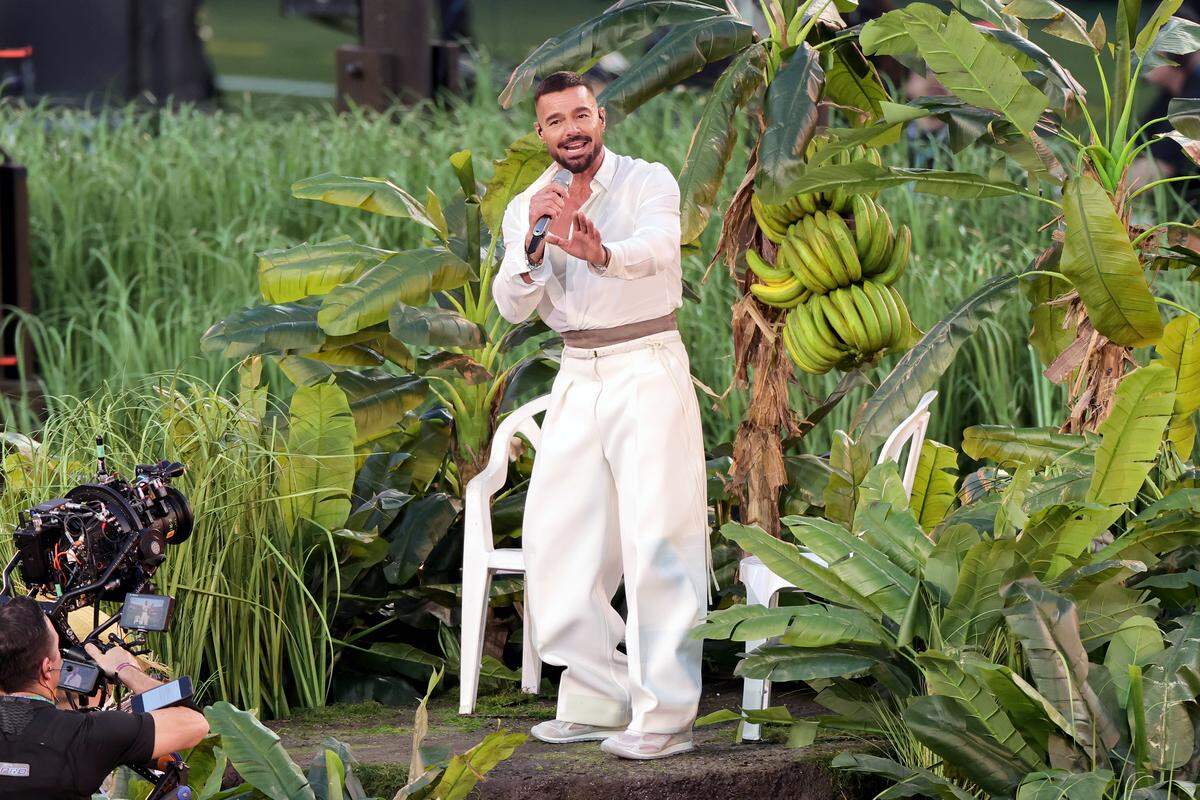
Fellow boricua Ricky Martin also performed, singing the chorus of “Lo que le pasó a Hawaii,” or “What happened to Hawaii,” an overtly political song that laments what happens when an island nation becomes a state.
At The Dead Flamingo’s watch party in Miami, Alex Valle, who is the owner of Thank You Miami Cocina & Beerhouse, called Bad Bunny’s performance “a step forward in life.” People need music and good times, especially in today’s political climate, he said.
For Sasha Torres, it felt very significant for the country to see Bad Bunny perform amid “everything going on with ICE,” she said, adding he has always been vocal about his politics. Bad Bunny avoided the United States for his most recent tour because of the immigration crackdowns and called for “ICE out” when he accepted a Grammy award this month.
His headlining performance caused a stir online from the moment it was announced months ago. For Puerto Ricans and Latinos, the NFL’s choice of a reggaeton star was seen as both a point of pride and a political statement, given the Trump administration’s anti-immigration agenda and U.S. Immigration and Customs Enforcement’s targeting of Latino communities. The NFL’s decision to pick Bad Bunny, one the biggest music superstars in the world and Puerto Rico’s unofficial cultural ambassador, to headline the halftime show is part of the league’s efforts to reach an international fanbase.
Unlike his Latino popstar predecessors, like fellow Super Bowl halftime performer Shakira, Bad Bunny is notably not a “crossover” artist. All of his music is in his native Spanish, not English. (In 2020, co-headliners Shakira and Jennifer Lopez performed their Super Bowl halftime show in English and Spanish. Bad Bunny appeared as a guest star that year to perform alongside Shakira.)
During his Saturday Night Live monologue in October, after he gave a shoutout to the Latino community in Spanish, Bad Bunny cracked this joke: “If you didn’t understand what I just said, you have four months to learn.”
Four months later, many conservatives were still not happy with the headliner. A recent poll showed that just 40% of registered Republican voters in Florida planned to watch Bad Bunny’s show, compared to 89% of Democrat voters, the Sun Sentinel reported. President Donald Trump disapproved of Bad Bunny as the headliner, calling it a “terrible choice.” The feeling is mutual, as Bad Bunny is not a fan of Trump.
Far-right group Turning Point USA announced its own alternative halftime show featuring Kid Rock to rival the NFL’s, branding it as the “All-American Halftime Show.” Ironically, the NFL’s halftime show was certainly all-American, too. Puerto Rico is a territory of the United States, which means Puerto Ricans born there (including Bad Bunny) are American citizens.
While the party at The Dead Flamingo was for drinks, dancing and fun, Bad Bunny’s show held a deeper significance for Miami and the country, as fans wiped tears and screamed with joy. Owner Michael Guerrero said Bad Bunny’s rise is a Latino’s American Dream.
“He made it,” he said. “We made it. It’s a proud moment.”
READ MORE: How salsa is getting Miami’s Gen Z off their phones and onto the dance floor
Miami Herald reporter Sofia Saric contributed to this report.
This story was originally published February 8, 2026 at 9:09 PM.