
Gang rule, racial animus — a judge saw right through Trump’s Haiti TPS revocation | Opinion
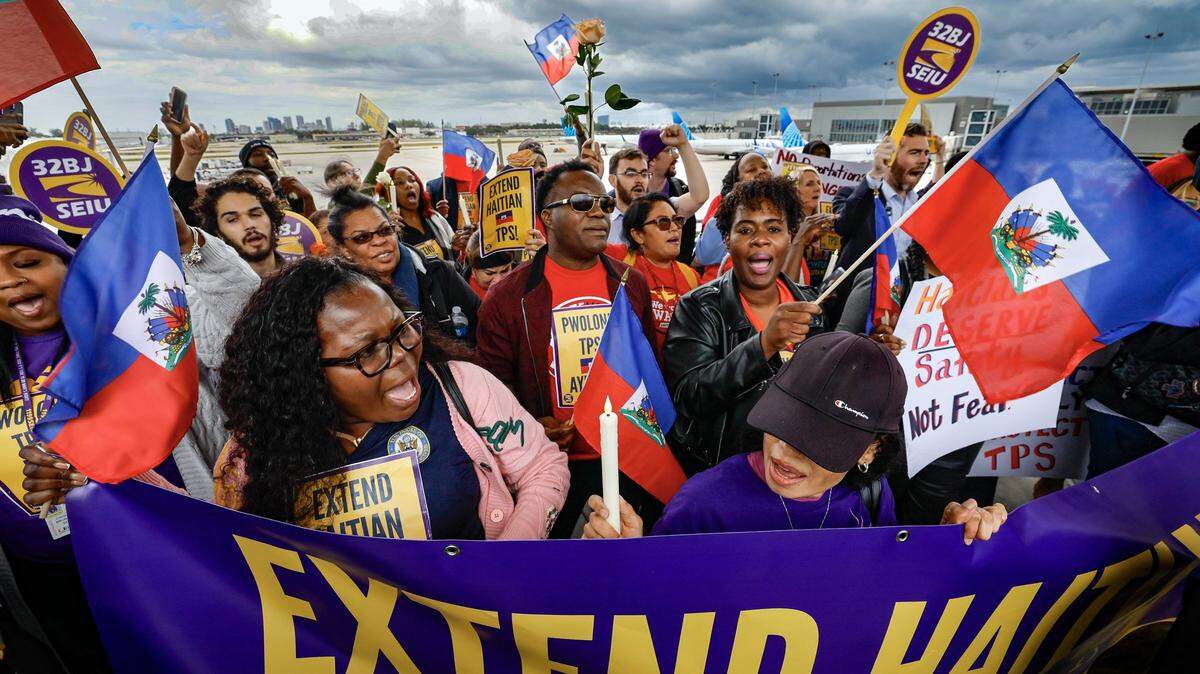
A federal judge stepped in at the last minute late Monday to stop the Trump administration from revoking Temporary Protected Status from Haitians in the U.S., a move that prevents, for now, more than 350,000 Haitians facing possible detention and deportation back to their devastated homeland.
At least someone finally had some sense. The Trump administration’s insistence that conditions in Haiti were good enough to end TPS flies in the face of harsh reality. Since the 2010 earthquake left more than 300,000 dead and 1.5 million homeless, conditions have only continued to deteriorate there.
That’s something South Florida understands deeply — even if politicians in Washington pretend otherwise — and which the U.S. District Judge Ana C. Reyes also comprehends, writing in an 83-page ruling that Haitians would face irreparable harm if they return, the Miami Herald reported.
How bad is it in Haiti? As the Herald reported, there is not one elected official in office nearly five years after President Jovenel Moise was assassinated. Not one. Gangs are running large sections of the country. The expected end later this week of a ruling presidential council is likely to create more violence and instability.
Sending people back to Haiti right now is, as many advocates have said — and we believe — virtually sentencing many of them to death. There have reportedly been thousands of killings, many rapes and more than 6 million people in need of humanitarian assistance, including over 1.4 million who have been forced to flee their homes.
And then there’s the compelling economic argument: In South Florida, where more than 150,000 Haitians hold TPS, business leaders are worried about the potential economic impact of losing workers in industries such as healthcare, especially for the elderly. This is Florida, a retirement haven. How is that a good idea?
Our state is home to nearly half of all Haitian TPS recipients in the U.S., the Herald reported. The impact here would be enormous.
Phillip Connor, a research fellow at Princeton University’s Center for Migration and Development who analyzed data from the U.S. Census Bureau, estimated that TPS holders pump more than $1 billion a year into the national and local economies, the Herald reported.
The legal argument in this case is particularly important to note. The plaintiffs — there are nine, including Haitian TPS holders, the Haitian Evangelical Clergy Association and a service labor union — argued that the decision to end TPS for Haitians was made because they are Black, based on race, not nationality. It’s an equal protection claim against Homeland Security Secretary Kristi Noem and the president. The plaintiffs claim the administration is acting out of racial animus.
Reyes agreed, using Noem’s own words to showcase the administration’s prejudiced decision to end TPS. Reyes noted Noem once referred to Haiti as “one of those (her word) ‘damn’ countries,” the Herald reported.
Who can forget then-candidate Trump in 2024 repeating the false and damaging claim that Haitians in Springfield, Ohio, were “eating the dogs. They’re eating the cats. They’re eating the pets of the people that live there”?
The administration has already ended TPS for a number of nationalities including Venezuela and Nicaragua. And no doubt the Trump administration will appeal the ruling in the hope that the court will let deportations continue while litigation proceeds.
We understand that TPS is, by definition, temporary. And that Haiti’s original designation came under President Obama after the earthquake, which was more than 15 years ago. But Haiti’s situation is dire. Conditions there have not improved; they’ve gotten far worse. For the Trump administration to argue otherwise is just plain wrong.
BEHIND THE STORY
MOREWhat's an editorial?
Editorials are opinion pieces that reflect the views of the Miami Herald Editorial Board, a group of opinion journalists that operates separately from the Miami Herald newsroom. Miami Herald Editorial Board members are: opinion editor Amy Driscoll and editorial writers Isadora Rangel and Mary Anna Mancuso. Read more by clicking the arrow in the upper right.
What's the difference between an op-ed and a column?
How does the Miami Herald Editorial Board decide what to write about?
The Editorial Board, made up of experienced opinion journalists, primarily addresses local and state issues that affect South Florida residents. Each board member has an area of focus, such as education, COVID or local government policy. Board members meet daily and bring up an array of topics for discussion. Once a topic is fully discussed, board members will further report the issue, interviewing stakeholders and others involved and affected, so that the board can present the most informed opinion possible. We strive to provide our community with thought leadership that advocates for policies and priorities that strengthen our communities. Our editorials promote social justice, fairness in economic, educational and social opportunities and an end to systemic racism and inequality. The Editorial Board is separate from the reporters and editors of the Miami Herald newsroom.
How can I contribute to the Miami Herald Opinion section?
The Editorial Board accepts op-ed submissions of 650-700 words from community members who want to argue a specific viewpoint or idea that is relevant to our area. You can email an op-ed submission to oped@miamiherald.com. We also accept 150-word letters to the editor from readers who want to offer their points of view on current issues. For more information on how to submit a letter, go here.