
County’s dispute with Miami’s beloved nature center looks like a power grab | Opinion
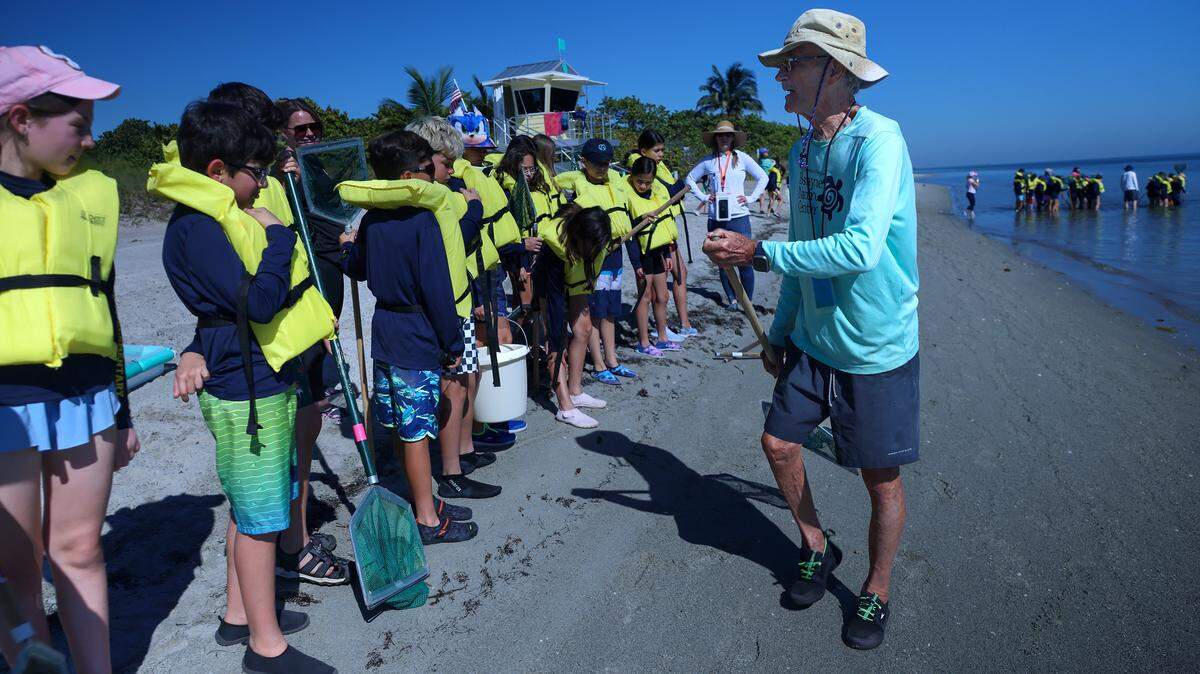
When the county issued an eviction notice to Marjory Stoneman Douglas Biscayne Nature Center a few weeks ago, officials at the nonprofit say they were caught off guard by the effort.
So were we — along with local environmentalists and others with ties to the center, which has occupied the building on Key Biscayne since 2001. We were puzzled, too, by the apparent involvement of the mayor’s top campaign and political advisor in the matter, as the Herald reported.
The nonprofit has not just been an environmental education center for 40 years, teaching students about South Florida’s ecology; it is part of the legacy of Marjory Stoneman Douglas, Miami’s most iconic environmentalist and the mother of Everglades restoration. The nonprofit is housed in a building she helped raise money to construct.
Miami-Dade County has backed off the Nov. 23 eviction notice and moved into a month-to-month deal with the center until a new agreement is reached. There are no interruptions to its programs, the Herald reported.
That’s for now, at least. Our hope is that the alarms sounded in the community will prompt Mayor Daniella Levine Cava’s administration to permanently end what appears to be a power grab to help make up for the county’s budget problems.
A county spokesman told the Herald Editorial Board on Nov. 26 that Miami-Dade and the nonprofit were still in “active negotiations.”
“We are committed to continuing open, productive conversations with the Marjory Stoneman Douglas Biscayne Nature Center. We have communicated extensively with their leadership that all programs at the Center will continue without interruption while we work to resolve any final matters as quickly as possible and move toward a new agreement,” the spokesman wrote in an email.
But two of the center’s supporters wrote in a Herald opinion piece that “...there has still been no productive dialogue” with the county.
“Each day of silence jeopardizes the nonprofit’s ability to plan programs, honor school commitments and retain staff,” wrote Bruce Matheson and Charles Munroe Jr., president and board member of Friends of Biscayne Bay. Matheson’s family donated land to establish Crandon Park, the center’s location.
The Herald reported on Nov. 19 that the county wants to expand programming at the site by using its own staff, instead of taking its current 10% cut of the center’s annual revenue, about $20,000, for the use of county-owned land. Officials expect that would raise revenue to $1 million per year but did not provide documents to back that projection when a Herald reporter requested them.
The $400-million-plus budget shortfall Miami-Dade faced earlier this year put a strain on resources with cuts to park staff, deferred maintenance and reduced hours at county pools. Miami-Dade eventually closed that gap, but more budget woes are expected in coming years.
We doubt evicting Marjory Stoneman Douglas Biscayne Nature Center would do much to address these financial problems. More important, we wonder whether county government would run the center better and more efficiently than the nonprofit has done for four decades by providing free or low-cost camps and other programs for students.
And then there’s the strange apparent involvement of Christian Ulvert in this matter — even though he holds no position in Miami-Dade government. Ulvert is a top political advisor to many elected officials and ran Levine Cava’s campaigns.
The Herald reported that the law firm representing the nonprofit sent a letter to the county stating the center was “directed” to meet with a “third party advisor” who told the center that its only option was to accept Miami-Dade’s “new plan,” even though the nonprofit could not see it.
That unnamed advisor appears to be Ulvert, according to an email reviewed by the Herald.
Miami-Dade denied directing anyone to meet with Ulvert, and he told the Herald he only met with the center’s board members as a concerned citizen. But Ulvert isn’t just any citizen. His apparent involvement blurs the lines between protecting taxpayers’ interests and personal and political ones.
This adds another layer of controversy to an already questionable move by Miami-Dade. By meddling with Stoneman Douglas’ legacy, the county may have picked an unnecessary battle, one that it needs to resolve quickly.
BEHIND THE STORY
MOREWhat's an editorial?
Editorials are opinion pieces that reflect the views of the Miami Herald Editorial Board, a group of opinion journalists that operates separately from the Miami Herald newsroom. Miami Herald Editorial Board members are: opinion editor Amy Driscoll and editorial writers Isadora Rangel and Mary Anna Mancuso. Read more by clicking the arrow in the upper right.
What's the difference between an op-ed and a column?
How does the Miami Herald Editorial Board decide what to write about?
The Editorial Board, made up of experienced opinion journalists, primarily addresses local and state issues that affect South Florida residents. Each board member has an area of focus, such as education, COVID or local government policy. Board members meet daily and bring up an array of topics for discussion. Once a topic is fully discussed, board members will further report the issue, interviewing stakeholders and others involved and affected, so that the board can present the most informed opinion possible. We strive to provide our community with thought leadership that advocates for policies and priorities that strengthen our communities. Our editorials promote social justice, fairness in economic, educational and social opportunities and an end to systemic racism and inequality. The Editorial Board is separate from the reporters and editors of the Miami Herald newsroom.
How can I contribute to the Miami Herald Opinion section?
The Editorial Board accepts op-ed submissions of 650-700 words from community members who want to argue a specific viewpoint or idea that is relevant to our area. You can email an op-ed submission to oped@miamiherald.com. We also accept 150-word letters to the editor from readers who want to offer their points of view on current issues. For more information on how to submit a letter, go here.