
Save this nature center partnership for the sake of Miami-Dade kids and the environment | Opinion
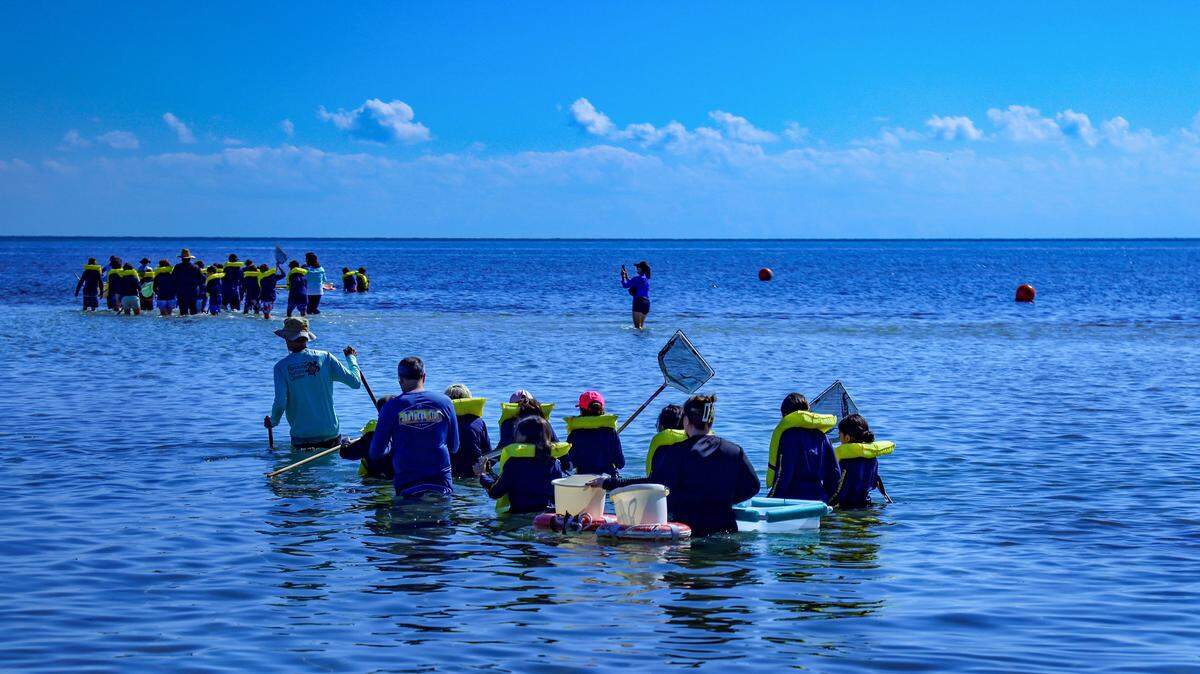
For nearly four decades, the Marjory Stoneman Douglas Biscayne Nature Center, a 501(c)(3) nonprofit located in Crandon Park on Key Biscayne, has partnered with Miami-Dade County Public Schools and the Miami-Dade Parks, Recreation and Open Spaces Department to educate tens of thousands of local students about Biscayne Bay, our coastal ecosystems and South Florida’s natural heritage.
The collaboration has worked remarkably well. The county parks department leases 2.9 acres to the school board and operates public recreation programs, such as kayaking. The county school system provides field-trip education to fifth graders at the center, and the nonprofit educates other county students through its staff and naturalists.
Importantly, the nonprofit has also been a key fundraising partner, securing roughly $4 million to construct the Crandon Park Visitors’ and Nature Center building — which opened on April 7, 2001 — and continually covers the costs for students who cannot afford to attend the school system’s fifth-grade program.
The nonprofit’s programs immerse students in the outdoors by taking them on knee-deep wading tours through seagrass beds with dip nets and on walking trails along the beach, across dune ecosystems, through the hardwood hammock and to the fossilized mangrove reef in the Bear Cut Preserve. Indoor activities include a “touch tank,” allowing children to interact directly with sea creatures, such as starfish. The experience educates over 12,000 children annually about their natural environment and inspires stewardship of our natural resources — all at no cost to the county. The nonprofit also contributes a percentage of its program and gift-shop revenue back to the county.
On August 22, 2025, instead of extending the partnership, Miami-Dade County abruptly issued what is effectively an eviction — ordering the nonprofit to remove all property and vacate by November 23, 2025. The center’s longtime director, Theodora Long, who has led the organization with distinction for 37 years, did not receive a courtesy phone call. After receiving the notice, she scheduled several meetings with county officials, only to have each one canceled.
It later emerged that the county’s proposed budget includes $1 million in new income from the Biscayne Nature Center’s operations — revealing an apparent motive for ending the collaboration. Yet no details of the county’s plan have been disclosed.
At a time when Biscayne Bay is again at a tipping point, the nonprofit’s outreach is more vital than ever to Friends of Biscayne Bay’s mission of protecting this critical resource. In response to the county’s action, nearly 20,000 residents signed our petition supporting the nonprofit’s programs. We hoped that this extraordinary show of public support would prompt the county to reconsider. Although a 45-day lease extension was recently granted, there has still been no productive dialogue. Each day of silence jeopardizes the nonprofit’s ability to plan programs, honor school commitments and retain staff.
The nonprofit’s programs are an educational gem in a county that too often overlooks environmental outreach. Ending this partnership would risk erasing decades of community investment, volunteerism and education.
Mayor Daniella Levine Cava built her public reputation as an environmental champion and social justice advocate. Yet her administration is now targeting a nonprofit founded by Miami’s most iconic environmentalist: Marjory Stoneman Douglas. We urge the mayor not to lose the trust of the environmental community that has long supported her.
We ask Miami-Dade County to reaffirm its commitment to the center’s educational mission by entering good-faith discussions to preserve the nonprofit’s role and programs. Those who love Crandon Park and this community will not give up on this partnership — and neither should the mayor.
Bruce Matheson, a lifelong Miami-Dade resident, is president of Friends of Biscayne Bay and a longtime advocate for protecting and restoring Biscayne Bay and preserving Miami-Dade’s natural and public lands. He is the great-grandson of W.J. Matheson, who helped shape South Florida’s early development and whose family in 1930 donated 82 acres for the county’s first Park, Matheson Hammock, and more than 800 acres of Key Biscayne in 1940 to establish Crandon Park.
Charles Munroe, Jr., is a fourth-generation Miami-Dade native and serves on the board of Friends of Biscayne Bay. He is an avid sailor, diver and passionate advocate for Biscayne Bay’s ecological health. He is a descendant of the pioneering Munroe family; Ralph Middleton Munroe built the home now preserved as The Barnacle Historic State Park in Coconut Grove.