
President Trump, Haitians and others banned from the U.S. are not the boogeymen | Opinion
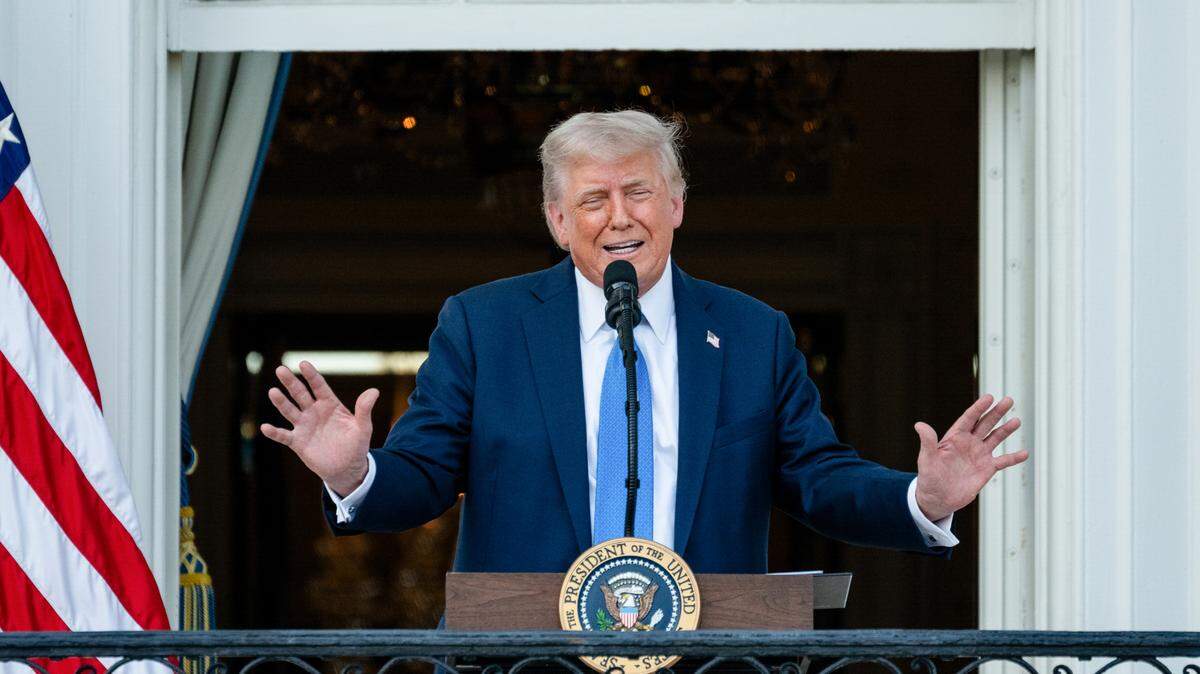
When President Donald Trump repeated a baseless claim in the 2024 election that Haitians living in a small Ohio town were eating people’s dogs and cats, America got a glimpse into how the president may view a lot of migrants.
The implication was that people from the poorest country in the Western Hemisphere were a threat to the values and safety of this country. Now, we see those views being put into policy.
The U.S. faces a lot of challenges and people’s concern about crime and out-of-control immigration are legitimate. But will ridding the country of as many immigrants as possible — whether undocumented or those here legally with Temporary Protected Status — and closing our borders to visitors and students from other countries truly fix our problems?
On Wednesday, Trump announced a total travel ban on the entry of Haitians and other countries’ nationals into the United States and a partial ban on Cubans and Venezuelans.
This is just the latest in the long list of actions he’s taken on immigration with frenetic pace. These actions aren’t designed to just go after criminals. They seem unlikely to make use safer, given that many studies show immigrants commit fewer crimes than Americans. They seem to be aimed at countries and people we just don’t like.
The travel ban goes into effect on June 9 and also includes other countries such as Afghanistan, Iran, Libya, Somalia, Sudan and Yemen. Trump tied his announcement to the horrific attack on a group of Jews in Colorado over the weekend that police say was perpetrated by a man from Egypt, a country not covered by the ban, who had overstayed his visitor visa .
Besides the travel ban, the Trump administration has:
- Revoked Temporary Protected Status from Venezuelans, and 350,000 people face deportation for now following a decision by the U.S. Supreme Court.
- Rescinded a Biden-era extension of TPS for Haitians, meaning deportation protections for them will end Aug. 3 if the program is not re-extended.
- Revoked a humanitarian parole program that allowed people from Cuba, Haiti, Venezuela and Nicaragua — countries facing turmoil or undemocratic regimes — to stay and work in the U.S. for up to two years. The Supreme Court last week allowed the administration to begin deporting 532,000 parole recipients.
- Paused student and exchange visa interviews.
- Banned Chinese students from obtaining visas to study at American universities.
- Blocked Harvard University from enrolling international students as apparent retaliation for the school balking at Trump’s demands.
- Revoked the visa of thousands of foreign students, in some cases without a clear reason, and detained a Tufts University doctoral student from Turkey who wrote an op-ed criticizing her school’s response to the Israel-Hamas war in Gaza.
Meanwhile, under DOGE, the Trump administration has also cut foreign humanitarian aid to several countries. The White House this week sent a request to Congress to eliminate $8.3 billion in foreign aid, including for HIV relief and refugee assistance.
Most of those refugees might no longer be able to seek safety in the U.S. One of Trump’s first actions when he took office in January was to suspend the country’s resettlement program indefinitely, saying those foreigners competed for “resources” against Americans. At the time, 600,000 people were being considered for admission, according to the Associated Press.
Trump has made one exception for white South Africans who, he has claimed without evidence, face genocide because of their race. Last month, the first group of Afrikaners — who are of mostly Dutch descent — arrived in Washington, D.C. While it can take years for refugees to be granted entry into the U.S., white South Africans were settled in a matter of a couple of months.
If the goal was to truly make sure we’re not allowing bad people into the country — a goal anyone can get behind — Trump would have approached issues such as TPS and refugee settlement with a fine-tooth comb, not a sledge hammer, with travel bans and blanket revocations of immigration benefits.
It’s becoming clearer that Trump isn’t working toward a more efficient immigration system but toward one that barely exists.
Click here to send the letter.
BEHIND THE STORY
MOREWhat's an editorial?
Editorials are opinion pieces that reflect the views of the Miami Herald Editorial Board, a group of opinion journalists that operates separately from the Miami Herald newsroom. Miami Herald Editorial Board members are: opinion editor Amy Driscoll and editorial writers Isadora Rangel and Mary Anna Mancuso. Read more by clicking the arrow in the upper right.
What's the difference between an op-ed and a column?
How does the Miami Herald Editorial Board decide what to write about?
The Editorial Board, made up of experienced opinion journalists, primarily addresses local and state issues that affect South Florida residents. Each board member has an area of focus, such as education, COVID or local government policy. Board members meet daily and bring up an array of topics for discussion. Once a topic is fully discussed, board members will further report the issue, interviewing stakeholders and others involved and affected, so that the board can present the most informed opinion possible. We strive to provide our community with thought leadership that advocates for policies and priorities that strengthen our communities. Our editorials promote social justice, fairness in economic, educational and social opportunities and an end to systemic racism and inequality. The Editorial Board is separate from the reporters and editors of the Miami Herald newsroom.
How can I contribute to the Miami Herald Opinion section?
The Editorial Board accepts op-ed submissions of 650-700 words from community members who want to argue a specific viewpoint or idea that is relevant to our area. You can email an op-ed submission to oped@miamiherald.com. We also accept 150-word letters to the editor from readers who want to offer their points of view on current issues. For more information on how to submit a letter, go here.
This story was originally published June 5, 2025 at 5:35 PM.