
Florida House speaker is right. College president searches shouldn’t be a ‘spoil system’ | Opinion
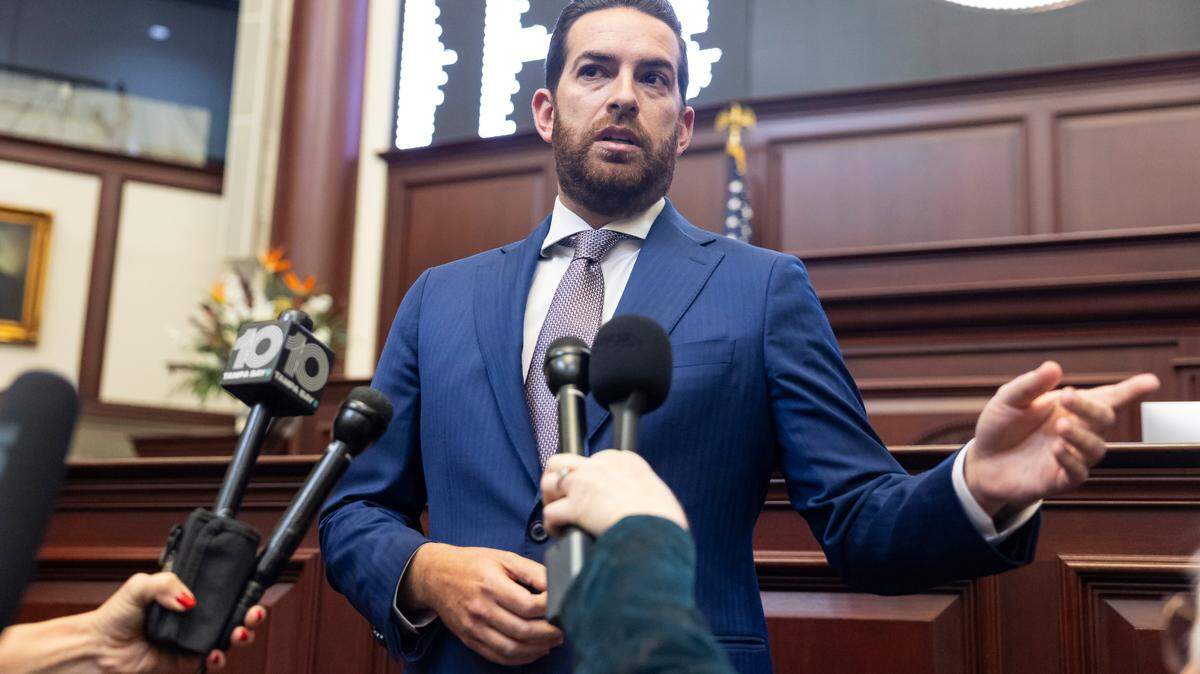
“A spoil system.” That’s how Florida House Speaker Daniel Perez last month characterized the state’s current method of selecting public university presidents under a 2022 law that shields information about the identity of candidates seeking those jobs from public disclosure.
He was right. Under current law, higher education presidential searches have been twisted during the last few years into games where the outcome is pre-determined by those in power — a patronage system, in other words — and the public is the last to know what’s going on. The result has been more and more political allies of Gov. Ron DeSantis snagging plum jobs at the state’s colleges and universities.
Now an important bill moving forward in the Florida House seeks to end the meddling behind closed doors. It would stop the governor or administration employees from discussing a presidential vacancy or anticipated opening with state and local university leaders. It would also remove the requirement that the state university system’s Board of Governors confirm a candidate selected by a university and return the process to each university’s board. And, notably, it would repeal a public records exemption that kept the public in the dark about presidential candidates until the end of the process.
The House bill, HB 1321, sponsored by Rep. Michelle Salzman, R-Pensacola, is gaining traction. A similar Senate Bill, SB 1726, sponsored by Miami Republican Sen. Alexis Calatayud, is also moving forward.
The college and university president selection process has a big problem: It’s hijacked by politics. And that’s not a secret. As we have noted before, even former state Sen. Jeff Brandes, a St. Petersburg Republican who helped sponsor the original bill that allowed presidential searches to be conducted mostly out of the public eye, said in 2023 that the legislation had been “perverted” by those who sought to control the outcome of the searches. The law only allows the disclosure of university president hopefuls in the later stages of a search.
For example, when the University of Florida president was chosen in 2022, only one name was put forth, former U.S. Sen. Ben Sasse of Nebraska. At Florida State College in 2023, again there was only one finalist, former state Rep. Fred Hawkins, a St. Cloud Republican. Two months ago, the governor’s office pushed Florida International University to hire former Lt. Gov. Jeannette Nuñez as its interim president — without a search. And just last week, DeSantis acknowledged in a press conference that he had tried to put former Rep. Randy Fine, now a congressman from Central Florida, into the top job at Florida Atlantic University because, “they wanted to get him out of the Legislature.”
The fight over control of higher education in Florida is part of a larger battle between DeSantis and the Legislature. Perez, in particular, has been forging an independent path for the House that sometimes runs directly counter to DeSantis’ positions. After so many years of lockstep obedience from lawmakers, the pushback is long overdue, a welcome sign that the checks and balances of democracy in Tallahassee can still function, even if they’re a bit creaky from under use.
That hasn’t been lost on the governor. On Wednesday, DeSantis lashed out at the House bill in a video posted on X, saying “HB 1321 should be nicknamed the ‘Make Universities Woke Again’ Act” because it would remove accountability that prevents colleges and universities from “reverting to a focus on indoctrination.”
Perez responded to reporters about DeSantis’ video that he does not “understand where he is coming from.” The bill, he noted, is about bringing the selection process back into the sunshine. “People should know what’s going on out there,” he said.
Last month, Perez put it more bluntly to the university system’s Board of Governors during a meeting at Florida A&M University. As the News Service of Florida reported, he said: “We cannot reject DEI [diversity, equity and inclusion] in the name of meritocracy while replacing it with a spoil system for a select few.”
Supporters of the exemptions argue they are needed to help attract top candidates who might be hesitant to apply for Florida president jobs if their employers found out. But that’s not a good reason.
If this legislation is approved, the selections of presidents of public institutions of higher learning would be made in the open once again. That’s the right thing to do. Higher education is too important to let it become a pawn of politics.
Click here to send the letter.
BEHIND THE STORY
MOREWhat's an editorial?
Editorials are opinion pieces that reflect the views of the Miami Herald Editorial Board, a group of opinion journalists that operates separately from the Miami Herald newsroom. Miami Herald Editorial Board members are: opinion editor Amy Driscoll and editorial writers Isadora Rangel and Mary Anna Mancuso. Read more by clicking the arrow in the upper right.
What's the difference between an op-ed and a column?
How does the Miami Herald Editorial Board decide what to write about?
The Editorial Board, made up of experienced opinion journalists, primarily addresses local and state issues that affect South Florida residents. Each board member has an area of focus, such as education, COVID or local government policy. Board members meet daily and bring up an array of topics for discussion. Once a topic is fully discussed, board members will further report the issue, interviewing stakeholders and others involved and affected, so that the board can present the most informed opinion possible. We strive to provide our community with thought leadership that advocates for policies and priorities that strengthen our communities. Our editorials promote social justice, fairness in economic, educational and social opportunities and an end to systemic racism and inequality. The Editorial Board is separate from the reporters and editors of the Miami Herald newsroom.
How can I contribute to the Miami Herald Opinion section?
The Editorial Board accepts op-ed submissions of 650-700 words from community members who want to argue a specific viewpoint or idea that is relevant to our area. You can email an op-ed submission to oped@miamiherald.com. We also accept 150-word letters to the editor from readers who want to offer their points of view on current issues. For more information on how to submit a letter, go here.
This story was originally published March 26, 2025 at 8:11 PM.