
Bill would stop DeSantis from hand-picking university presidents. His allies push back
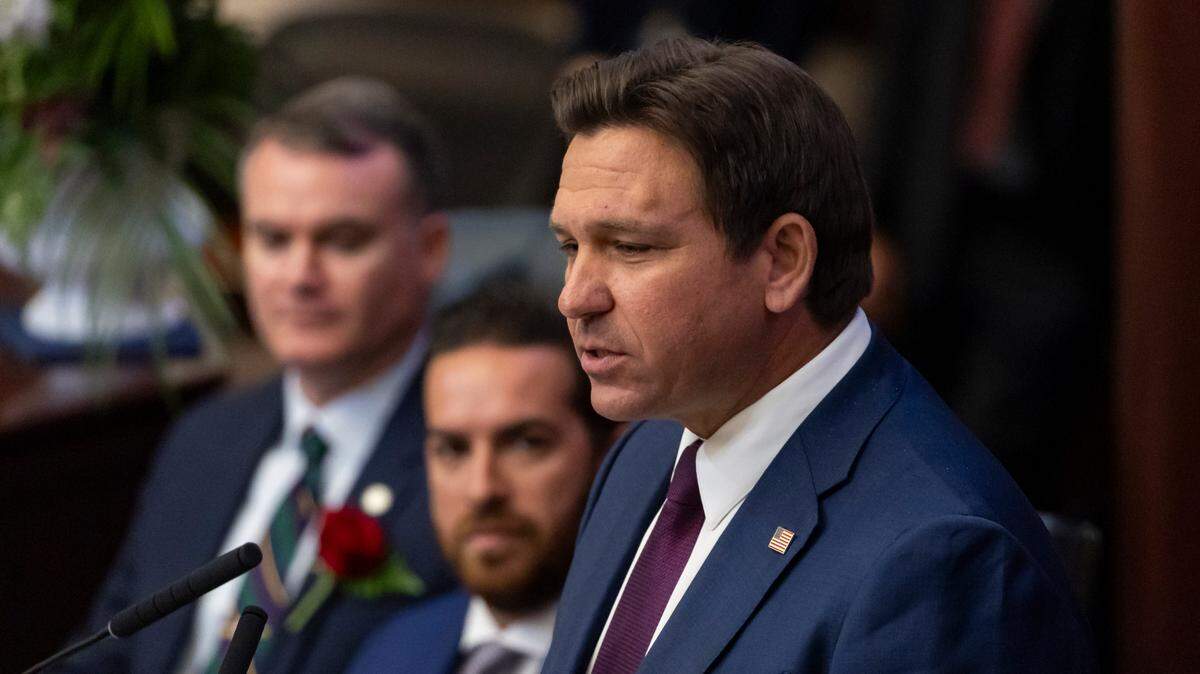
In recent years, Gov. Ron DeSantis has helped install political allies at the helm of public colleges and universities in an effort to remake Florida’ higher-education into a bastion of conservatism.
Now, a bill advancing in the Republican-led Florida House seeks to stop the governor and employees in his administration from getting involved in a university’s presidential search.
If approved, the House bill would prohibit the governor or an employee in his administration from discussing a presidential vacancy or anticipated opening with state and local university leaders.
The bill would also remove the requirement that the state university system’s Board of Governors confirm a candidate selected by a university. Instead, each university’s board would have the power to select and appoint a president of its choosing. The proposal would also repeal a public records exemption in an effort to make the presidential selection process at universities and colleges more transparent.
“The bill is a lot bigger than one portion – and I have no problem discussing that issue with the governor and his team,” state Rep. Michelle Salzman, the sponsor of the bill, said on Wednesday after she was criticized online for trying to remove the governor from the selection process.
The proposal comes just two months after the governor’s office pushed Florida International University to hire Jeannette Nuñez as its interim president without a search. Nuñez was serving as DeSantis’ lieutenant governor when the governor’s office advocated for her hiring. She now earns an annual salary of $850,000 as interim president, according to her contract.
Along with FIU, the governor’s influence over university presidential searches has been increasingly apparent, underscoring a trend in Florida that appears to favor political connections over academic credentials as DeSantis works to eradicate what he has characterized as “woke indoctrination” on college campuses.
In at least one case, the governor has viewed an open presidential post as an opportunity to move a rival out of Tallahassee. At a news conference last week, he revealed that he tried to put Congressman Randy Fine, a former state lawmaker, at the helm of FAU because state lawmakers wanted to get rid of him.
“They wanted to get him out of the Legislature, so they asked me to put him up for Florida Atlantic president, and I did, and the whole board would’ve rather resigned than make him president,” DeSantis said at a news conference last week.
DeSantis and his allies push back
The House proposal was slammed by DeSantis in a video that was posted on X late on Wednesday.
The governor said the proposal would roll back the progress he has ushered in at the state’s higher education system, and “pave the way for the re-wokification” of universities.
“Do not turn the reins over to unelected bureaucrats inside the universities,” DeSantis said. “We need to have accountability and the people you elect to office need to bring that accountability.
House Speaker Daniel Perez, R-Miami, told reporters shortly after the governor’s video was posted that he does not “understand where he is coming from” when he says the bill would bring back “woke ideology” to college campuses.
Perez said the bill aims to bring universities’ presidential searches back into the sunshine, in reference to a provision that would repeal a law that currently shields information about the candidates vying to become college and university presidents.
“People should know what’s going on out there,” Perez said.
Perez also noted that the university trustees are appointed by the governor, as is the state board that oversees higher education, and that the House bill doesn’t change that.
Earlier on Wednesday, Attorney General James Uthmeier, who up until late February served as the governor’s chief of staff, criticized the House proposal and said Republicans in the chamber “forgot they were elected to get the woke out of higher ed.”
“God forbid we have conservatives wanting to do conservative things,” Uthmeier said in a post on X. “We should all hope our conservative governors and state leaders want to be proactively involved in finding great conservative Presidents for our universities and colleges — they are state funded executive institutions, after all.”
Uthmeier added that “it was an honor” to help put conservative presidents at the helm of eight state universities, including FIU, New College of Florida and Florida Atlantic University. At New College and FAU, the presidents have a background that is more focused on politics than academics.
Richard Corcoran, a former Florida House speaker, has overseen a conservative makeover of New College. And Adam Hasner, a former GOP lawmaker who worked as a public policy director with GEO Group, a private prison company, leads FAU. Last week, FAU police sought immigration enforcement authority to question and detain people on campus as the state pushed for more immigration enforcement at the state and local level.
Florida law currently requires the university’s board of trustees to conduct a search to select a presidential candidate, who then needs to be confirmed by the state university system’s Board of Governors.
When the FIU Board of Trustees selected Nuñez as interim president in February, one FIU board member said the state’s rules “do not anticipate the reality of an engaged governor’s office being involved in the hiring of our presidents.”
“I don’t think that engagement is going to change in the next few years,” Board member Dean Colson said during a meeting. If the rules are not changed, Colson said the university will have to spend “a lot of time and money when the probable results in the search are already known.”
Whether intentional or not, Florida lawmakers in both chambers appear intent on addressing those questions and giving the power back to university boards.
In the Senate
The House bill – and a similar bill in the Senate — would both change the law to remove the Board of Governor’s authority in the selection process. The Senate bill — sponsored by Sen. Alexis Calatayud, R-Miami — does not include the provision that would prohibit the governor and his staff from getting involved in the advocacy of a candidate.
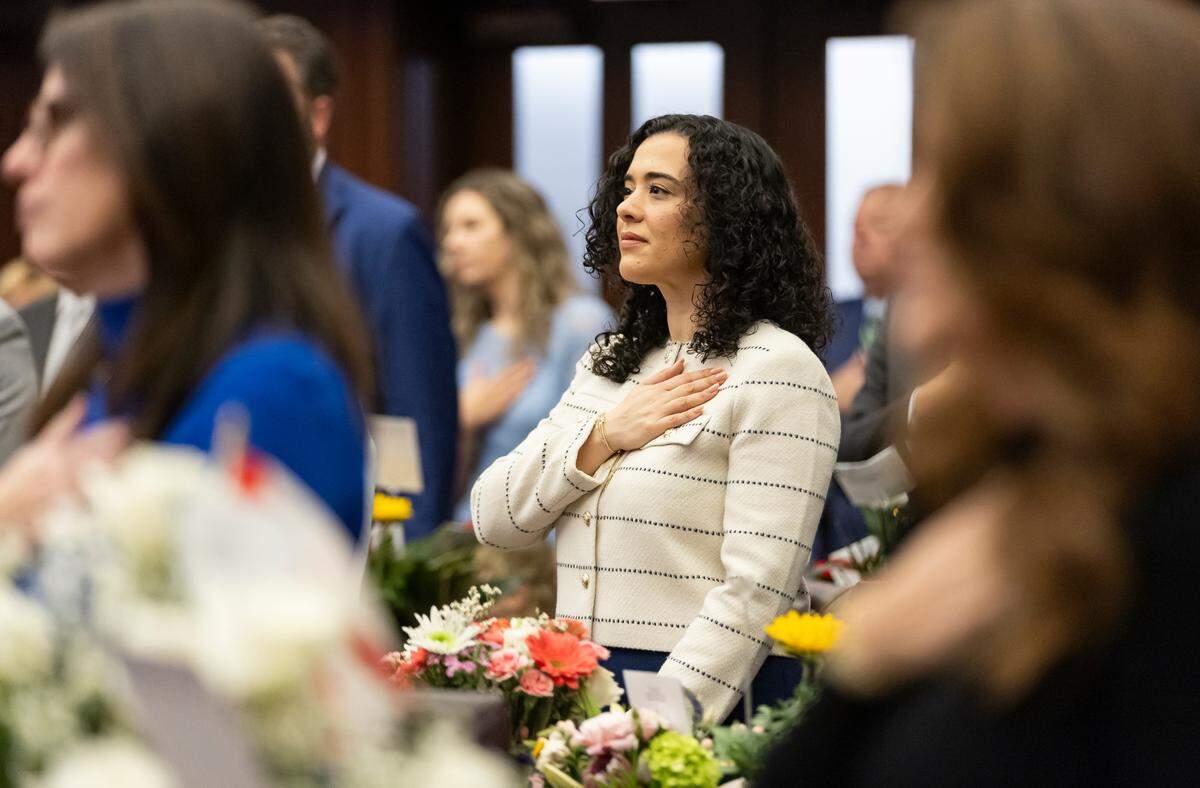
Calatayud did not respond to a request seeking comment on her bill on Wednesday.
On Thursday, the Miami Republican’s bill cleared the Senate Appropriations Subcommittee on Higher Education with a major rewrite. Among the changes is a proposal to prohibit universities from doing polling on federal, state or local candidates. Under her bill, a university would still have the ability to do polling “to measure and inform the public about social, political and economic issues related to candidate preferences.”
The impetus for the polling restrictions was not explained during the committee hearing, but the idea drew concerns from senators of both parties.
“I am not sure about the polling language that is here because honestly some of the best polling that we see on a lot of different races for public office here in Florida come from our higher ed institutions,” Sen. Carlos Guillermo Smith, D-Orlando, said during the committe hearing.
Some universities, including FIU, FAU and the University of North Florida, have polling operations.
UNF in February released a poll that said First Lady Casey DeSantis might be an early favorite to replace her husband in office, compared to U.S. Rep. Byron Donalds. FAU conducted a series of polls on the 2024 presidential race.
This story was originally published April 9, 2025 at 4:26 PM.