
Cuban-American Rep. Díaz-Balart fought for refugees in the U.S. Who champions them now? | Opinion
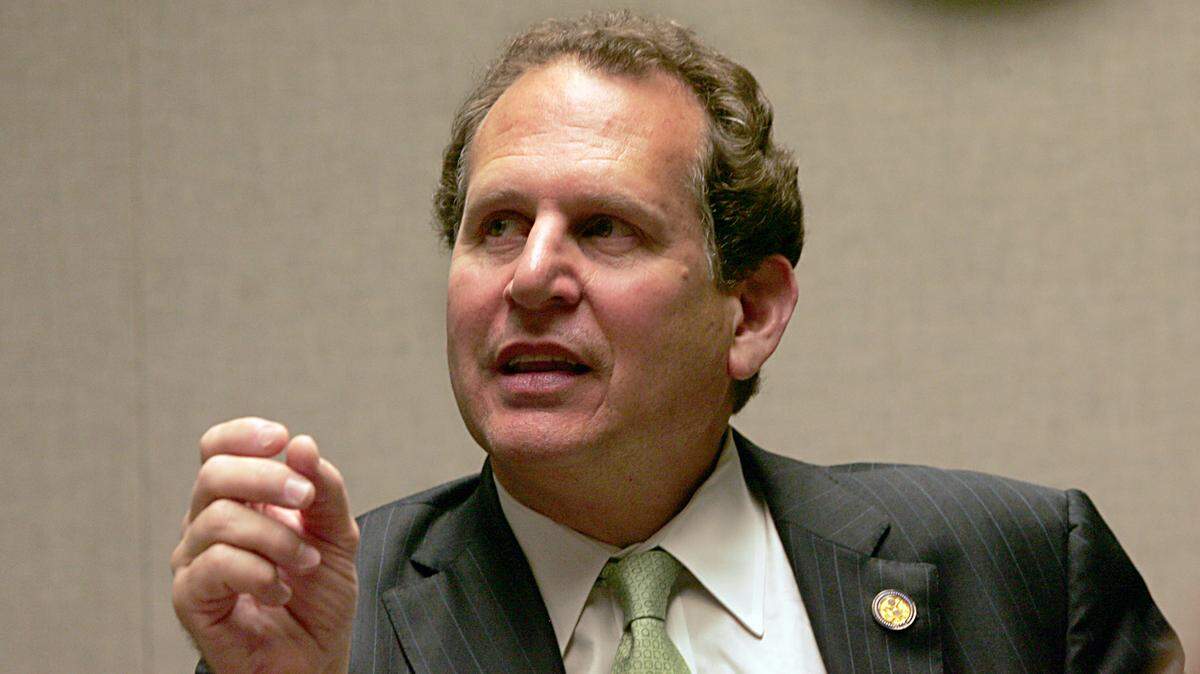
Former Miami Republican U.S. Rep. Lincoln Díaz-Balart, who died Monday at 70 after a battle with cancer, was a political towering figure in Miami’s Cuban exile community — a fierce opponent of Fidel Castro and a devoted advocate for a free Cuba.
Sadly, Díaz-Balart is yet another Cuban exile outlived by the communist Castro regime, which today remains in power after 66 years.
His life was emblematic of the Cuban exile experience — a narrative of loss, resilience and an unbreakable will to fight against oppressive governments. His fight extended beyond Cuba to Nicaragua and El Salvador, always championing the right of immigrants fleeing tyranny to find refuge in the United States.
Unfortunately, no one in Congress today plays that role quite like he did.
An unwavering dedication to human rights and immigrant advocacy defined his legislative career. Among his most historic achievements in Congress was codifying the U.S. embargo on Cuba through the Helms-Burton Act, ensuring that only an act of Congress could lift it. He also played a crucial role in passing the Nicaraguan Adjustment and Central American Relief Act, a 1997 law that allowed individuals from Nicaragua, El Salvador and Guatemala who entered the U.S. during a period of political unrest in their home countries to apply for a green card and a path to citizenship.
Such a law would never get off the ground today.
Díaz-Balart was among the first to help establish Cuban Americans as a powerful and influential voting bloc within the GOP, helping shape local, state and national politics for decades, just as President Ronald Reagan, the first to seriously court the Cuban vote, was elected.
An intellectual with sharp political instincts, Díaz-Balart was fully fluent in English and became the first young Cuban exile politician to gain recognition beyond exile circles. He initially entered politics in South Florida in 1982 as a Democrat but, disenchanted by what he saw as the party’s leniency toward communism, switched to the Republican Party in 1985. He was first elected to public office in the Florida House in 1986 and, then, in the Senate. He ran for Congress and won, representing Florida’s 21st District from 1992 to 2011. Today, his younger brother, Mario Díaz-Balart, holds the redistricted seat.
“Lincoln’s influence in framing the debate on U.S. policy toward Cuba, centered on democracy, freedom and human rights, cannot be overstated. He was the intellectual giant among our delegation,” former Republican U.S. Rep. Ileana Ros-Lehtinen, who served years with Díaz-Balart, told the Editorial Board. “He was the author of some of the most consequential pieces of legislation to punish the oppressors of the Cuban people.”
Mario Díaz-Balart described him as a “defender of the silenced and oppressed.”
Politics ran through the Díaz-Balart family’s blood, as did their fierce opposition to Castro. His father, Rafael Díaz-Balart, was a majority leader in Cuba’s House of Representatives. But Diaz-Balart’s opposition to Castro was more than political — it was deeply personal. His aunt, Mirta Díaz-Balart, was Fidel Castro’s first wife, making Castro, briefly, his uncle by marriage.
This familial connection did nothing to soften his criticism of the Cuban regime. If anything, it fueled his resolve.
Known for his fiery rhetoric, Díaz-Balart consistently condemned the Cuban government’s human rights abuses and authoritarian rule. For nearly a decade, his speeches in Congress often echoed the frustrations and hopes of countless Cuban exiles in Miami yearning for their homeland’s freedom.
Even after retiring from Congress in 2011, Díaz-Balart never stopped fighting for a free Cuba. Through legal and consulting work, he remained deeply engaged in Western Hemisphere affairs, offering insights and support to initiatives promoting democracy on the island.
His passing is a profound loss to the Cuban exile community, particularly to the first wave of exiles who arrived in the U.S. in the early 1960s, and to all immigrants who came to the U.S. seeking freedom and safety.
He was a beacon of hope, a voice that never wavered from loudly demanding “Viva Cuba Libre!” and standing up for what’s right.

Click here to send the letter.
This story was originally published March 3, 2025 at 5:19 PM.