
All too common: South FL woman tried to get help before police say husband killed her | Opinion
The signs that Nathan Gingles was planning to murder his estranged wife seemed clear: According to court documents, he broke into her Tamarac home in violation of a no-harmful-contact order, wearing gloves and a backpack — later found in her garage — containing duct tape, plastic restraints and a note about “air embolisms.” He put a tracker on her car and had told his wife he would kill her on different occasions.
Mary Gingles did what she was supposed to do: She contacted law enforcement several times to report some of these incidents. She filed a petition for a domestic violence injunction in Broward County.
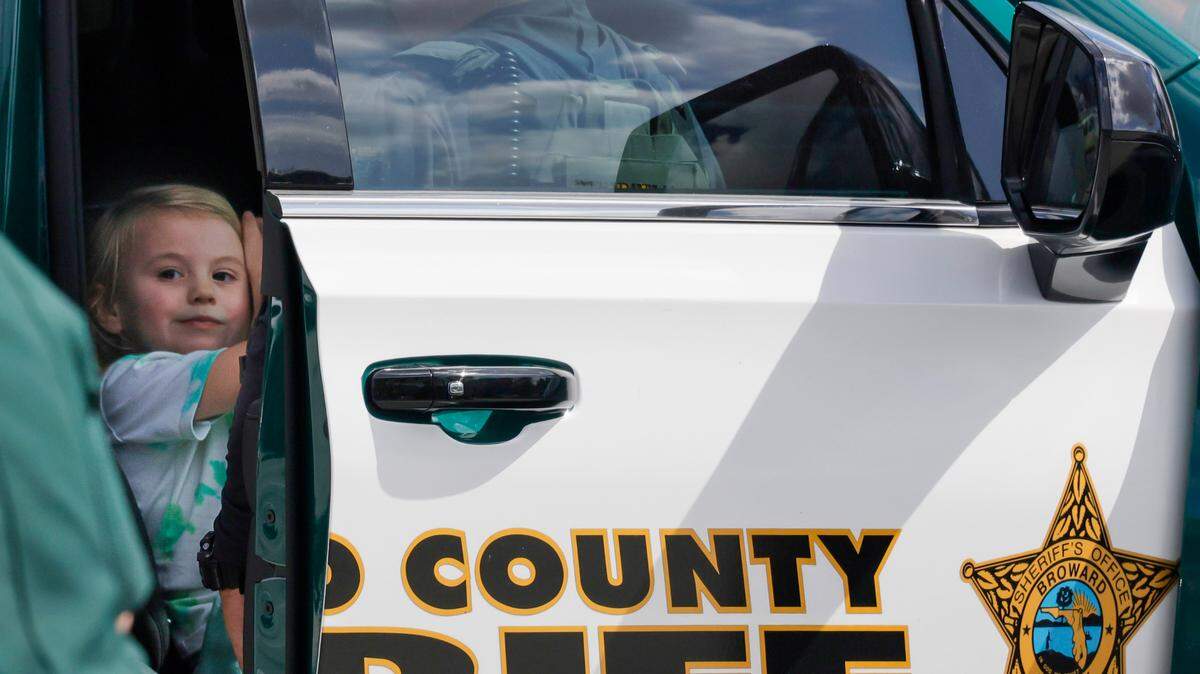
By Broward Sheriff Gregory Tony’s own admission, his deputies could have done more to try to stop Nathan Gingles before this past weekend. It was too late: He killed his wife, her father and a neighbor in whose house Mary Gingles sought shelter from her husband’s rampage, according to law enforcement. Their 4-year-old daughter, Seraphine, witnessed the murders and was later found unharmed at a Walmart.
Tony said at a Wednesday news conference his deputies may have had enough evidence to arrest Nathan in December, when his wife called police saying he was threatening to kill her, the Herald reported. They “probably could have done more” when she told the sheriff’s office about the car tracker, Tony said, as reported by the Sun Sentinel. And BSO deputies did not take Nathan’s guns from him after a Broward judge mandated they be seized in December.
In other words, there’s a likelihood Nathan could have been sent to jail, or deprived of his weapons, and that his family could have been alive.
Now, seven deputies have been suspended over their handling of calls related to this case. There were dozens of calls to the Tamarac home leading up to Sunday’s triple murder, according to Tony.
Broward deputies were either complacent or failed do their due diligence every time Mary pleaded for help. Whether that was because they didn’t believe her, were friendly with Nathan, as she described in her divorce filings, or too busy to properly follow up should be answered in BSO’s internal investigation.
.“...When we rectify this situation I’m going to send the fear of God amongst this entire agency,” Tony said. “There will be people who lose their jobs over this.”
It’s important to hold deputies accountable if they failed to protect a victim but, as important, law enforcement must learn how to improve the ways it handles such cases in the future. The facts leading up to Sunday’s murders read like a story straight out of a domestic-violence-prevention brochure: the documented history of violence during the couple’s marriage along with the escalating threats and controlling and obsessive behavior that many men display before they take the lives of their female partners.
In South Florida, this story has happened before. In 2022, police said a man shot and killed his wife in front of her daughter and others at a community center pool in Northeast Miami-Dade. The day before, he had allegedly attacked and stabbed her but managed to elude police. He had a long criminal history and had been questioned in the 2014 disappearance of a previous girlfriend. Earlier this month, a 20-year-old woman was shot and killed by her boyfriend in her apartment, the Miami-Dade Sheriff’s Office said.
While men account for the vast majority of homicide victims, 92% of female homicide victims in the U.S. were killed by a man they knew and the majority of them were wives or intimate acquaintances of their killers, according to 2018 data from the Violence Policy Center. In many cases, the suspects, like Nathan Gingles, are already known to law enforcement.
These statistics are probably common knowledge in the law enforcement community.
If there was any way to prevent the death of Mary Gingles, her father and her neighbor, this community deserves to know exactly how — and police should be aware the next time a similar case arises because, as the statistics show, that will certainly happen.
Click here to send the letter.
BEHIND THE STORY
MOREWhat's an editorial?
Editorials are opinion pieces that reflect the views of the Miami Herald Editorial Board, a group of opinion journalists that operates separately from the Miami Herald newsroom. Miami Herald Editorial Board members are: opinion editor Amy Driscoll and editorial writers Isadora Rangel and Mary Anna Mancuso. Read more by clicking the arrow in the upper right.
What's the difference between an op-ed and a column?
How does the Miami Herald Editorial Board decide what to write about?
The Editorial Board, made up of experienced opinion journalists, primarily addresses local and state issues that affect South Florida residents. Each board member has an area of focus, such as education, COVID or local government policy. Board members meet daily and bring up an array of topics for discussion. Once a topic is fully discussed, board members will further report the issue, interviewing stakeholders and others involved and affected, so that the board can present the most informed opinion possible. We strive to provide our community with thought leadership that advocates for policies and priorities that strengthen our communities. Our editorials promote social justice, fairness in economic, educational and social opportunities and an end to systemic racism and inequality. The Editorial Board is separate from the reporters and editors of the Miami Herald newsroom.
How can I contribute to the Miami Herald Opinion section?
The Editorial Board accepts op-ed submissions of 650-700 words from community members who want to argue a specific viewpoint or idea that is relevant to our area. You can email an op-ed submission to oped@miamiherald.com. We also accept 150-word letters to the editor from readers who want to offer their points of view on current issues. For more information on how to submit a letter, go here.