Lawmakers: Make the flamingo our state bird already | Opinion
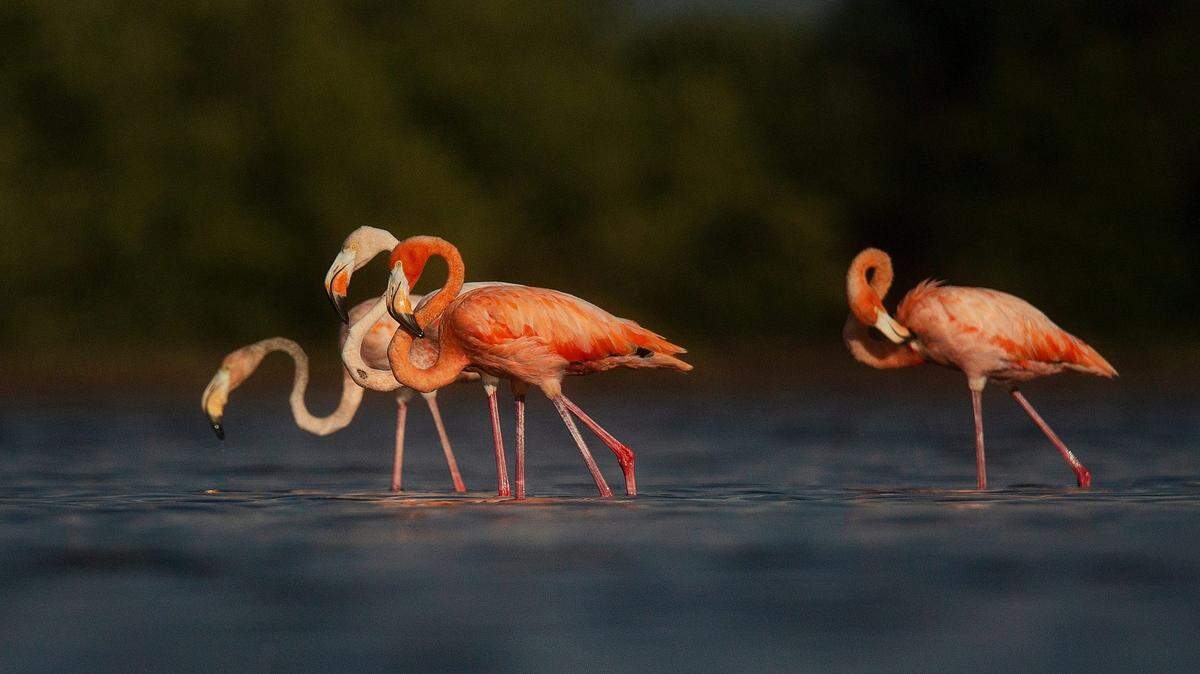
Ask anyone about Florida’s state bird, and they’ll likely guess it’s the flamingo.
The Sunshine State and the skinny-legged, pink-plumaged bird have become synonymous in popular culture.
The truth is, though, that the official state bird of Florida is the rather unassuming mockingbird. These days there’s a bit of a squawk in Tallahassee over which of the two birds should represent the state, but our hearts are with the flamingo.
State Rep. James Mooney, a Republican from Islamorada, has introduced a bill to make this change. Mooney took up the flamingo cause after a similar bill filed by State Rep. Linda Chaney, R-St. Petersburg failed to pass last year.
Mooney’s proposal seeks to designate two birds to replace the mockingbird: the American Flamingo as the state bird and the Florida scrub-jay as the state songbird. Including the endangered scrub-jay in the bill may improve the chances of its passage, providing additional protection for the bird against development threats.
The debate over the flamingo is expected to begin when lawmakers reconvene in March. If approved, the switch could take place as early as July 1, 2025.
In an editorial last year, we were all in on the flamingo as state bird. From the South Florida perspective, we see flamingos as an instantly identifiable symbol of Miami, the TV show Miami Vice that helped shape South Beach and even the Hialeah Park race track, where a pink flock circles the track after the seventh race. To us, it seemed surprising that flamingos weren’t already the state bird.
But those darn mockingbirds appear to have some serious lobbyists on their side.
The 2025 bill marks the eighth attempt by lawmakers to replace the mockingbird, which lacks the vibrant, tropical vibe exuded by the flamingo. Although mockingbirds are lovely, they are not unique to Florida and already serve as the state bird for Arkansas, Mississippi, Tennessee and Texas.
Yes, back in 1927 when the mockingbird was first chosen as the state bird, it might have been fitting for the agricultural Florida of that era. But the Florida of today is a different place. It’s time for an update.
Joining Mooney in the flamingo fight is ZooMiami spokesman Ron Magill who sees the switch as a no-brainer. “I don’t believe that there has ever been a bird more commonly associated with the state of Florida than the flamingo,” Magill told the Editorial Board. He’s right.
Magill says the bird has been an unofficial state icon for decades — whimsical plastic pink flamingos on lawns, as the mascot for the state lottery, its presence in the Everglades and, of course, the Hialeah and Miami Vice connections.
This year, the case for the flamingo is stronger than it was in the past.
One bad rap that has plagued the flamingos is that they, too, are out-of-towners. For a long time, flamingos were believed to be transients, visiting Florida as they flew between their native habitats in Cuba, Mexico and the Bahamas, where they are the national bird.
“The reality is that in the 1800s, flamingos could be found by the thousands living and reproducing in Florida,“ Magill told the Board. Legendary ornithologist John J. Audubon described seeing them in such numbers that they would darken the sky.
Unfortunately, due to hunting for the hat plume trade and for food, flamingos were mostly gone from the state at the turn of the last century, pushed to their other habitats. In other words, the flamingos went on the run to survive and were considered endangered in Florida, but their population has rebounded, especially in the Everglades.
Magill told the Board that thanks to conservation biologists from the zoo and Audubon Florida, data was acquired and submitted to the Florida Freshwater Fish and Game Commission, proving that flamingos were indeed native to Florida and should be listed as native.
With the American flamingo’s deep roots in Florida verified and their population on the rebound, what’s the hold up?
It’s time for the Legislature to correct this oversight and grant the flamingo its rightful place as the state bird.
Let’s make it happen this time, lawmakers.