
Jewish people had every right to be offended by Miami Beach artwork. It had to come down | Opinion
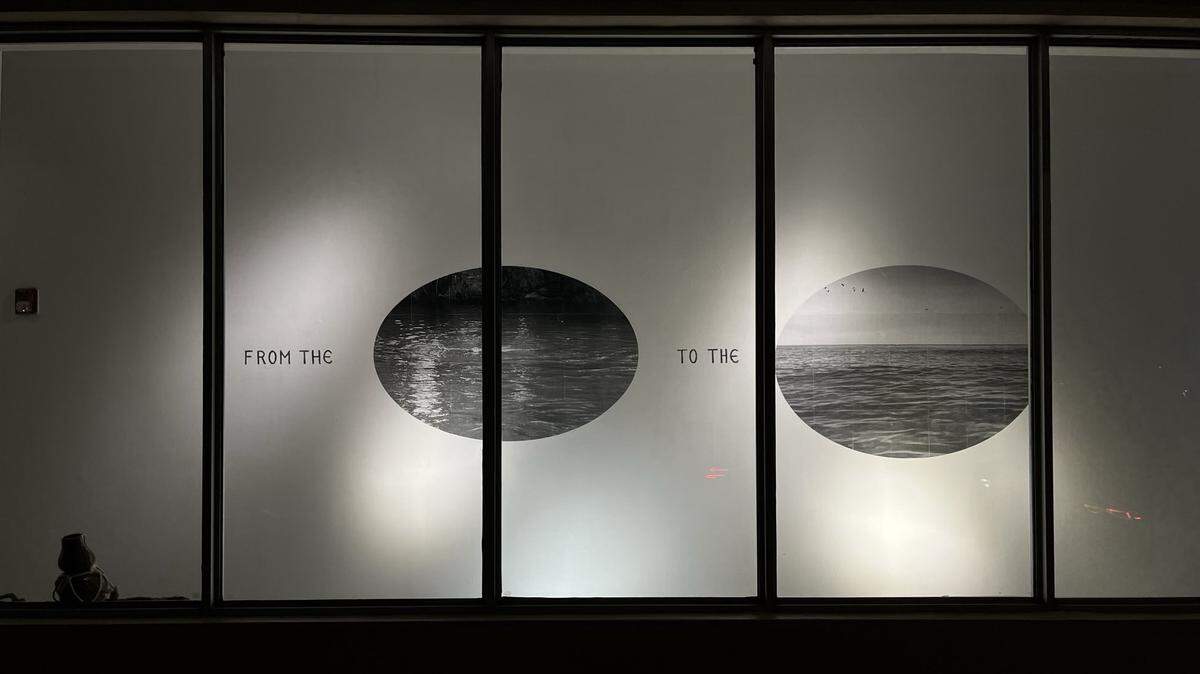
It’s hard to make a plea for artistic expression when a public artwork displayed at a major pharmacy chain store in one of South Florida’s busiest cities alludes to a phrase many Jews consider a call for their destruction.
Several local artists are describing local nonprofit Oolite Arts’ decision to take down the piece that was on display in the window of a Miami Beach Walgreens as censorship. There are very limited instances when works of art — as provocative as they may be — should not be exposed publicly.
This might be one.
The work by visual artist Vũ Hoàng Khánh Nguyên, who goes by Vũ, titled “How we live like water,” makes a subtle reference — through the use of words and images of the Jordan River and the Atlantic Ocean — to the pro-Palestinian phrase “from the river to the sea.” That is widely considered a call for Israel’s extermination, even though that doesn’t appear to have been the artist’s intent. The phrase has been used by some protesters opposing Israel’s invasion of Gaza after the Oct. 7 Hamas terrorist attacks.
To be clear, artists and citizens should be free to criticize Israel’s government and actions or demand accountability for the death of more than 34,000 Palestinians killed since the conflict started, according to Gaza’s health ministry.
It’s a threat to freedom of expression to bundle legitimate support for Palestinians with antisemitism.
But word choice matters.
And some words, especially “from the river to the sea,” also represent a threat to many people. Should works of art that allude to it be exhibited in a space that’s visible to the public, including Jews living or visiting Miami Beach?
As much as some supporters don’t consider it a demand to exterminate a Jewish state, that’s exactly how how many Jews interpret it — and that matters.
“From the river to the sea, Palestine will be free” is a reference to the area between the Jordan River and the Mediterranean Sea, which covers the state of Israel. A Palestine “free from the river to the sea” is often understood as the elimination of Israel. Organizations like the Anti-Defamation League classify it as antisemitic.
The phrase gained traction in the 1960s as a call for the creation of a “free Palestine” following the mass exodus of Palestinians from what is today Israel during the 1948 war surrounding the country’s creation, the Washington Post reported. Some describe it a cry for a peaceful land for Palestinians.
Yet supporters of Hamas — who murdered 1,200 people on Oct. 7, including Israeli children and families — have also adopted the phrase.
“Palestine is ours from the river to the sea and from the south to the north,” Khaled Mashaal, the Hamas’ former leader, said in 2012, according to the Associated Press. “There will be no concession on any inch of the land.”
Whenever people in American utter similar words, a Hamas terrorist probably cheers. So why give them a platform?
Vũ’ wrote in an Instagram post that “From the river to the sea,” is a “reminder to viewers that water is a precious, borderless resource that connects us all,” Oolite Arts approved the installation on Oct. 5, 2023, two days before the Hamas attacks, according to the post.
Vũ, who uses they/them pronouns, also wrote that Oolite Arts didn’t notify them before removing the artwork, and that they did not get a chance to clarify its intention. The decision stemmed from a letter from Jewish lawyers saying the artwork was offensive and political, according to the Instagram post.
Oolite Arts wrote in a statement to the Herald that it is “committed to evaluating our decision-making in this matter and to put in place policies so that artists we work with have clear guidelines and expectations.” A letter signed by more than 300 South Florida artists is calling for greater transparency from the nonprofit.
Perhaps if Oolite had handled this issue more openly, a controversy could have been avoided. Regardless of how it was handled, this moment is a reminder that, when it comes to horrendous things like antisemitism, words have a powerful impact, no matter what their intentions are.
Click here to send the letter.
BEHIND THE STORY
MOREWhat's an editorial?
Editorials are opinion pieces that reflect the views of the Miami Herald Editorial Board, a group of opinion journalists that operates separately from the Miami Herald newsroom. Miami Herald Editorial Board members are: opinion editor Amy Driscoll and editorial writers Isadora Rangel and Mary Anna Mancuso. Read more by clicking the arrow in the upper right.
What's the difference between an op-ed and a column?
How does the Miami Herald Editorial Board decide what to write about?
The Editorial Board, made up of experienced opinion journalists, primarily addresses local and state issues that affect South Florida residents. Each board member has an area of focus, such as education, COVID or local government policy. Board members meet daily and bring up an array of topics for discussion. Once a topic is fully discussed, board members will further report the issue, interviewing stakeholders and others involved and affected, so that the board can present the most informed opinion possible. We strive to provide our community with thought leadership that advocates for policies and priorities that strengthen our communities. Our editorials promote social justice, fairness in economic, educational and social opportunities and an end to systemic racism and inequality. The Editorial Board is separate from the reporters and editors of the Miami Herald newsroom.
How can I contribute to the Miami Herald Opinion section?
The Editorial Board accepts op-ed submissions of 650-700 words from community members who want to argue a specific viewpoint or idea that is relevant to our area. You can email an op-ed submission to oped@miamiherald.com. We also accept 150-word letters to the editor from readers who want to offer their points of view on current issues. For more information on how to submit a letter, go here.