
Miami Beach candidate will bring a tougher edge as mayor of a party town | Opinion
READ MORE
Editorial Board Miami Beach 2023 Election Recommendations
In advance of the upcoming Miami Beach elections on November 7, 2023, the Editorial Board interviewed political candidates to better understand their views on various issues and how their policies will affect their constituents. The goal is to give voters a better idea of who’s the best candidate for each race. Read our recommendations for Miami Beach below:
Expand All
Editorial Board withdraws recommendation for Miami Beach mayor | Opinion
Miami Beach candidate will bring a tougher edge as mayor of a party town | Opinion
For Miami Beach Commission Group IV, better candidate has a clear view of future | Opinion
In Miami Beach Group V, the Herald recommends longtime preservationist | Opinion
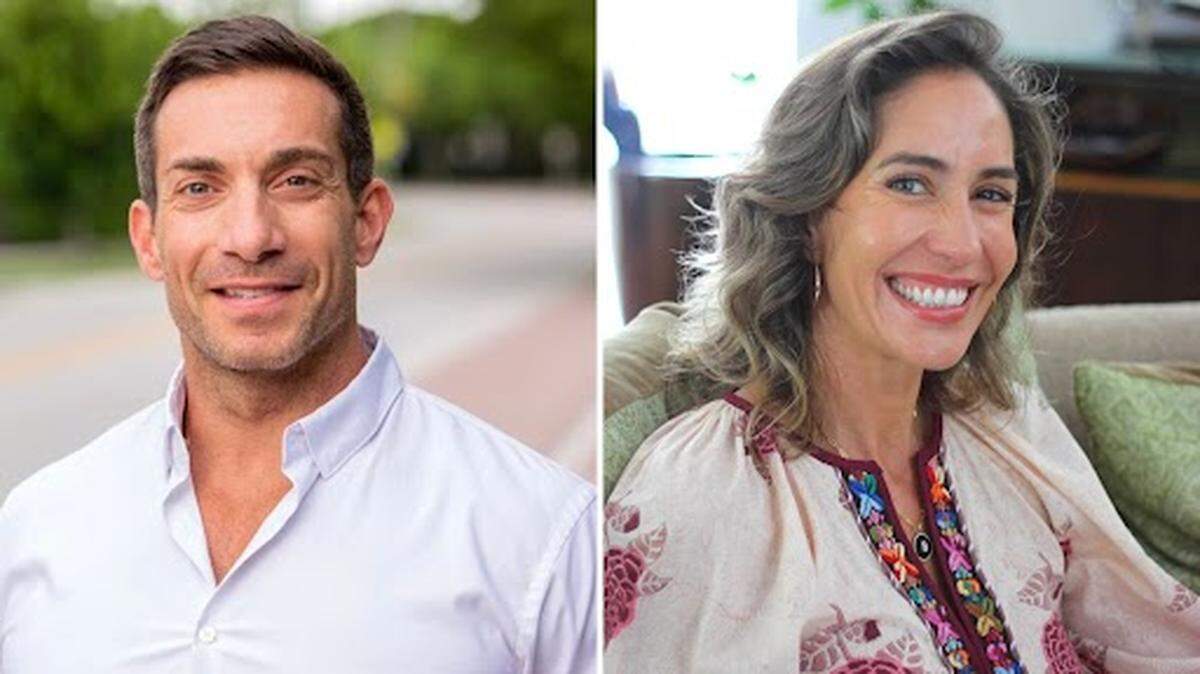
In Miami Beach Group VI, the Herald recommends candidate with a more-solid vision | Opinion
Four men are vying to be the next mayor of Miami Beach. They bring a range of experience in governance — from impressive to none.
They also bring serious questions about their fitness for office, their sense of integrity and their ability to be a leader for all of Miami Beach.
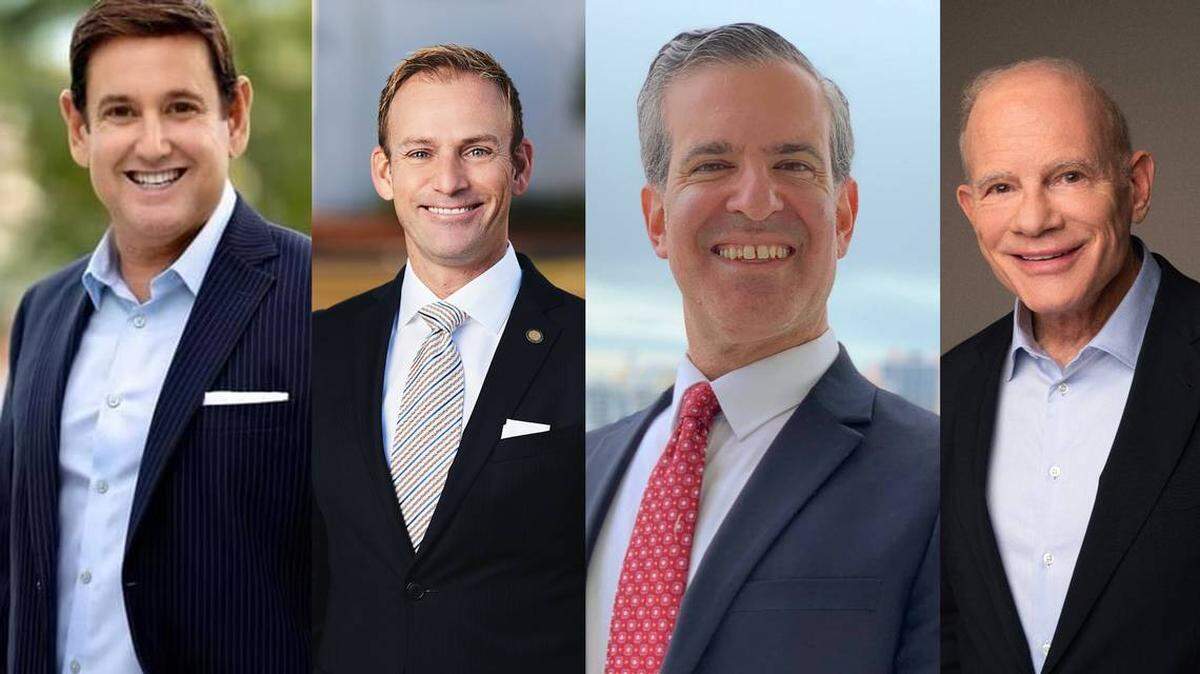
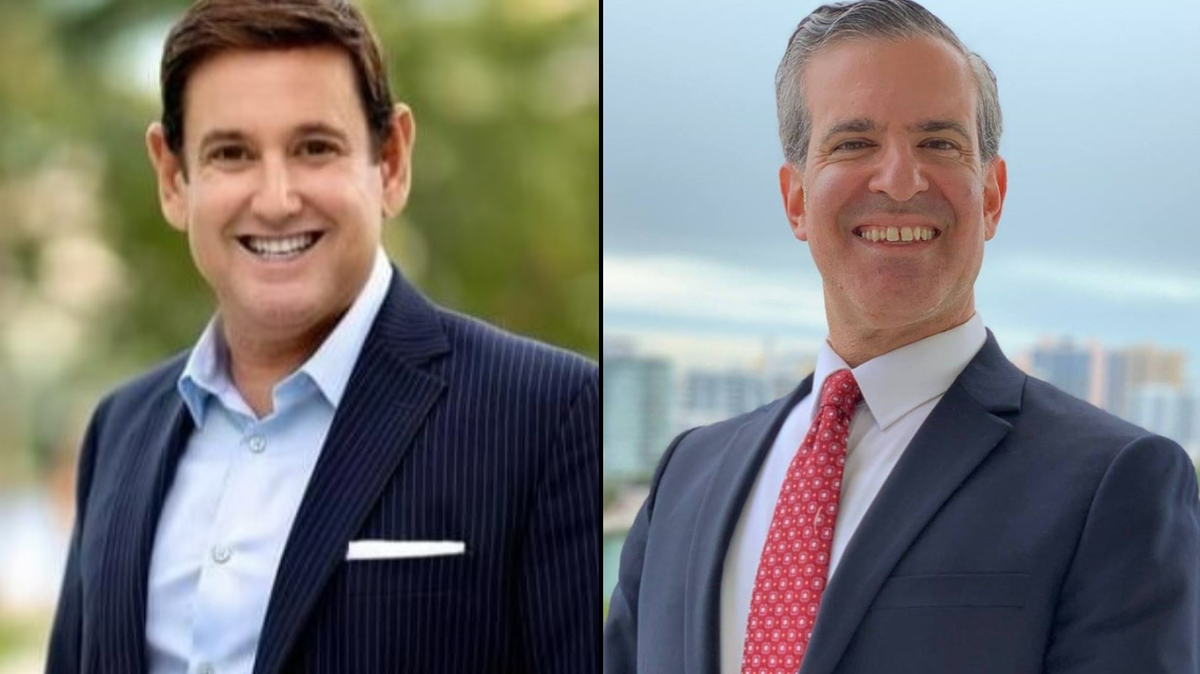
Of the four — Michael Grieco, Michael Gongora, Steven Meiner and William Roedy — the Editorial Board recommends Meiner, with reservations but also a sense of cautious hope that he understands the broad parameters of the job beyond legislating.
In recent years, Miami Beach has always seemed to be standing at the proverbial crossroads: Can the city break the grip of the spring break and year-round party culture? Should the city develop its way out of it? Eliminate short-term rentals? Would a personality change work by developing arts and culture to lure more desirable and affluent tourists while letting weary residents enjoy South Beach again? Will sea-level rise, crime and homelessness swamp those good intentions?
Meiner, 52, is an enforcement attorney with the U.S. Securities and Exchange Commission. He was in private practice in New York City before he moved to Miami Beach in 2007. He’s been a city commissioner since 2019.
Range of issues
He would bring a tougher edge to quality-of-life issues, one that should be tempered by a more-moderate commission. Already, he proposed a municipal prosecutor’s office to handle misdemeanors; he wants to make it harder for the commission to increase developments’ floor-area ratio, the formula that regulates the overall size of a building. He wants to protect Biscayne Bay: “We need to comply with the county’s Biscayne Bay task force report, which is part of my initiative and we need to do it quickly.”
He credits outgoing Mayor Dan Gelber’s push for an arts-and-culture makeover and would continue in that direction.
Though we criticized his proposal to arrest homeless people who refuse a shelter bed, we like Meiner’s responsiveness to what residents are demanding: a ratcheting back of Miami Beach’s “anything goes” party scene and development that would remake the city’s landscape and disrupt residential neighborhoods.
Meiner is not the most experienced public servant in the mayor’s race, but he appears to play it along the straight and narrow, ethically speaking, which heartened the Editorial Board.
Grieco, 48, and Gongora, 53, would draw from the deepest wells when it comes to governance experience.
Commission support
Gongora is a condo board attorney who has served three terms on the City Commission. He was first elected in a special election in 2006, serving a partial term, and was elected again in 2009 and 2017. He would be Miami Beach’s first openly gay mayor.
He cites the support of three commissioners as the foundation upon which he will get things done. He’s disturbed by the lack of collegiality the he says has hindered the Gelber.
“After I’m elected mayor, I do want to have an old-school retreat in January, off site, with a moderator, and I want people to learn how to work together, personality wise,” Gongora told the Editorial Board.
“I want us to talk about what our big issues are, and moving forward together as a team rather than fighting Facebook attacks and email attacks and what we’ve really been seeing for the past several years.”
For Gongora, such issues include jump-starting sea-level rise mediation projects that he laments were put on pause, taking a more-nuanced, neighborhood-specific approach to the 2 a.m.-vs.-5 a.m. ban on liquors sales, and continuing moving the city toward an arts-and-culture profile.
Grieco brings experience both as a former city commissioner and as a state legislator. His background as an attorney in the Miami-Dade State Attorney’s office means his approach to addressing the Beach’s more intractable problems is grounded in law. He told the Editorial Board he is “very, very uncomfortable” with arresting homeless people. “I think it’s way too aggressive. . . . There are options that fall short of actually putting people in handcuffs.”
He says he is most able to address Florida lawmakers’ intrusion into municipal affairs, in which local elected officials are handcuffed by state law.
All of Grieco’s know-how remains overshadowed by prior lapses in integrity that continue to make his candidacy a no-go for the Editorial Board. In 2021, Miami-Dade County’s Commission on Ethics & Public Trust issued a “letter of instruction” criticizing Grieco for twice violating the Citizens’ Bill of Rights during his term as a Miami Beach commissioner.
In 2017, he resigned from the commission after reaching a plea deal after being charged with a first-degree misdemeanor for accepting a campaign donation made in the name of another person.
The charges were the result of an investigation into his ties with a political committee that raised $200,000 from Beach developers, lobbyists and city vendors. Grieco denied taking donations from the PAC, which would have been a violation of city rules. He even told the Herald, “It is absolutely untrue . . . You can look right into my soul.” However, two well-regarded forensic document experts concluded that the handwritting on documents filed by the PAC were identical to Grieco’s.
Secret recording
Most recently, Grieco left unattended a loaded gun on a park bench, an oversight for which he took responsibility, he told the Board.
Earlier this year, Grieco secretly recorded a conversation with Gongora, who said that he and Commissioner Kristen Rosen Gonzalez had met with developer Russell Galbut, who was “already with me and giving me money.” As reported by the Herald, Grieco later said the comments raised campaign finance concerns because Galbut is on a list of developers prohibited from giving to candidates under city rules. When asked, Gongora said Galbut has family members in Miami Beach who can support him,
All this leaves enough questions in the Editorial Board’s mind about their fitness for the office of mayor from an ethical standpoint. In the end, we cannot recommend either Grieco or Gongora, despite their legislative dexterity.
William Roedy, 75, is a political newcomer who spent decades living in London as an executive with MTV, and who is trying mightily to portray himself as homegrown. His resume is impressive: West Point grad, Vietnam War vet, MTV executive and an ambassador for the United Nations’ anti-AIDS program in 1998. His ability to govern and lead a city, however, is a big question mark.
‘Smear tactic’
This leaves us with Meiner. We acknowledge he has a perception problem he needs to explain to the public as he did to the Editorial Board.
Meiner voted against chastising the Miami-Dade County School Board for rejecting a recognition of LGBTQ month and voting against naming a street on Miami Beach for Harvey Milk, the gay San Francisco City Supervisor who was slain while in office in 1978. That has drawn accusations that he’s anti gay, which he calls a smear tactic: “Nobody was saying this before I filed for mayor.”
He told the Board if an issue is not directly related to Miami Beach, then he’s a No vote. He said that, although he is an orthodox Jew, he voted against a commissioner’s proposal to pass a resolution defining “antisemitism.” Meiner also said he supported appropriations for SAVE, an LGBTQ+ rights organization, and a safe space for LGBTQ+ students.
“The comments are hurtful. It bothers me that there’s this narrative from people who never met me or who don’t follow the commission meetings,” he said.
OK, so he’s consistent. Indeed, the Harvey Milk proposal is a bit of a stretch. However, he also needs to understand the power of making a statement, no matter if it’s only symbolic. This is an international city with a reputation for open arms, and the expectation is that he will show up at Pride parades, welcome African-American visitors to a city that is tired of Urban Beach Weekend and act like the big-city leader he would be.
His “only if relevant to Miami Beach” approach appears parochial cover to not take stand. He’s seeking to be the mayor of Miami Beach, not Mayberry.
Meiner, like all candidates in this race, isn’t perfect. But we think he can bring the Beach into better balance the more accommodating quality of life residents seek with the pressures of living in a city that’s also a glitzy international capital of entertainment.
The Herald Editorial Board recommends STEVEN MEINER for Miami Beach mayor.
This story was originally published October 22, 2023 at 4:00 AM.