
Miami gets yet another chance to save its ancient past. Will we blow it again? | Opinion
Miami, as anyone who has lived here for a while can tell you, is not exactly known for valuing its history.
The opposite, really: This is a community far too quick to jettison the old for the new, even when that attitude damages the very things that make South Florida unique — and make it a draw for the tourists we depend on for our economic survival.
Now, though, the city has taken a step to preserve a recently uncovered piece of its most ancient history, part of a prehistoric settlement on the banks of the Miami River. That’s welcome news. There are many more details to nail down and considerations for the developer to be debated. But maybe it’s a sign that we’re starting to care, at least a little, about our heritage. Perhaps it is even — dare we hope? — the mark of a maturing city.
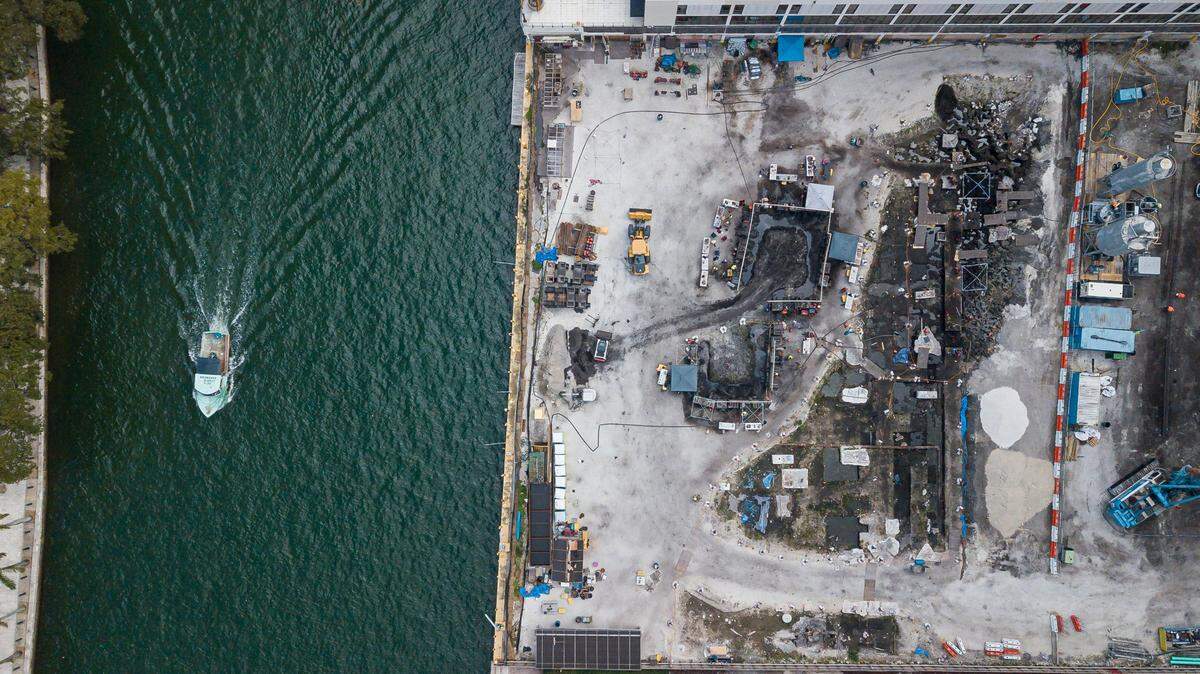
We’re talking about the unanimous decision this week by the city’s historic preservation board to approve temporary protection for a portion of a prehistoric settlement in the Brickell neighborhood of Miami. The property at 444 Brickell Ave. is part of a larger chunk of land on the river that the Related Group is planning to redevelop. The preservation board’s decision means no more demolition or building permits on the smaller piece of property for at least six months, and it’s a step toward final designation as a legally protected archaeological site. Independent archaeologists have said it is one of the most significant prehistoric sites in South Florida.
We have known for decades, of course, that the land at the mouth of the river and along its edges was special. Previous redevelopment projects in that area have uncovered evidence of a Tequesta Indian settlement that goes back thousands of years and stretched along both sides of the river.
Historic landmark
The Miami Circle was uncovered first, in 1998, and is now a national historic landmark. It’s owned by the state, purchased for $27 million to save it from development. As we spelled out in our editorial series last year, “Broken Promises,” however, it is treated with classic Miami disrespect as more of an unofficial dog park than a precious piece of our cultural legacy.
Other, subsequent archaeological discoveries have resulted in piecemeal preservation at best. One such discovery, in 2014, wound up with a negotiated deal that has been a deep disappointment. Developers of a project on the river in downtown Miami — Met Square — agreed to save circular post-hole foundations and display artifacts found of their site. The Met Square project has been built, but litigation continues. The builder, MDM, insists it is preserving what it promised. But the reality, nine years after the announcement of a “history-making” preservation deal, has fallen far short of expectations.
Miami has another chance to overcome its long-held disdain for the past with this latest site, and this time we can do better. The developer seems to have followed all requirements once the initial discoveries were made. But there’s big money involved. Related bought the parcel for $104 million in 2013, property records indicate, with a $164 million construction loan in January for the first tower, the Herald has reported. There are expectations and rights that go with that.
There’s another viewpoint, though, without a price tag. Members of some Native American groups, who supported the move by the preservation board, want to see all excavation at the site stopped, calling it a “desecration” of indigenous people’s resting places. That’s not about money. It’s about honoring our shared past.
Where Miami goes from here will shape its future. We will need creative methods, good faith and extraordinary cooperation to preserve our past, in this particular instance and others yet to come. For too long, we have allowed our leaders to dismiss our past as unimportant.
In this moment, we have a chance to choose a different path.
BEHIND THE STORY
MOREWhat's an editorial?
Editorials are opinion pieces that reflect the views of the Miami Herald Editorial Board, a group of opinion journalists that operates separately from the Miami Herald newsroom. Miami Herald Editorial Board members are: opinion editor Amy Driscoll and editorial writers Isadora Rangel and Mary Anna Mancuso. Read more by clicking the arrow in the upper right.
What's the difference between an op-ed and a column?
How does the Miami Herald Editorial Board decide what to write about?
The Editorial Board, made up of experienced opinion journalists, primarily addresses local and state issues that affect South Florida residents. Each board member has an area of focus, such as education, COVID or local government policy. Board members meet daily and bring up an array of topics for discussion. Once a topic is fully discussed, board members will further report the issue, interviewing stakeholders and others involved and affected, so that the board can present the most informed opinion possible. We strive to provide our community with thought leadership that advocates for policies and priorities that strengthen our communities. Our editorials promote social justice, fairness in economic, educational and social opportunities and an end to systemic racism and inequality. The Editorial Board is separate from the reporters and editors of the Miami Herald newsroom.
How can I contribute to the Miami Herald Opinion section?
The Editorial Board accepts op-ed submissions of 650-700 words from community members who want to argue a specific viewpoint or idea that is relevant to our area. You can email an op-ed submission to oped@miamiherald.com. We also accept 150-word letters to the editor from readers who want to offer their points of view on current issues. For more information on how to submit a letter, go here.