
Pope Francis shouldn’t have welcomed Cuba’s leader. He helped legitimize a brutal regime | Opinion
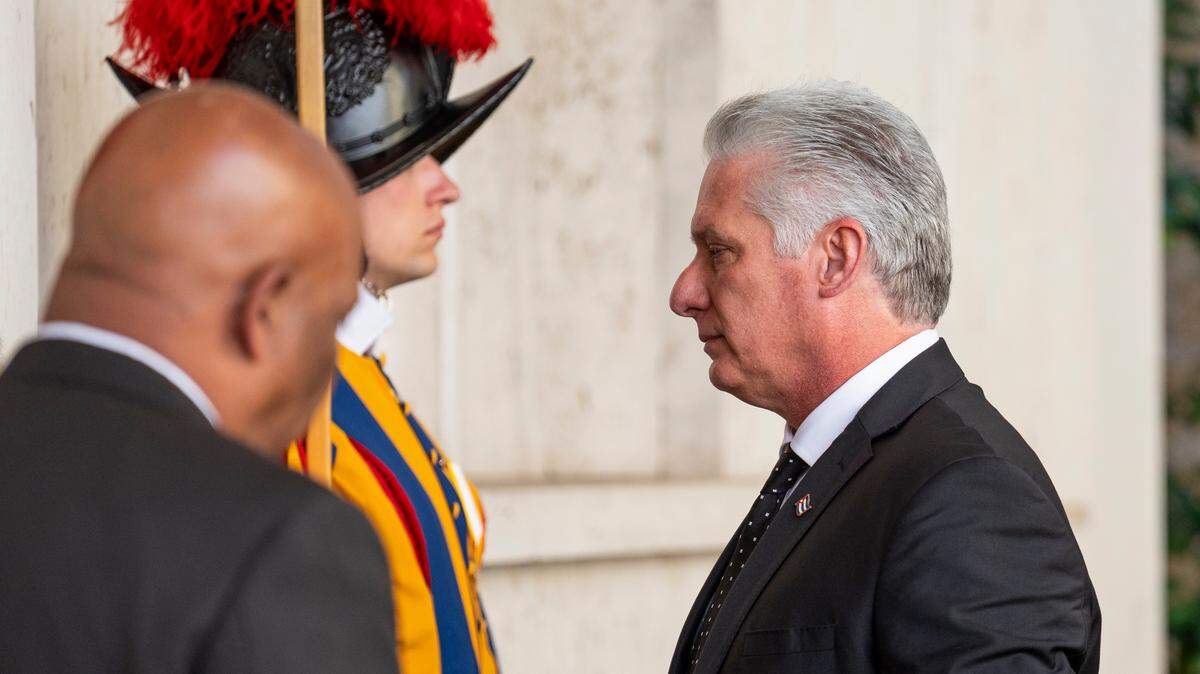
Pope Francis’ meeting last week at the Vatican with Cuban leader Miguel Diaz-Canel looked much like a normal meeting with any head of state. There were handshakes. There was an exchange of pleasantries. There were gifts. There was a 40-minute private discussion and all the ceremonial trappings that accompany such a visit.
Down the block, though, at the far end of the street leading to St. Peter’s Square, a small gathering of protesters showed that this wasn’t just any meeting.
The protesters were demonstrating against the pope receiving the Cuban dictator. They asked for human rights to be respected in Cuba and for the release of political prisoners there. They said the meeting with Pope Francis would be used by the communist regime as evidence that Cuba isn’t doing anything wrong.
They were held at a distance, but they made their point nonetheless, and it was a crucial one that we want to highlight here. They reminded the Vatican — and the world — of the continuing repression on the island. They prodded the pope not to forget the massive July 11, 2021, anti-government street protests that resulted in more than 1,400 arrests. Many of the participants are still in jail. They spoke up about Cuba’s decades of refusal to grant its people autonomy.
China and Russia
The pope should also remember that Cuba isn’t just a threat to its own people. Just this month, as the country struggles through yet another economic crisis, we learned that Cuba has apparently agreed to allow China to establish a spy base on the island, just 90 miles from Florida’s coastline. Money is probably the reason: No doubt China is paying vast sums to Cuba to do it. But the threat is close by.
And it doesn’t stop there. Russia is also interested in strengthening ties with Cuba, likely in an attempt to bring Cuba under its control.
So the pope’s meeting with Diaz-Canel feels like a bad idea when it comes to U.S.. national security. And it feels like a terrible insult to those, especially in Miami, who so desperately want to see the Cuban people free from a dictatorship that hasn’t eased despite Fidel Castro’s death and Raul Castro’s public relinquishing of power.
‘Diplomatic relations’
Why would the leader of the Catholic Church — who, at 86, is still recovering from a June 7 operation — grant an audience to Diaz-Canel, thereby giving the Cuban government a chance to pretend the brutality and repression at home aren’t happening?
The statement released by the Vatican after the meeting with the pope and with the Vatican’s secretary of State, Cardinal Pietro Parolin, offers only vague clues. It mentions that there was discussion of “the importance of the diplomatic relations” between the Holy See and Cuba. Other topics included Cuba’s “situation and the contribution that the Church offers, especially in the sphere of charity” and “some international themes of reciprocal interest.”
We don’t know what happened in that 40-minute meeting. At the very least, we hope the pope used the time to pressure Diaz-Canel on the release of political prisoners in Cuba. If he didn’t, the only thing the pope’s meeting accomplished was to hand Cuba the perfect opportunity to falsely claim legitimacy on the world stage.
BEHIND THE STORY
MOREWhat's an editorial?
Editorials are opinion pieces that reflect the views of the Miami Herald Editorial Board, a group of opinion journalists that operates separately from the Miami Herald newsroom. Miami Herald Editorial Board members are: opinion editor Amy Driscoll and editorial writers Isadora Rangel and Mary Anna Mancuso. Read more by clicking the arrow in the upper right.
What's the difference between an op-ed and a column?
How does the Miami Herald Editorial Board decide what to write about?
The Editorial Board, made up of experienced opinion journalists, primarily addresses local and state issues that affect South Florida residents. Each board member has an area of focus, such as education, COVID or local government policy. Board members meet daily and bring up an array of topics for discussion. Once a topic is fully discussed, board members will further report the issue, interviewing stakeholders and others involved and affected, so that the board can present the most informed opinion possible. We strive to provide our community with thought leadership that advocates for policies and priorities that strengthen our communities. Our editorials promote social justice, fairness in economic, educational and social opportunities and an end to systemic racism and inequality. The Editorial Board is separate from the reporters and editors of the Miami Herald newsroom.
How can I contribute to the Miami Herald Opinion section?
The Editorial Board accepts op-ed submissions of 650-700 words from community members who want to argue a specific viewpoint or idea that is relevant to our area. You can email an op-ed submission to oped@miamiherald.com. We also accept 150-word letters to the editor from readers who want to offer their points of view on current issues. For more information on how to submit a letter, go here.
This story was originally published June 27, 2023 at 12:46 PM.