
Florida lawmakers: Find a scrap of compassion and pass fentanyl test-strip bill | Opinion
Is everyone in Tallahassee missing the compassion gene? Fentanyl is killing people across Florida, just as it is in the rest of the country. And yet our lawmakers’ response last session was to crack down on those who deal the drugs while refusing to take a small step that could actually help prevent overdoses: decriminalizing fentanyl test strips.
Two Democratic South Florida legislators are trying to pass legislation in the 2023 session — other lawmakers tried last year — that would allow the use of the test strips. It’s a narrower measure this time, aimed only at test strips that specifically detect fentanyl or other, virtually identical synthetic opioids. Will the Republican-controlled Legislature be more reasonable this time? Or will legislators once again callously shrug this off, saying they have no sympathy for drug users?
It seems like such a simple issue. Test strips could save lives by warning people if a drug — yes, drugs like cocaine, but also illegally sold ADHD medications — is laced with fentanyl, which could kill them. Other states have authorized the use of test strips. But the Florida Legislature’s puritanical impulses, which frequently are disconnected from the real world, prevailed last year. On the final day of the session, lawmakers put a stop to the measure because they were afraid that providing test strips was, essentially, condoning drug use.
It’s the same flawed reasoning trotted out for eons when it comes to teaching teens about pregnancy prevention — that you’re encouraging them to have sex. News flash: Kids are going to have sex anyway, and they’re also going to do drugs. Not all of them, of course. Probably not most of them. But even the smartest and best-parented kids in the world can make ill-considered decisions on impulse or amid peer pressure.
No second chance
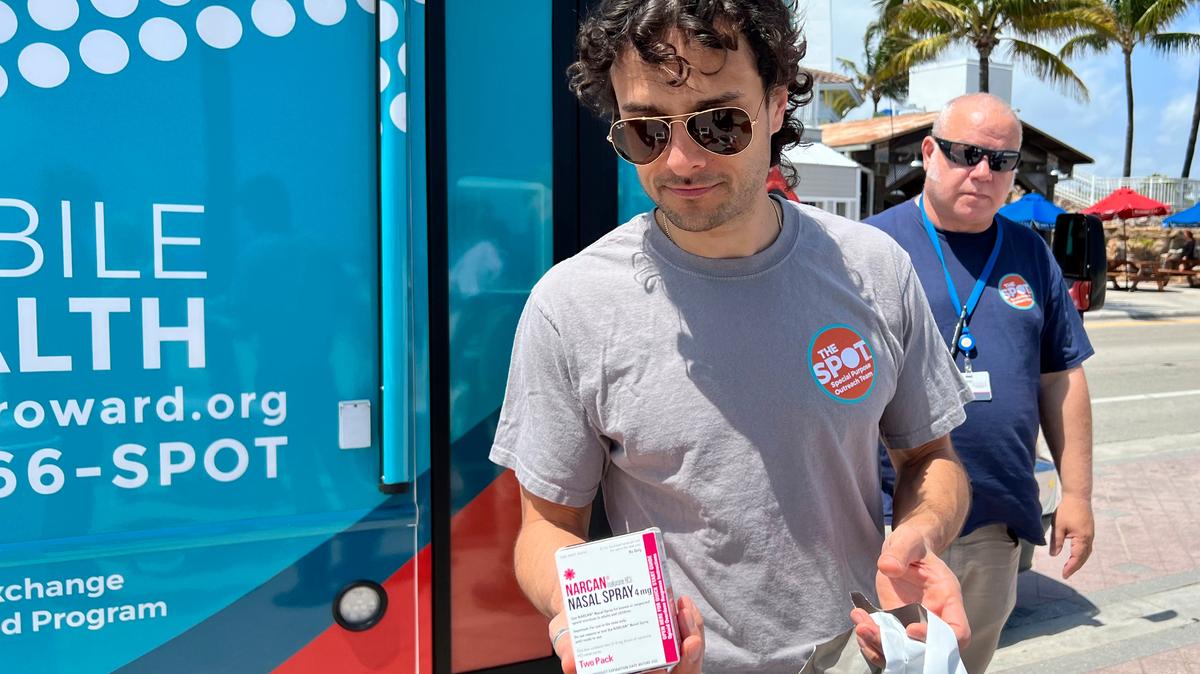
With fentanyl, there may not be a second chance. It can be lethal even in the tiniest amounts, and even through accidental exposure for mere seconds. We already allow the use of Narcan nasal spray, a drug that revives those who are overdosing. Florida needs to have test strips in its opioid arsenal as well.
Parkland Rep. Christine Hunschofsky, who is sponsoring the 2023 version of the bill, HB 165, along with Sen. Tina Polsky of Boca Raton, told the Editorial Board that she hopes Republican lawmakers follow the lead of Texas Gov. Greg Abbott, who reversed his position late last year and now supports legalizing the test strips. He said he now understands that drastic action needs to be taken to stop the carnage, and that “test strips will be one of those ways.”
Hunschofsky has similar thoughts. “This is an all-hands-on-deck situation,” she said. “We all know someone who has been affected by the fentanyl overdose epidemic. And while this is not the solution, this is one more tool in the harm-reduction tool box. The goal here is that we want to stop people from dying.”
We’re well aware that Florida’s political landscape has devolved into an us-vs-them mentality but opioid overdoses and drug use don’t respect party lines. Many families — including some lawmakers’, no doubt — have been through the heartbreak of opioid overdoses. This is a proposal that should win bipartisan backing on those grounds alone.
Some objections to the test strips have centered on the notion that the devices might be used by drug dealers to guarantee their drugs are fentanyl free — or the reverse, that fentanyl is the drug being sold, if that’s what a user wants. That may a legitimate fear but this state, like Texas, needs to slow these deaths by all means available.
Gov. DeSantis has been taking some action on opioids. Last year, based on recommendations from the Statewide Task Force on Opioid Abuse, he signed into law HB 95, which increased penalties for trafficking fentanyl. He also announced last summer that a substance-abuse and recovery pilot program, Coordinated Opioid Recovery, or CORE, used in Palm Beach County would expand to 12 counties. He appointed a director of opioid recovery, as well.
We hope those efforts reduce addiction and deaths. They don’t negate the need for more actions, though. According to documents released by the governor’s office as part of the CORE announcement, there were 8,000 reported overdose deaths in Florida in 2021 and a 790% increase in fentanyl-related deaths since 2015.
Save lives
This is not a choice between law and order and coddling criminals, even though that’s the way some misguided lawmakers would paint it. This is about saving lives.
The Florida Legislature has yet to see the light. Instead of showing some compassion — and a lot more common sense — lawmakers discussing drug users have sounded appallingly like Scrooge in “A Christmas Carol,” talking about the poor: “If they would rather die, they had better do it and decrease the surplus population.”
It’s too late for a Christmas miracle but, then again, we don’t need one. All we need is for lawmakers to find a scrap of compassion during the 2023 session and, this time around, pass the bill.
BEHIND THE STORY
MOREWhat's an editorial?
Editorials are opinion pieces that reflect the views of the Miami Herald Editorial Board, a group of opinion journalists that operates separately from the Miami Herald newsroom. Miami Herald Editorial Board members are: opinion editor Amy Driscoll and editorial writers Isadora Rangel and Mary Anna Mancuso. Read more by clicking the arrow in the upper right.
What's the difference between an op-ed and a column?
How does the Miami Herald Editorial Board decide what to write about?
The Editorial Board, made up of experienced opinion journalists, primarily addresses local and state issues that affect South Florida residents. Each board member has an area of focus, such as education, COVID or local government policy. Board members meet daily and bring up an array of topics for discussion. Once a topic is fully discussed, board members will further report the issue, interviewing stakeholders and others involved and affected, so that the board can present the most informed opinion possible. We strive to provide our community with thought leadership that advocates for policies and priorities that strengthen our communities. Our editorials promote social justice, fairness in economic, educational and social opportunities and an end to systemic racism and inequality. The Editorial Board is separate from the reporters and editors of the Miami Herald newsroom.
How can I contribute to the Miami Herald Opinion section?
The Editorial Board accepts op-ed submissions of 650-700 words from community members who want to argue a specific viewpoint or idea that is relevant to our area. You can email an op-ed submission to oped@miamiherald.com. We also accept 150-word letters to the editor from readers who want to offer their points of view on current issues. For more information on how to submit a letter, go here.