
Florida lawmakers fail to fight fentanyl overdoses, but Spring Break heroes come to the rescue | Editorial
We’re halfway through Spring Break. It’s party time, and drugs and alcohol are front and center.
With 10 local drug overdoses, recently, we would hope that the young revelers flocking to Miami Beach and Fort Lauderdale would think twice about buying cocaine or popping pills, especially since they could be laced with killer doses of fentanyl.
The smartest likely don’t indulge at all. But then there are the others.
Two weeks ago, a group of West Point cadets renting a home in Wilton Manors bought cocaine likely not knowing that it was laced with a potentially lethal dose of fentanyl, a highly addictive synthetic opioid. All ended up in the hospital. Days later in North Miami- Dade, four more people were rushed to the hospital after overdosing on another bad batch of drugs mixed with fentanyl, which is mixed with cocaine and methamphetamine, and sometimes pressed into pill form before being sold to unsuspecting users.
This spike in victims aside, fentanyl already is Florida’s deadliest opioid. About 8,000 Floridians die annually of fentanyl overdoses. Deaths are on the rise in Miami-Dade, too, according to the county medical examiner.
No state protection
Florida offers little protection for the unsuspecting drug users. It took years for the state to approve needle exchanges to protect drug users from contracting HIV. In 2019, Gov. DeSantis signed the Infectious Disease Elimination Act (IDEA), allowing county commissions to authorize sterile needle and syringe exchange programs for people who inject drugs.
A primary objection of conservative lawmakers is that such programs — and those that safeguard the quality of illegal drugs — promote drug use. We understand the squeamishness. But decades of research shows that needle exchanges lower other health risks for people who are vulnerable and those whom they might infect. It’s a public-health issue.
We’re far from condoning drug use, but that does not mean that, as a society, we should allow drug users to die when a simple law could save their lives. But harm-reduction measures are difficult to pass even in the middle of an epidemic, made worse by the emotional ravages of a pandemic. According to the DEA, overdose deaths involving synthetic opioids, primarily fentanyl, rose more than 55% from 2020 to 2021 nationwide.
During this legislative session, Florida lawmakers had an opportunity to decriminalize the use and sale of test strips that would help detect fentanyl in drugs. The strips can be lifesavers. The measure, introduced by Rep. Andrew Learned, D-Brandon, was blocked on the final day of the session.
“The only thing these strips do is save Floridians by simply telling people whether or not fentanyl exists,” Learned’s said on the House floor.
Learned told the Editorial Board that after his bill was blocked, some Republicans promised to consider it again next year. But other Republicans said they would never support it.
“To summarize it, they told me that they have no sympathy for people who do drugs. I disagree,” Learned said. We commend Learned for taking up this prickly, but important, issue to address the welfare of many Floridians who are struggling with drug addiction.
Unfortunately, such inaction by lawmakers gives little ammunition for those trying to save lives this Spring Break, like state Attorney General Ashley Moody, who at the start of annual partying issued a news release: “I am pleading with students to avoid illicit drugs and never mix any drugs or medication with alcohol,” she wrote. Moody is also calling on Congress to pass the Federal Initiative to Guarantee Health by Targeting Fentanyl Act, which would permanently classify fentanyl as a Schedule I drug, one with no known medical use and high chance of being abused.
For now, local police and fire departments will be doing what they can to save lives.
Dan Gelber, mayor of Miami Beach, where most Spring Breakers have congregated, told the Editorial Board his city’s first responders are bracing for a tense, busy few days.
“While the rest of the world may view March as a vacation, it is not our time to relax,” said Gelber, who added his city is prepared for “ten thousand young people converging on a postage stamp.”
Gelber said the city is beefing up police and fire equipment to deal with possible overdoses. Fire-resuce units will carry Narcan, a drug that reverses opioid overdoses. “If Miami Beach receives a call of a mass overdose like the one in Fort Lauderdale, the city has a special-ops team that will respond to the decontamination.” Let’s hope they don’t have to use it.
Another life-saving measure is making the nasal spray form of Narcan more widely available to the public, not just fire rescue units. It’s well documented that Narcan has prevented thousands of overdose deaths. In short, it’s a miracle drug that brings victims on the brink back to life in minutes.
Narcan saves lives
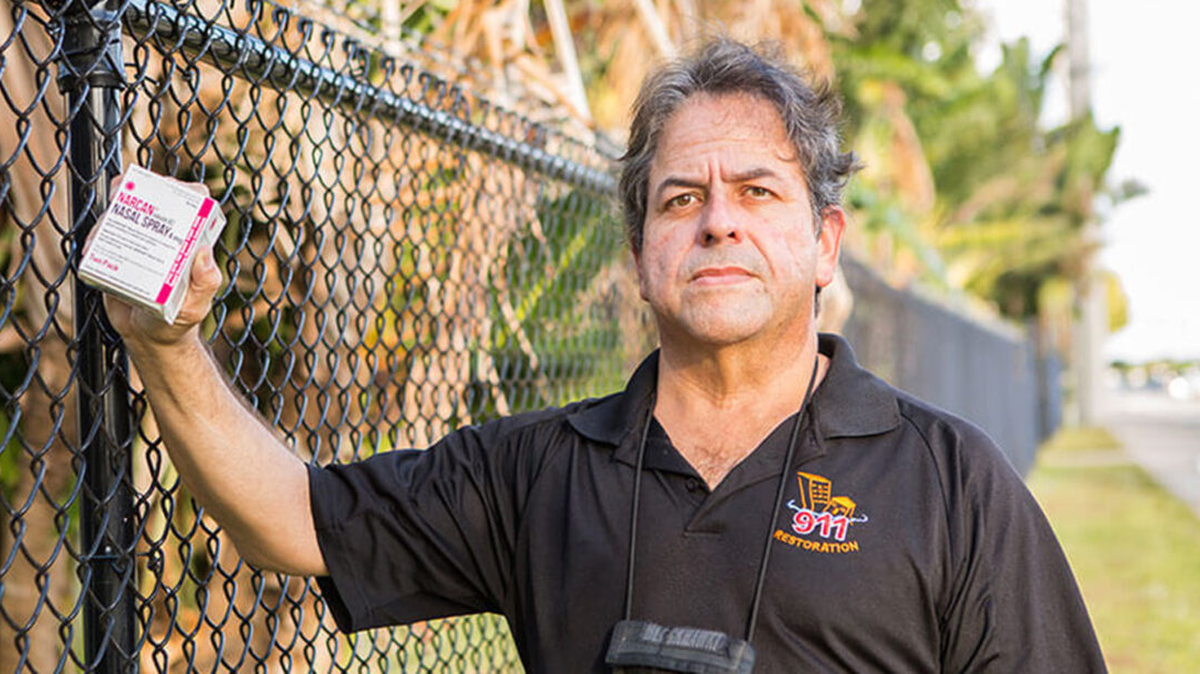
Narcan also is available to the broader public, and former Boynton Beach firefighter Luis Garcia has made it his mission to go where young people assemble during Spring Break and hand out Narcan nasal spray bottles for free.
The idea is that you don’t have to be an illegal drug user to carry Narcan; anyone can run into someone overdosing and can become a life saver. During his almost 30 years as a firefighter and paramedic, Garcia says Narcan was the most effective antidote to opioid overdoses that he carried in his rescue truck.
“I just know it saves lives,” Garcia told the Board.
This weekend, Garcia is hitting crowded beaches in Miami-Dade, Broward and Palm Beach counties, handing out 600 bottles of Narcan nasal spray. He purchases it through his nonprofit GoFundMe called USA Opioid Crisis Mortality Reduction campaign, which has so far raised about $60,000. Garcia said, who offers his knowledge to anyone who calls him at 954-859-4696.
“Narcan should be carried by everyone; it’s no different than a first-aid kit, a fire extinguisher, an EpiPen, or a defibrillator. I encourage people willing to be a Good Samaritan to carry Narcan,” Garcia told the Board. Most people are unaware they can buy Narcan over the counter The cost of a two-bottle set of Narcan is about $120, which is primarily covered by insurance, with a co-pay, he said.
A fentanyl overdose can happen to a long-time or a casual user, but this epidemic should be viewed as a public-health issue for everyone, not just those who take illegal drugs.
Florida obviously needs a master plan to combat fentanyl overdoses. Legislators can’t look the other way or say that drug users, expressing their free will to buy illegal drugs, don’t deserve to be protected from preventable deaths because they are doing something illegal. Expanding access to drug treatment and rehab would be a big help.
Next year, the Legislature should recognize the need for the government to provide Floridians with ways to prevent overdose opioid deaths. We can’t get everyone to stop from using drugs, but we should be able to prevent them from dying. It’s the right thing to do.
This story was originally published March 19, 2022 at 2:23 PM.