
We aren’t fools, Miami-Dade commissioners. You’re about to line your own pockets with taxpayers’ money | Editorial
Greater Miami has seen it all in politics: backroom deals, elected officials going to jail and even a public hearing featuring an analysis of a disgraced police chief’s crotch.
We’ve become so numb to political shenanigans that our elected officials are bound to lose their sense of shame from time to time. But perhaps a good ol’ fashioned public shaming can stop Miami-Dade County commissioners from voting to line their own pockets when they leave office.
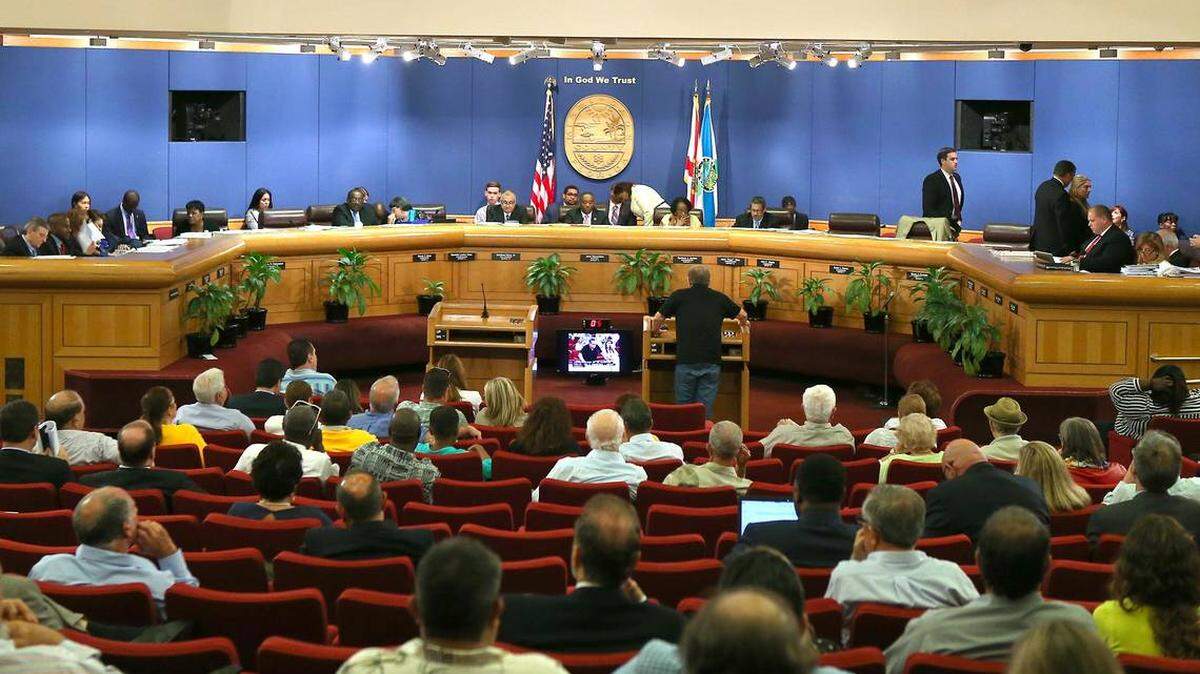
On Tuesday, the commissioners will take the final vote on the county “ambassador” program — aka the Ex-commissioner Reemployment Act, basically, milking tax dollars after they have reached term limits and vacated their seats on the commission dais.
If approved, the program will pay former commissioners $25,000 a year to be “ambassadors” for the county. That’s your tax dollars being used so former politicians can attend ribbon-cutting ceremonies and serve as consultants to the county, whatever that entails.
As the Herald reported over the weekend, the proposed county budget has $475,000 set aside for 19 ambassadors-to-be. That money includes stipends for five term-limited members leaving office in November. Those same five commissioners will be voting on the proposal: Chair Jose “Pepe” Diaz, Sally Heyman. Jean Monestime, Rebeca Sosa and Javier Souto.
Do commissioners understand how bad this looks? Do they realize this exercise in greed should be killed on the spot? If they are so out of touch and approve it at a time when many Miamians can’t afford rent, the least each of the 13 sitting commissioners should do is vow not to take the money once they leave office. We know we sound naive, but county residents will be able to better gauge the content of their character.
When the ambassador proposal surfaced earlier this month, no one would publicly lay claim to it, though it passed the first of two required votes. It’s time for the mysterious commissioner behind it to come forward and make their case to the public. In the meantime, the person who proposed more than doubling commissioners’ compensation — including salaries and benefits — to $138,000 per year should also come forward.
This taxpayer-funded ambassador bonanza could cost taxpayers up to $8 million over 15 years. That figure, however, is based on every eligible ex-commissioner accepting the yearly $25,000. Some have already said they wouldn’t accept it. Good to hear.
“It’s not in my retirement plan to resurface as an ‘ambassador’ for $25,000 a year or for one penny. And neither should any of my former colleagues,” former Commissioner Katy Sorenson wrote in a Herald op-ed.
Compensation for ambassadors would be based on how long they were in office. Let’s look at what taxpayers could pay those five termed-out commissioners if they served as ambassadors for as many years as allowed:
- Jean Monestime: $300,000 (from fiscal year 2023 to 2034)
- Jose “Pepe” Diaz: $500,000 (2023 to 2042)
- Sally Heyman: $500,000 (2023 to 2042)
- Rebeca Sosa: $525,000 (2023 to 2043)
- Javier Souto: $750,000 (2023 to 2052)
It’s worth noting Souto, 83, would be 113 in 2052. But you get the picture. This program would create an avenue for former elected officials to stay on the county’s payroll for decades without voters having any say. It’s a middle finger to the voters who, in 2012, limited commissioners to two terms in office.
Let’s just speak plainly and call the “ambassador” program a shameful cash grab. Miami-Dade County commissioners: Don’t waste our money, reject this proposal and act like the true public servants that you want us to believe you are.
Once you leave the commission, go find a job.
BEHIND THE STORY
MOREWhat's an editorial?
Editorials are opinion pieces that reflect the views of the Miami Herald Editorial Board, a group of opinion journalists that operates separately from the Miami Herald newsroom. Miami Herald Editorial Board members are: opinion editor Amy Driscoll and editorial writers Isadora Rangel and Mary Anna Mancuso. Read more by clicking the arrow in the upper right.
What's the difference between an op-ed and a column?
How does the Miami Herald Editorial Board decide what to write about?
The Editorial Board, made up of experienced opinion journalists, primarily addresses local and state issues that affect South Florida residents. Each board member has an area of focus, such as education, COVID or local government policy. Board members meet daily and bring up an array of topics for discussion. Once a topic is fully discussed, board members will further report the issue, interviewing stakeholders and others involved and affected, so that the board can present the most informed opinion possible. We strive to provide our community with thought leadership that advocates for policies and priorities that strengthen our communities. Our editorials promote social justice, fairness in economic, educational and social opportunities and an end to systemic racism and inequality. The Editorial Board is separate from the reporters and editors of the Miami Herald newsroom.
How can I contribute to the Miami Herald Opinion section?
The Editorial Board accepts op-ed submissions of 650-700 words from community members who want to argue a specific viewpoint or idea that is relevant to our area. You can email an op-ed submission to oped@miamiherald.com. We also accept 150-word letters to the editor from readers who want to offer their points of view on current issues. For more information on how to submit a letter, go here.
This story was originally published September 19, 2022 at 5:03 PM.