
Miami-Dade’s ‘ambassadors’ plan should be renamed the Ex-commissioner Reemployment Act | Editorial
Way back in 2012, which is roughly a million years ago in Florida time, disenchanted Miami-Dade County voters decided county commissioners were out of control and should be limited to two terms.
But the charter amendment they overwhelmingly passed didn’t actually force anyone out of office until 2020, when the first round of term-limited commissioners left. Another five are set to depart in November.
Or are they?
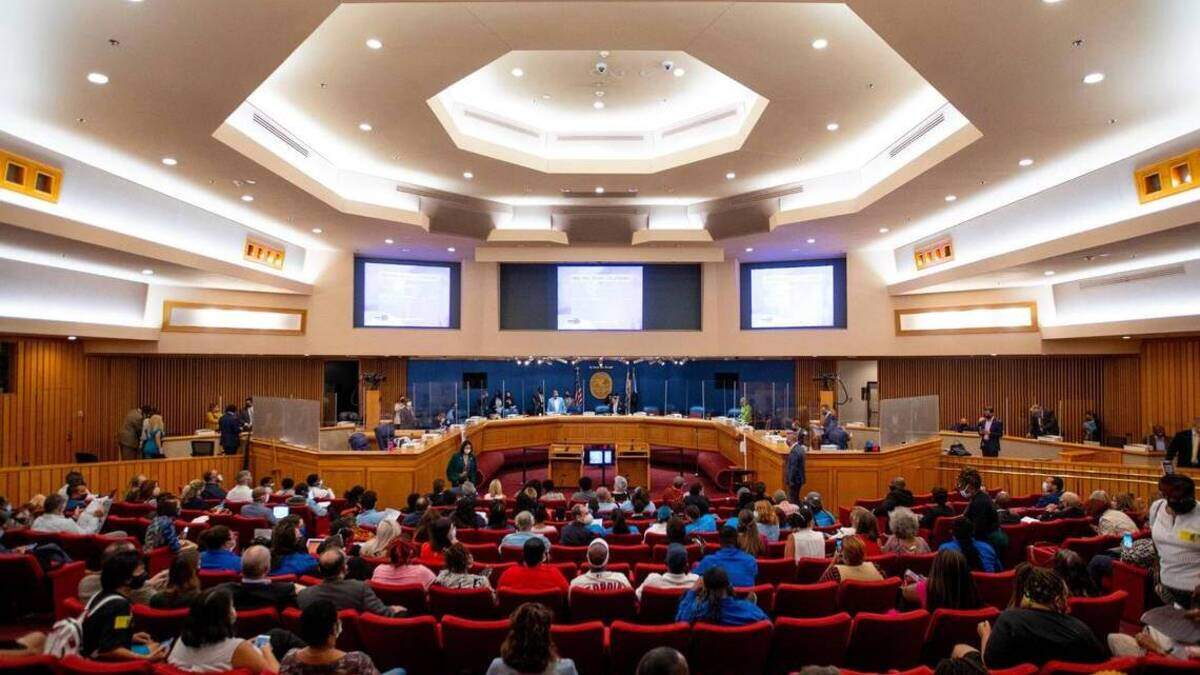
A measure that popped up during the county budget hearing late Thursday would create a new program that would allow former commissioners to become county “ambassadors” and remain as consultants to the county at $25,000 a year. Their duties would include vital missions such as meeting with dignitaries, ribbon-cutting, “leading the pledge of allegiance,” attending county events and consulting on issues such as transportation or neighborhood improvements.
It’s Section 32, Item H on the county’s budget agenda — good luck finding it — but it would be more accurately named the Former Commissioner’s Reemployment Act. It creates an end-run around voters, 77% of whom said commissioners needed to be term-limited.
Online reaction was swift, scornful — and justified: “So $25K for photo ops,” summed up Alicia Arellano, who just lost a race to represent District 8, on Twitter. Former Commissioner Juan Zapata termed the idea “shocking!” Current state Sen. Jason Pizzo called it wasteful and “an example of why people hate politicians.”
And yet, if you’re a term-limited commissioner or one already thrust out into the cold, hard world, maybe you have another word for it: “Suh-weet!”
When the proposal surfaced during Thursday night’s meeting, no one would publicly lay claim to it, though it passed the first of two required votes. Jennifer Moon, head of the commission’s budget office, didn’t shed a lot of light when she told the Herald that the idea “came from discussions between current and former commissioners.”
It’s also unclear how much this little addition tucked into the County Commission’s $45 million budget for 2023 would cost us, as taxpayers.
And there’s a pretty low bar for qualifications, even by Miami standards. In addition to being a former commissioner, you can’t have been recalled by voters and you can’t have been “criminally indicted and found guilty arising directly” out of your duties while serving in elected office. (Committing a crime while out of office doesn’t seem to be a disqualifier.) The commission chair would get to pick who the lucky winners of these “jobs” would be.
Commissioners are supposed to be public servants, not lifetime employees. Once they’ve served, they’re supposed to go back to their previous lives, perhaps even in the (gasp) private sector. That’s the point of term limits, to keep people from becoming too entrenched in government, to stop the status quo and break the hold of special interests.
That’s what voters said unequivocally they wanted — Remember that whole, eight-is-enough, throw-the-bums-out movement? — and it seems to be what commissioners are pointedly trying to subvert.
There’s a symmetry to all of this that would be almost poetic if it weren’t downright infuriating. This is just the kind of high-handed behavior that angered voters enough, in 2012, to impose the term-limit law to begin with.
BEHIND THE STORY
MOREWhat's an editorial?
Editorials are opinion pieces that reflect the views of the Miami Herald Editorial Board, a group of opinion journalists that operates separately from the Miami Herald newsroom. Miami Herald Editorial Board members are: opinion editor Amy Driscoll and editorial writers Isadora Rangel and Mary Anna Mancuso. Read more by clicking the arrow in the upper right.
What's the difference between an op-ed and a column?
How does the Miami Herald Editorial Board decide what to write about?
The Editorial Board, made up of experienced opinion journalists, primarily addresses local and state issues that affect South Florida residents. Each board member has an area of focus, such as education, COVID or local government policy. Board members meet daily and bring up an array of topics for discussion. Once a topic is fully discussed, board members will further report the issue, interviewing stakeholders and others involved and affected, so that the board can present the most informed opinion possible. We strive to provide our community with thought leadership that advocates for policies and priorities that strengthen our communities. Our editorials promote social justice, fairness in economic, educational and social opportunities and an end to systemic racism and inequality. The Editorial Board is separate from the reporters and editors of the Miami Herald newsroom.
How can I contribute to the Miami Herald Opinion section?
The Editorial Board accepts op-ed submissions of 650-700 words from community members who want to argue a specific viewpoint or idea that is relevant to our area. You can email an op-ed submission to oped@miamiherald.com. We also accept 150-word letters to the editor from readers who want to offer their points of view on current issues. For more information on how to submit a letter, go here.
This story was originally published September 9, 2022 at 6:05 PM.