
Privacy wins, for now, in Florida abortion case. But minority rule is far from over | Editorial
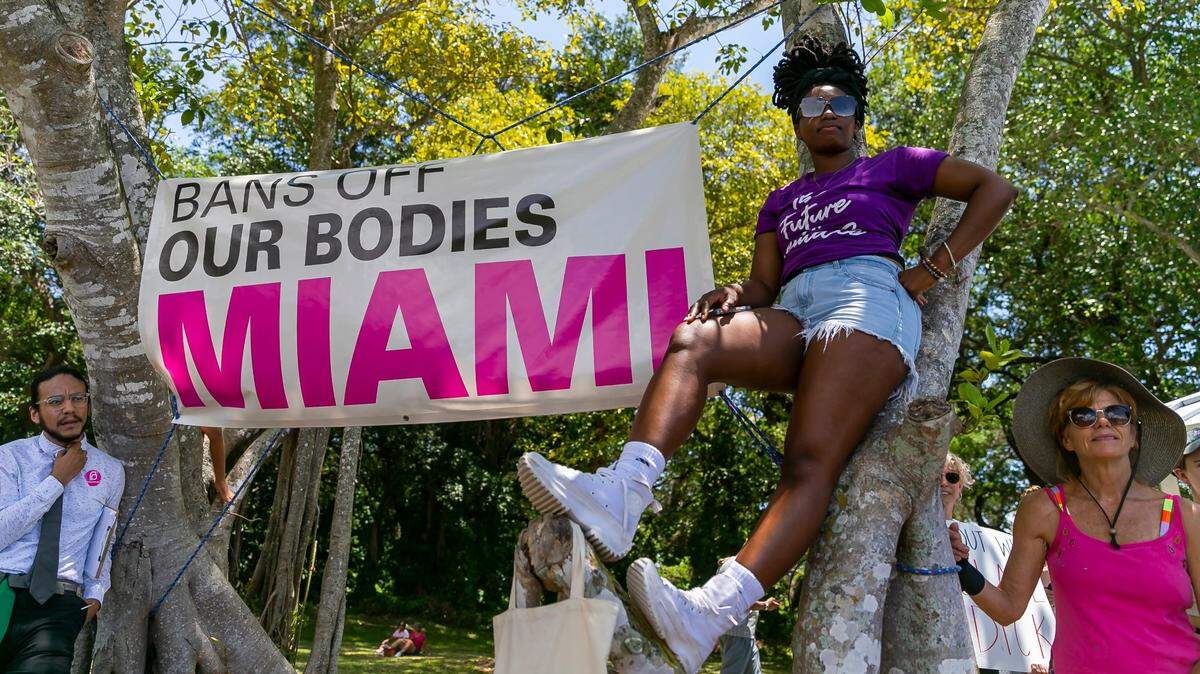
A Florida judge on Thursday said he’ll block the new law imposing a 15-week abortion ban. It’s a victory, however temporary, for privacy rights and the state Constitution.
It took a Leon County circuit judge, John Cooper, to acknowledge that, since 1989, the Florida courts have said the privacy clause in the Constitution includes abortion protections. Florida voters reaffirmed the right to privacy in 2012, rejecting a ballot initiative that would have weakened it. Poll after poll has shown that Floridians want abortion decisions to be made by individuals, not the government.
You wouldn’t know any of that based on the way the Republican Legislature or Gov. Ron DeSantis has acted, of course. They seem to have zero regard for what the majority of people want, muscling through the Legislature a 15-week ban that — with unbelievable cruelty — includes no exceptions for rape or incest.
They pushed their sanctimonious, minority viewpoint on us all, despite indications that voters aren’t with them: A University of North Florida poll in February that found 57% of the state’s registered voters were against the ban.
And they trampled on our established rights in this state despite the fact that Florida had the fourth-highest abortion rate in the nation in 2019, according to the Centers for Disease Control and Prevention, with more than 18 abortions per 1,000 women aged 15 to 44 years. The national average is about 11.
Floridians, it’s clear, want choice.
After Cooper heard arguments this week — three days after the U.S. Supreme Court overruled Roe v. Wade — he said he would issue an injunction in the suit brought by Planned Parenthood, the Center for Reproductive Rights and the American Civil Liberties Union. It can’t come soon enough. Once he issues the injunction, Florida’s new law will be on pause.
(Florida currently allows abortions up to 24 weeks. It was unclear when the injunction would go into effect or whether it would last long. The 15-week law was set to begin at midnight Friday.)
Florida’s abortion fight is certainly far from over. The state plans to appeal, of course, and it will be using your tax money to pay for attorneys to argue for taking your rights away.
The issue is likely to wind up before the Florida Supreme Court. In the past, the court has upheld privacy protections, but it’s now a more conservative body, with three justices appointed by DeSantis and all seven appointed by Republican governors.
Thursday’s ruling offered a sliver of hope. Against the assembled might of the Florida Legislature and a governor who tries to crush anyone who crosses him, one judge found the 15-week ban unconstitutional.
He honored the will of the voters, not the minority rule coming out of the Legislature. May we see more of that.
BEHIND THE STORY
MOREWhat's an editorial?
Editorials are opinion pieces that reflect the views of the Miami Herald Editorial Board, a group of opinion journalists that operates separately from the Miami Herald newsroom. Miami Herald Editorial Board members are: opinion editor Amy Driscoll and editorial writers Isadora Rangel and Mary Anna Mancuso. Read more by clicking the arrow in the upper right.
What's the difference between an op-ed and a column?
How does the Miami Herald Editorial Board decide what to write about?
The Editorial Board, made up of experienced opinion journalists, primarily addresses local and state issues that affect South Florida residents. Each board member has an area of focus, such as education, COVID or local government policy. Board members meet daily and bring up an array of topics for discussion. Once a topic is fully discussed, board members will further report the issue, interviewing stakeholders and others involved and affected, so that the board can present the most informed opinion possible. We strive to provide our community with thought leadership that advocates for policies and priorities that strengthen our communities. Our editorials promote social justice, fairness in economic, educational and social opportunities and an end to systemic racism and inequality. The Editorial Board is separate from the reporters and editors of the Miami Herald newsroom.
How can I contribute to the Miami Herald Opinion section?
The Editorial Board accepts op-ed submissions of 650-700 words from community members who want to argue a specific viewpoint or idea that is relevant to our area. You can email an op-ed submission to oped@miamiherald.com. We also accept 150-word letters to the editor from readers who want to offer their points of view on current issues. For more information on how to submit a letter, go here.
This story was originally published June 30, 2022 at 5:54 PM.