
On abortion, Florida’s party of ‘religious freedom’ tramples over non-Christians’ beliefs | Editorial
When Florida imposed a 15-week abortion ban in April, the state Senate president’s office released a statement titled: “Increased protection for unborn children signed into law.”
Republican Senate President Wilton Simpson also said about the measure:
“After 15 weeks, that is a child. And so, the argument is, should you kill a baby after 15 weeks because it was (conceived) under certain circumstances?”
But this notion of an unborn child isn’t universally shared. It was pushed first by Roman Catholics and later by evangelicals in their decades-long efforts to end abortion rights. That Gov. Ron DeSantis signed the ban at a Christian church in Central Florida makes clear to whom it appeals.
With the U.S. Supreme Court’s expected overturn of Roe v. Wade, the Christian right’s view of abortion as murder, and a sin, will be enshrined into law in many red states. Those who don’t share that belief will be forced to follow them.
Not all religions agree on the beginning of life, and their attitudes on abortion are more nuanced than anti-abortion rights groups seem to acknowledge. Even among Christians, there are different views on the issue, as groups such as Catholics for Choice will attest.
That was made clear in an amicus brief to the Supreme Court signed by Christian, Jewish, Muslim, Sikh and other groups that stated, “Numerous religions teach that the decision to terminate a pregnancy is a woman’s moral prerogative, and that abortion is morally permissible or even required under certain circumstances.”
A lawsuit filed against Florida’s abortion ban argues that it violates the religious-freedom rights of members of Boynton Beach’s Jewish Congregation L’Dor Va-Dor. The lawsuit was filed by Rabbi Barry Silver, a lawyer and former Democratic state representative, who calls himself a “social activist Rabbi-rouser” on his website.
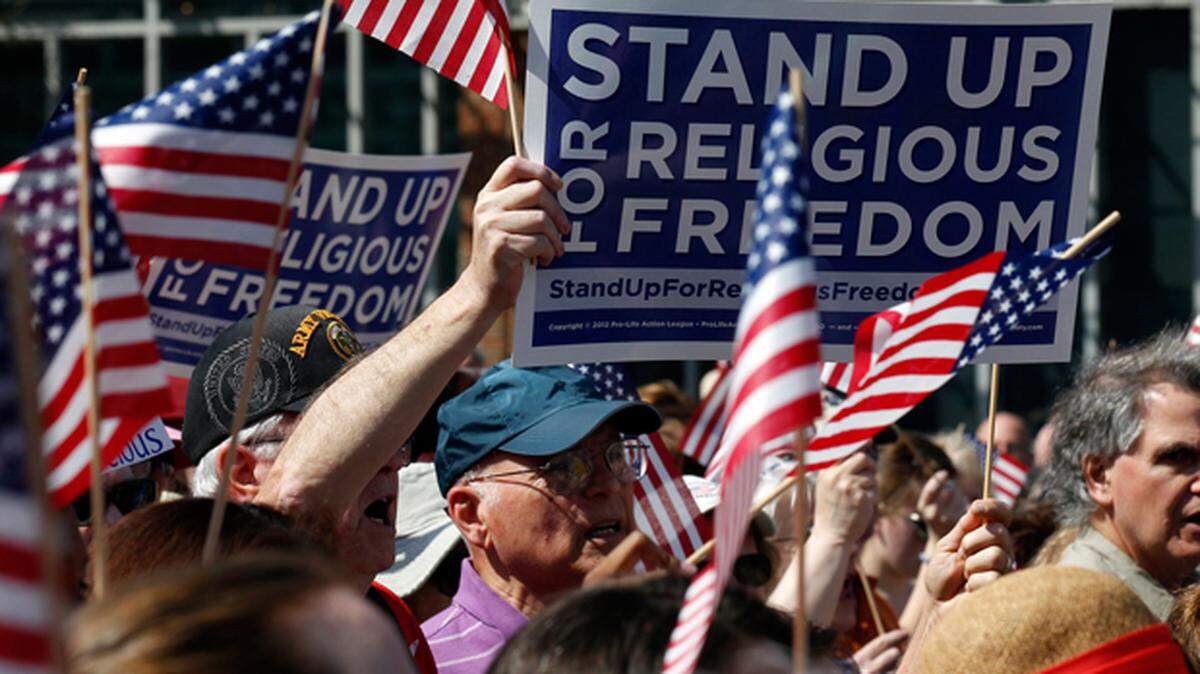
It’s too soon to tell whether the challenge will stand up in court. But it highlights the hypocrisy of Florida Republicans, who so adamantly defend religious freedom while forcing their set of beliefs on Floridians. Conservatives have been careful to not mention religion when debating abortion, but the origins and arguments in their fight to take reproductive rights away are clear.
Religious freedom for whom?
“Religious freedom is not simply something that applies to evangelical Protestants,” said Samira K. Mehta, an assistant professor and program director at the University of Colorado Boulder who specializes in American religions with a focus on Judaism and Protestantism.
“Saying that life begins at conception is a theological statement that runs counter to Jewish teaching, the Muslim teaching and to the sincerely held beliefs of many Christians, and all of those people also have the right to religious freedom.”
Mehta told the Herald Editorial Board that different religions diverge on “ensoulment,” the moment when a soul is believed to enter the body. For Muslims, that happens after 120 days, or roughly 18 weeks, and there’s a range of positions on abortion. There’s a general consensus that abortion is forbidden after those 120 days, but allowed to protect a woman’s life. However, some Islamic scholars believe it should never happen. In Buddhism, life begins at conception, but there’s no single view on abortion.
In Jewish law, there’s a debate over when ensoulment happens, but that’s not the most important point, Mehta said. In general, a fetus is considered potential life, rather than a living being. Although there’s ambiguity on when a fetus becomes a person, that’s usually when the baby’s head emerges from the mother’s body.
“If you have to choose between maternal life and fetal life, you are obligated by Jewish law to choose maternal life, because the mother is the alive person and the fetus is the potential life,” Mehta said.
The Florida ban makes exceptions for fatal fetal abnormalities or to save the mother’s life (but not for incest or rape), but it requires at least two doctors to sign off on it — a burdensome hurdle, especially for poor women.
Traditional and liberal forms of Judaism differ on their views of abortion for other reasons. But many believe Jewish law allows it to protect the “mental or physical well-being of the woman,” as the lawsuit states. There are also other considerations: if genetic testing detects diseases like Tay-Sachs — a rare neurological disorder usually found in people of Eastern European Jewish ancestry; a family doesn’t have the resources to raise another child; or a woman suffered from serious health complications in a previous pregnancy.
These aren’t easy considerations for any woman, family or spiritual counselors. Terminating a pregnancy is a conundrum that shouldn’t be taken lightly. Abortions should be rare and safe.
The anti-abortion movement has seized the religious and moral narrative over the issue. But what other faiths show is that this is not the black-and-white, good-versus-evil decision as Florida lawmakers blithely make it seem.
BEHIND THE STORY
MOREWhat's an editorial?
Editorials are opinion pieces that reflect the views of the Miami Herald Editorial Board, a group of opinion journalists that operates separately from the Miami Herald newsroom. Miami Herald Editorial Board members are: opinion editor Amy Driscoll and editorial writers Isadora Rangel and Mary Anna Mancuso. Read more by clicking the arrow in the upper right.
What's the difference between an op-ed and a column?
How does the Miami Herald Editorial Board decide what to write about?
The Editorial Board, made up of experienced opinion journalists, primarily addresses local and state issues that affect South Florida residents. Each board member has an area of focus, such as education, COVID or local government policy. Board members meet daily and bring up an array of topics for discussion. Once a topic is fully discussed, board members will further report the issue, interviewing stakeholders and others involved and affected, so that the board can present the most informed opinion possible. We strive to provide our community with thought leadership that advocates for policies and priorities that strengthen our communities. Our editorials promote social justice, fairness in economic, educational and social opportunities and an end to systemic racism and inequality. The Editorial Board is separate from the reporters and editors of the Miami Herald newsroom.
How can I contribute to the Miami Herald Opinion section?
The Editorial Board accepts op-ed submissions of 650-700 words from community members who want to argue a specific viewpoint or idea that is relevant to our area. You can email an op-ed submission to oped@miamiherald.com. We also accept 150-word letters to the editor from readers who want to offer their points of view on current issues. For more information on how to submit a letter, go here.
This story was originally published June 19, 2022 at 4:30 PM.