
Bicyclists deserve a safer ride in Miami-Dade. But progress has been on a slow roll | Editorial
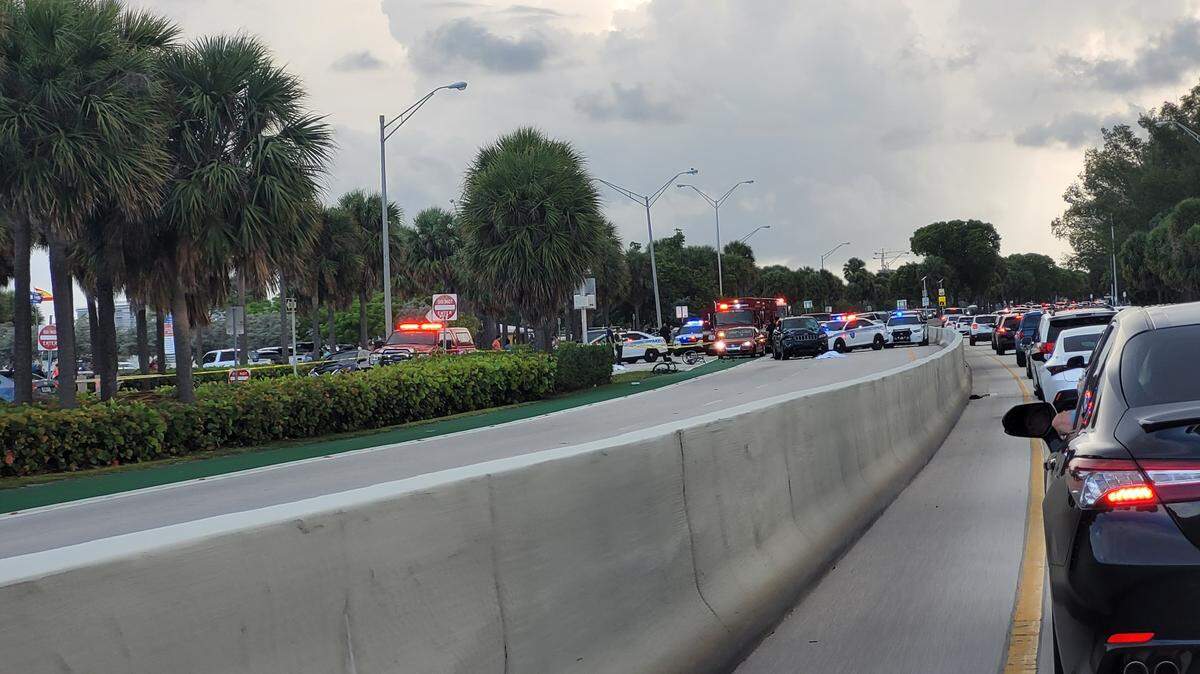
The deaths of two bicyclists on the Rickenbacker Causeway recently is shining a spotlight — again — on what an unfriendly place Miami-Dade is for those who get around on two wheels. It’s about time to address why we as a community so brazenly disregard their safety.
The history of cyclists, joggers and vehicles on the Rickenbacker Causeway, which offers one of the most beautiful vistas in South Florida, is long and, sometimes, tragic. Co-existing not only has been difficult, but also deadly.
But it can be fixed — and should be.
Two days after the fatal accident, Miami-Dade Mayor Daniella Levine Cava, whose husband was injured in a bicycle accident on the causeway in 2018, announced a solution. It’s a Band-aid solution, but we’’l take it, for now.
The mayor announced that vertical barriers will be installed on the most hazardous stretches of bike lanes on the Rickenbacker Causeway. It’s part of a $250,000 upgrade that the mayor has ordered this week.
“It’s a short-term measure to address certain areas,” Levine Cava told the Miami Herald. And it’s not the first time the county has promised similar barriers.
In 2015, the County Commission passed a resolution calling for bike-lane barriers on the Rickenbacker after a cycling fatality there, but the structures never came. Some cyclists oppose bike-lane barriers because they can’t pass slower bikers. Still, the county has to get it done this time.
Sunday afternoon, an eastbound Jeep on the causeway slammed into a man and woman on bikes. They were killed almost instantly, police say. Witnesses called what they saw horrific.
The collision occurred in a well-known trouble spot, a section where the roadway divides, leaving bikers vulnerable at the foot of the largest bridge leading to Key Biscayne. At that juncture, both bicyclists and the vehicles are sharing the roadway, thanks to a design defect.
‘Terrible accident’
No charges have been filed against the Jeep driver, for now. The investigation continues. He remained on the scene and passed a sobriety test. Unfortunately, police said, just a “terrible accident.” But the Miami-Dade biking community is taking exception with that description.
Try telling the loved ones of Yaudys Vera, 48, and Ogniana Reyes, 46, who died while enjoying a favorite pastime, that this was an “accident.”
The deaths have angered and alarmed members of the bicycling community, who have long said that Miami-Dade, a motor-vehicle paradise, is notorious for its lack of bike infrastructure.
Adding to the outrage is a $500 million plan Miami-Dade considered — and rejected — to privately overhaul the Rickenbacker. It would have included barricades to protect bikers from cars on the causeway. Among the improvements championed by architect and cycling enthusiast Bernard Zyscovich were bike lanes separated from automobile traffic.
Zyscovich told the Herald the section where Sunday’s fatalities occurred, under his plan, would have been transformed into a separated 30-foot wide biking and pedestrian path. “There would be no need for a bicycle to ever be in the same place as a car,” he said.
But Key Biscayne leaders opposed Zyscovich’s vision, saying it did not provide the kind of adequate traffic solutions for the island community. So the plan died.
Bicyclists have long said they’re tired of how Greater Miami is way behind other areas around the world that have made cycling a safe mobility option. Miami is consistently ranked at or near the bottom as an unsafe city for bicyclists and pedestrians.
Since 2006, at least seven people have been killed on the Rickenbacker; four were bicyclists.
Bicyclists also have long asked for more aggressive traffic enforcement on the causeway to get drivers to slow down. They say the causeway should be considered a parkway, not a speedway.
Activists demand answers
On Monday, members of the cycling community dispatched to Levine Cava and Miami Mayor Francis Suarez a “Call to Action” memorandum with two main demands:
1. Immediately install physical, protected bike lane dividers along the entirety of the Rickenbacker Causeway. We think that is doable.
2. Commit to a comprehensive long-term plan to implement a permanent bicycle highway facility throughout the entire causeway.
We agree with their request.
The county mayor responded with the quickest, if not best solution, which is what’s needed right now.
We suggest the mayor form a task force with stakeholders and a mandate to find a solution to finally separate cyclists, joggers and vehicles. It’s not rocket science, and it’s taken far too long to resolve this critical issue.
BEHIND THE STORY
MOREWhat's an editorial?
Editorials are opinion pieces that reflect the views of the Miami Herald Editorial Board, a group of opinion journalists that operates separately from the Miami Herald newsroom. Miami Herald Editorial Board members are: opinion editor Amy Driscoll and editorial writers Isadora Rangel and Mary Anna Mancuso. Read more by clicking the arrow in the upper right.
What's the difference between an op-ed and a column?
How does the Miami Herald Editorial Board decide what to write about?
The Editorial Board, made up of experienced opinion journalists, primarily addresses local and state issues that affect South Florida residents. Each board member has an area of focus, such as education, COVID or local government policy. Board members meet daily and bring up an array of topics for discussion. Once a topic is fully discussed, board members will further report the issue, interviewing stakeholders and others involved and affected, so that the board can present the most informed opinion possible. We strive to provide our community with thought leadership that advocates for policies and priorities that strengthen our communities. Our editorials promote social justice, fairness in economic, educational and social opportunities and an end to systemic racism and inequality. The Editorial Board is separate from the reporters and editors of the Miami Herald newsroom.
How can I contribute to the Miami Herald Opinion section?
The Editorial Board accepts op-ed submissions of 650-700 words from community members who want to argue a specific viewpoint or idea that is relevant to our area. You can email an op-ed submission to oped@miamiherald.com. We also accept 150-word letters to the editor from readers who want to offer their points of view on current issues. For more information on how to submit a letter, go here.
This story was originally published May 17, 2022 at 7:22 PM.