
Can my landlord raise my rent that much? Florida renters do — and don’t — have rights | Editorial
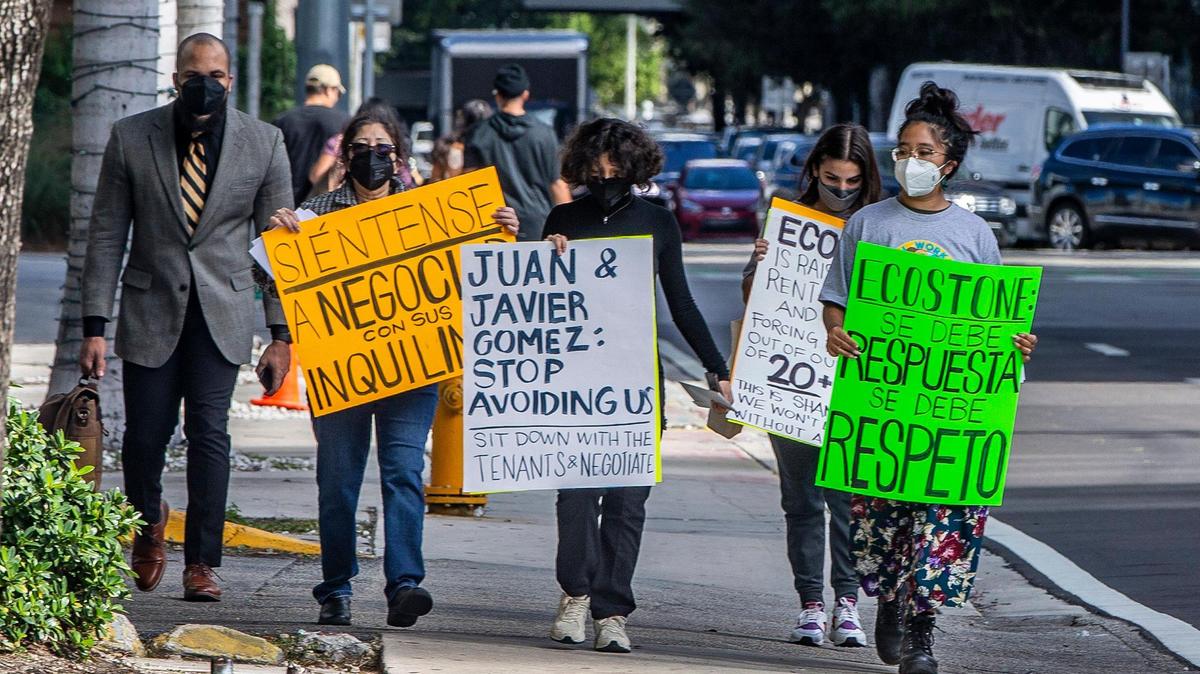
Here’s the not-so-new news: Florida law leans heavily in favor of landlords and property rights. So there’s no cavalry coming to the rescue of tenants facing jaw-dropping rent increases in South Florida.
There’s very little that governments can do under state statute to protect renters from price gouging. But they can protect renters in other ways, such as through the ordinance that the Miami Beach City Commission unanimously approved this month requiring landlords give 60 days’ notice before raising rent by more than 5%. That rule could be extended to the rest of Miami-Dade County under legislation proposed by Commissioner Eileen Higgins.
Sixty days gives renters time to look for cheaper living options if they don’t plan to pay up. But a rent increase is a rent increase, and many tenants will not find greener pastures somewhere else.
So what else is available, or in the pipeline, to help renters? The Herald Editorial Board compiled some important information renters should know.
Rent control
State law preempts cities and towns from imposing caps on rent increases in most cases and Democratic bills in the Legislature to change that are doomed.
There’s an exception if a local government can declare a “housing emergency which is so grave as to constitute a serious menace to the general public.” If we’re not there yet in Miami-Dade, we’re very close. The city or county would then ask voters to approve control measures for one year, after which the same process would have to happen again for renewal, including voter approval.
In December, two dozen Democratic state lawmakers signed a letter asking Gov. Ron DeSantis to declare a state of emergency because of the “ongoing affordable housing crisis” and direct the state attorney general to “recognize any rental price increases of greater than 10% as price gouging.” DeSantis ignored the request. No surprise there.
Meanwhile, the St. Petersburg City Council in December voted to explore the idea to cap rent prices for one year. A similar move is unlikely to happen in Miami-Dade County or the city of Miami, given the conservative leaning of some commissioners and the backlash it would face from builders and landlords, who have also seen their costs go up thanks to inflation.
Rent control isn’t the only option local governments have. Other creative solutions include providing tax exemptions for landlords who don’t raise rent above a certain threshold, state Rep. Anna Eskamani, D-Orlando, told the Editorial Board. It’s time for local governments to start thinking of them seriously.
A fix that won’t help
One of the Legislature’s solutions to the state’s housing-affordability crisis has been Senate Bill 884/House Bill 537, which would allow landlords to charge tenants a nonrefundable monthly fee instead of an upfront security deposit.
On the surface, this would offer relief for renters who cannot afford expensive moving costs. But here’s the catch: Landlords wouldn’t be required to return the fees at the end of the lease like they do with security deposits, nor would the payments apply toward damage beyond normal wear and tear. That means this purported fix might cause renters who don’t have another option more trouble and expenses. Of course, it’s being pushed by LeaseLock, a finance company that provides the fee option in 129 Florida communities.
The Legislature should offer more protections to renters, not make them more vulnerable to potentially predatory practices that opponents compare to payday loans that trap working-class people in an endless cycle of debt.
Can I withhold my rent?
Many renters don’t know they can withhold rent payment if a landlord has failed or refused to provide important maintenance that renders “the leased premises wholly untenantable,” according to state law. The tenant must provide seven days’ written notice. The Florida Bar has a template of that notice on its website and instructions on how and when to withhold rent.
However, what’s in the law often differs from reality. The horror stories of insect infestations, toxic mold in apartment units and hostile landlords are common in Miami-Dade, as Zaina Alsous, of the Miami Workers Center, told the Herald Editorial Board. Her advice is for renters living in uninhabitable conditions to talk to their neighbors facing similar issues and organize — “There’s power in the union,” she said.
Where do I go for help?
The Miami Workers Center is one of the organizations that connect tenants at risk of eviction to legal and community defense. The Miami-Dade County Commission is in the process of creating an Office of Housing Advocacy, and commissioners Raquel Regalado and Jean Monestime are working on an ordinance called the Tenant’s Bill of Rights to delineate what that office will do.
A draft ordinance shows that the office would, among other things, create a Tenant Information Helpline and a web page with resources and downloadable forms — i.e. eviction and rent-withholding — approved by the Florida Bar and translated into Spanish and Creole.
Tenant’s Bill of Rights
Here are some of the things the bill would do:
▪ Landlords could not require prospective tenants to disclose a prior eviction until their application is approved. That information is public record, but Regalado said the rule would give applicants a face-to-face chance to get approved without a prior eviction weighing against them.
▪ If a rental unit is sold, the seller or buyer must give 60 days’ notice to renters with a month-to-month agreement if the sale will result in tenancies being terminated.
▪ Require landlords to provide tenants a notice of their rights no later than 10 days after a lease is signed or renewed.
▪ Require landlords to notify renters within 14 days of receiving notice that a residential building may be unsafe.
The Tenant’s Bill of Rights is “a first step,” Regalado told the Editorial Board. It won’t solve the No. 1 issue facing tenants: soaring rent costs. And there are other issues that need to be addressed, such as the fact that only 10% of renters have legal representation when they face an eviction, according to the Workers Center.
But in a state where renters are often left to their own devices, they will take any help they can get.
A previous version of this editorial incorrectly stated that tenants had to give landlords 20 days to perform important maintenance before withholding rent. Tenants must give seven days’ written notice before doing so.
BEHIND THE STORY
MOREWhat's an editorial?
Editorials are opinion pieces that reflect the views of the Miami Herald Editorial Board, a group of opinion journalists that operates separately from the Miami Herald newsroom. Miami Herald Editorial Board members are: opinion editor Amy Driscoll and editorial writers Isadora Rangel and Mary Anna Mancuso. Read more by clicking the arrow in the upper right.
What's the difference between an op-ed and a column?
How does the Miami Herald Editorial Board decide what to write about?
The Editorial Board, made up of experienced opinion journalists, primarily addresses local and state issues that affect South Florida residents. Each board member has an area of focus, such as education, COVID or local government policy. Board members meet daily and bring up an array of topics for discussion. Once a topic is fully discussed, board members will further report the issue, interviewing stakeholders and others involved and affected, so that the board can present the most informed opinion possible. We strive to provide our community with thought leadership that advocates for policies and priorities that strengthen our communities. Our editorials promote social justice, fairness in economic, educational and social opportunities and an end to systemic racism and inequality. The Editorial Board is separate from the reporters and editors of the Miami Herald newsroom.
How can I contribute to the Miami Herald Opinion section?
The Editorial Board accepts op-ed submissions of 650-700 words from community members who want to argue a specific viewpoint or idea that is relevant to our area. You can email an op-ed submission to oped@miamiherald.com. We also accept 150-word letters to the editor from readers who want to offer their points of view on current issues. For more information on how to submit a letter, go here.
This story was originally published February 26, 2022 at 3:45 PM.