
Miami really, really needs rapid transit. But $1 billion for a four-mile monorail? Nope! | Editorial
It was supposed to be cheaper.
When the Miami Beach Monorail developers pitched Miami-Dade commissioners on their plan in 2020 to build a long-sought rapid-transit line from the mainland to Miami Beach, it was supposed to be a much less pricey alternative to extending the existing Metromover train.
Now we have learned that both the construction cost and the operating cost of that four-mile link are estimated to be about twice as much as the original figures. That’s according to documents obtained from the county by the Miami Herald’s Doug Hanks.
The price to design and build the elevated train has gone from about $587 million to more than $1 billion. The amount the county would pay for operating costs has gone from $61 million a year to $117 million. That’s about $2 million a week — a mighty expensive four miles. It’s sounding like the Maybach of monorails.
Soaring costs
Some of that extraordinary leap in cost is due to the addition of a second station in Miami Beach. Much of it — according to Meridiam, a public infrastructure financial group developing the project with casino operator Genting — is due to the rising cost of materials, up by 25% to 30%. Another portion comes from additional engineering that was needed.
The upshot for the county, though — and for all of us — is this: “You can’t afford that. You can’t afford it with the current revenue stream.” That was the assessment of Jennifer Moon, a former deputy mayor who oversaw the monorail negotiations in 2020 and now heads the County Commission’s budget office, in the Herald story.
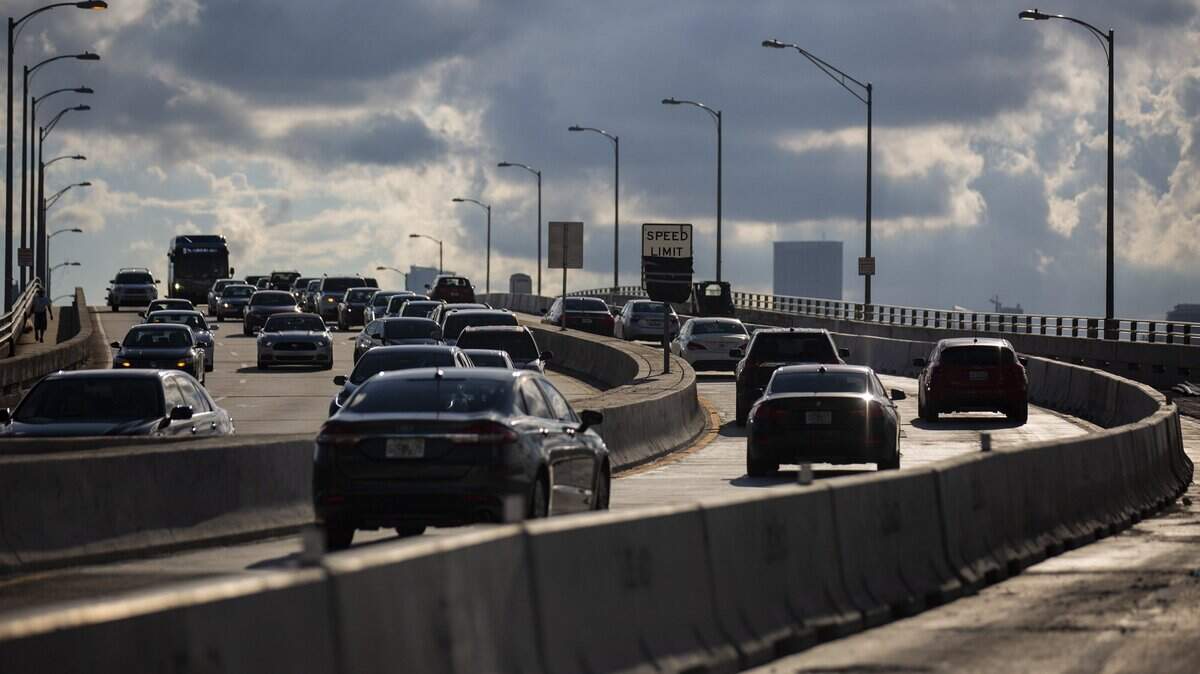
Miami-Dade needs some kind of rapid transit from the mainland to the Beach. It’s an idea that has been kicked around since the ’80s to help with our ceaseless traffic congestion, part of South Florida’s apparently endless effort to catch up on transportation issues. So, yes, we want to see this work.
And with Miami trying to position itself as a city of the future and lure transplants from places with much better transportation systems, getting a rapid-transit link to South Beach becomes even more important.
But this latest round of cost estimates is setting off alarm bells so loud they’re deafening. County commissioners and the mayor need to heed them. The developers need to get the numbers down — way down — and commissioners need to take a second look at any other possibilities for that corridor.
Monorail to Miami Beach
The Miami Beach Monorail project is supposed to run from the foot of the MacArthur Causeway on the old Miami Herald site, over the bridge spanning Biscayne Bay and into South Beach, with a transit hub on the mainland side and stations at Lenox and Washington avenues in Miami Beach. The Meridiam bid was the only one for the project, and it was backed by then-Mayor Carlos Gimenez. Part of the deal is that Genting would donate the land for the mainland station next to what it hoped would be a casino, giving it a straight shot from South Beach to the (potential) craps table.
The county already did a $10 million transit study in 2020 that said the two best choices for the so-called Baylink segment were a Metromover extension or a monorail. Monorail was expected to be cheaper, based on the Meridiam proposal.
Even so, commissioners — advisedly — proceeded with caution. They signed an interim agreement for $14 million with Meridiam, which also managed the PortMiami tunnel project, to allow commissioners to delve more deeply into the idea and let the monorail developers cover costs while exploring exactly what it would entail.
Now, it appears, we know.
Back in 2020, the monorail sounded like a way to save money and get a train to the beach. Now, it seems unaffordable. Is it still a better deal than extending the Metromover?
Make it affordable
Monorail developers say they may be able to bring the cost estimates down before Mayor Daniella Levine Cava makes her recommendation to the commission and the commission votes. Christopher Hodgkins, CEO of Miami Access Tunnel, speaking for the Miami Beach Monorail Consortium, told the Editorial Board that he’s well aware that the current estimate won’t fly: “It’s not a number that we’re happy with ... We’ve got to make it work and we’ve got to make it affordable.”
He’s not trying to pretend the problem isn’t there. That’s great. But whatever amount of savings his company comes up with, it’ll need to be significant. He also mentioned the possibility of finding new chunks of state and local government money to help defray the price of the monorail, including from the Florida Department of Transportation. That’s still taxpayer money. If the price remains similar to what we’re seeing now, we’re not sure that’s much comfort simply because it comes from another pot.
Levine Cava and county commissioners had been scheduled to take up the final price estimate in March. The mayor told the Editorial Board Thursday that the developers are now expected to ask for a six-month extension. No matter when the moment of reckoning comes, commissioners must consider whether they are being good stewards of taxpayer money. This would be, after all, a privately developed and operated transit line funded with yearly payments from the government — a first in Miami-Dade.
Levine Cava told us that negotiations to reduce the costs of monorail are still under way, including discussions with FDOT. “They had sticker shock, too,” she said. “Nobody said, ‘No problem, we’ve got this money here.’ We don’t know if there will be additional funding.”
She said it’s still too soon to know if a monorail will prevail. And she stressed that the county must also pay for other rapid-transit needs. “It’s about priorities,” she said.
Monorail is certainly farthest along in the planning, and that’s important. There’s also still the idea of extending Metromover, which the county’s 2020 transit study estimated would cost roughly the same as monorail, at least back then. Then there’s bus rapid transit, or BRT, which is what South Miami-Dade is getting along a 20-mile stretch of U.S. 1. It’s a futuristic electric bus network with a dedicated lane, buy-ahead tickets, climate-controlled stations and intersection-controlling devices. We hope it lives up to its promise, and soon, because it could provide new alternatives for a county that has been ruled by cars for too long.
Miami’s track record
Miami-Dade residents have every reason to be skeptical about the monorail — or any project that costs this much. The county’s ballyhooed SMART plan — the Strategic Miami Area Rapid Transit plan — was supposed to make rapid transit in six corridors a top priority, including a beach corridor from downtown to Miami Beach’s convention center. That was back in 2016.
The so-called People’s Transportation Plan, a half-cent tax approved in 2002, was supposed to help pay for miles of new Metrorail — but didn’t. And then there’s the still unhealed wound of the Marlins stadium, a horrible, lopsided deal that will end up costing taxpayers about $2 billion.
Commissioners need to keep those examples in their heads as they think this issue through. The last thing Greater Miami needs is a $1 billion example of government failure running along the MacArthur in full view of every passing visitor. Imagine what that would do to the viability of any future transportation projects.
We don’t know yet which option is the right one for the Miami-to-Miami Beach corridor. But is it monorail? Maybe, if the costs come way down. But at twice the price, the answer has to be No.