
A pricey trip to the beach: Monorail costs to Miami-Dade nearly double to $117M a year
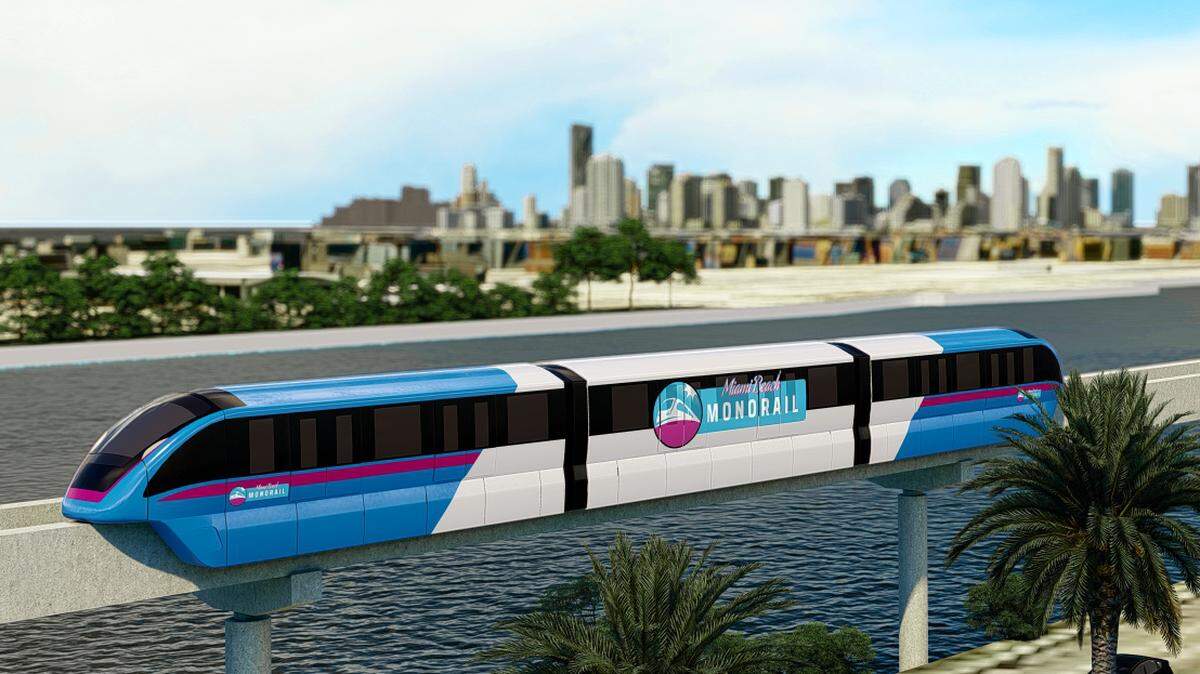
The developers behind a proposed monorail link with Miami Beach want double the money from taxpayers they proposed less than two years ago, a price hike that would have Miami-Dade County paying about $2 million a week for the four-mile transit line.
Miami-Dade County would pay private monorail developers about $117 million a year for the elevated train over Biscayne Bay connecting Miami with Miami Beach, according to documents Miami-Dade released Friday to the Miami Herald.
The estimated yearly payment is nearly double the $61 million that was included in the original bid approved by county commissioners in October 2020, during the final weeks of the administration of then-Mayor Carlos Gimenez. Developers behind the project blame global inflation, pricier demands from Miami-Dade and other factors.
Based on the higher projected costs, the monorail system would require higher tax rates or an infusion of grant money from Washington and Tallahassee, according to a veteran of Miami-Dade’s budget process.
‘You can’t afford that’
“You can’t afford that,” said Jennifer Moon, a former deputy mayor who oversaw the monorail negotiations in 2020 and now heads the County Commission’s budget office. “You can’t afford it with the current revenue stream.”
If built, the proposed Miami Beach Monorail system would be a first in Miami-Dade: a privately developed and operated transit line funded with yearly payments from the government.
At one end would be a new transit hub where the Miami Herald used to stand on the Miami waterfront, land now owned by Genting, a Malaysian casino operator and monorail partner.
That would include platforms for the monorail, plus a new Metromover station and bus depot on property where Genting hopes to build a waterfront resort.
The monorail system would travel over the MacArthur Causeway until ending in South Beach, with stations on Lenox and Washington avenues.
Pitched as a cheaper transit option given Genting’s contribution of land for a transit station on its property, the new monorail figures have the project as costly as past estimates for larger rail lines.
The price tag to design and build the monorail system in the 2020 proposal was $587 million. Development costs now top $1 billion.
That means the four-mile monorail would cost roughly half as much as the nearly $2 billion a state consultant in 2019 estimated would be needed to build a 13-mile extension of Metrorail along Northwest 27th Avenue to Miami Gardens. A year earlier, a county consultant estimated a 20-mile light rail system at ground level would cost $1.3 billion to build in South Miami-Dade.
In their filings with Miami-Dade, released through a public-records request, monorail representatives said rapidly rising expenses, changes in the county’s requirements for another South Beach station and more extensive research of the engineering work needed left them asking the county for far more money than originally contemplated.
Adding a Washington Avenue station cost about $49 million, the proposers said. Another $85 million came from “global inflation and “an unexpected increase in all prices of supplies and subcontracted works.”
Talks with the Miami Beach Monorail team have continued under the current mayor, Daniella Levine Cava, who must decide whether to recommend commissioners approve a final development deal.
Levine Cava’s transit director, Eulois Cleckley, said in an email to the mayor Thursday night that county negotiators are working to bring down costs before a final estimate is due next month.
“The project cost submitted by the MBM team is well above the Board approved amount of $586,500,000 for this interim agreement phase,” he wrote. “Therefore, the submission of the price updates does not constitute the County’s acceptance of any project cost.”
Finally a plan for Baylink?
In October 2020, commissioners voted to pay the monorail partners $14 million to cover costs to develop final engineering and financial plans for a project that would provide the rapid-transit “Baylink” that’s been contemplated for Biscayne Bay since the 1980s.
That agreement included preliminary financial figures from a team that includes Meridiam, the development company behind the PortMiami project, and Aqualand Development, a firm owned by two registered lobbyists who were leaders of Gimenez’s 2016 reelection: campaign manager Jesse Manzano-Plaza and finance chairman Ralph Garcia-Toledo, who is also a sub-contractor on other county projects.
At the time, the monorail project’s design and construction cost estimate was $587 million, with related expenses adding to a total development price tag of about $656 million.
In the price update the monorail group filed Jan. 18, construction cost is now $1 billion, including $90 million budgeted for expense escalation during construction.
Add in other costs during the construction period and financing expenses, and the development tab now hits $1.2 billion.
While the monorail partners would pay the project costs upfront — the latest disclosure projects a $1.5 billion investment — Miami-Dade’s government would pay back that money, with extra to cover operating expenses, profits and interest costs for the developers.
The latest filings show how steadily the price has increased since the summer of 2019, when the Gimenez administration recommended Miami-Dade launch a bidding process for a beach transit line based on a Genting monorail proposal. Though confidential at the time, Gimenez and Genting released some cost estimates, with the project pegged at roughly $400 million to build.
Monorail or Metromover?
Pursuing monorail was controversial for transit advocates, who argue Miami-Dade would be better off extending Metromover to the Beach — an option a $10 million county study in 2020 concluded would draw more riders than a monorail line.
High costs were a main argument against pursuing Metrorail in Miami-Dade in 2018, and county leaders approved a $300 million rapid-transit bus line instead. One of the arguments was an expensive rail line would sap money from future transit projects across the county.
“That’s the main reason they chose [rapid-transit bus] in South Dade,” said Kevin Amézaga, president of the Miami Riders Alliance. “We don’t want [monorail] to be a boondoggle that ruins it for other transit projects.”
This story was originally published February 4, 2022 at 8:54 PM.