
Another person was just killed on Brightline’s tracks. How many more have to die? | Editorial
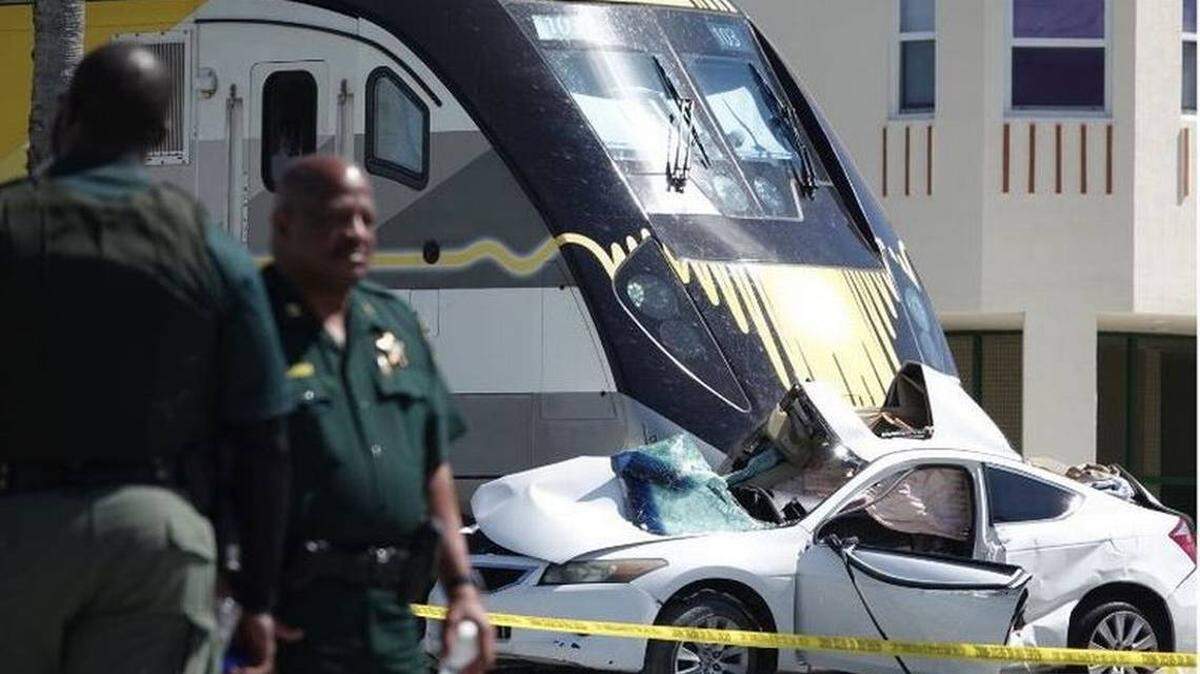
Brightline trains are fast, silent — and deadly.
Someone was killed on the tracks in North Miami Beach when the train came whooshing through on Tuesday. Last month, on Brightline’s first day back after suspending service for 19 months during the pandemic, a train struck a car in Pompano Beach. The driver was heading southbound — on the tracks — and was later issued a traffic citation. A few weeks later, a train in Dania Beach struck a golf cart on the tracks. No one was in it, but still.
Something’s really wrong here. The numbers show it. Brightline, the municipalities through which the trains run, residents and drivers all need to come together to make things right.
In January 2020, an Associated Press analysis found that Brightline had the worst death rate per mile of any railroad in the country. It’s a shocking status that must be addressed. Unfortunately, a rail-safety bill in the Florida Senate didn’t go anywhere.
Clearly, accidents happen. In Brightline’s case, however, we must learn the why of those accidents. Are drivers trying to beat the track barriers as they come down? Are some people walking along the tracks, and unable to hear a train until it’s too late? Are some committing suicide by train?
Brightline is privately owned and providing vital transportation between Miami and West Palm Beach. Trains reach speeds of 79 miles per hour. According to state statute, people on the tracks, but not at a crossing, are trespassing.
Last year, according to National Public Radio, Brightline said that 75% of deaths along its tracks were suicides. That’s an awfully high number, one that a U.S. Department of Transportation study disputes, saying that suicides account for about 30% of all rail fatalities nationwide. And the Federal Railroad Administration’s website says only a handful of Brightline fatalities are suicides.
Blaming the victims can’t be the go-to defense. To its credit, Brightline launched a public-education campaign, warning people to stay off the tracks and upgraded fencing along some stretches of track.
However, these trains aren’t out in the boonies; they speed through densely populated urban areas — and stricter safety measures should ensure that they operate accordingly.
BEHIND THE STORY
MOREWhat's an editorial?
Editorials are opinion pieces that reflect the views of the Miami Herald Editorial Board, a group of opinion journalists that operates separately from the Miami Herald newsroom. Miami Herald Editorial Board members are: opinion editor Amy Driscoll and editorial writers Isadora Rangel and Mary Anna Mancuso. Read more by clicking the arrow in the upper right.
What's the difference between an op-ed and a column?
How does the Miami Herald Editorial Board decide what to write about?
The Editorial Board, made up of experienced opinion journalists, primarily addresses local and state issues that affect South Florida residents. Each board member has an area of focus, such as education, COVID or local government policy. Board members meet daily and bring up an array of topics for discussion. Once a topic is fully discussed, board members will further report the issue, interviewing stakeholders and others involved and affected, so that the board can present the most informed opinion possible. We strive to provide our community with thought leadership that advocates for policies and priorities that strengthen our communities. Our editorials promote social justice, fairness in economic, educational and social opportunities and an end to systemic racism and inequality. The Editorial Board is separate from the reporters and editors of the Miami Herald newsroom.
How can I contribute to the Miami Herald Opinion section?
The Editorial Board accepts op-ed submissions of 650-700 words from community members who want to argue a specific viewpoint or idea that is relevant to our area. You can email an op-ed submission to oped@miamiherald.com. We also accept 150-word letters to the editor from readers who want to offer their points of view on current issues. For more information on how to submit a letter, go here.
This story was originally published December 7, 2021 at 1:33 PM.